Retiring Arizona Prison Watch...


This site was originally started in July 2009 as an independent endeavor to monitor conditions in Arizona's criminal justice system, as well as offer some critical analysis of the prison industrial complex from a prison abolitionist/anarchist's perspective. It was begun in the aftermath of the death of Marcia Powell, a 48 year old AZ state prisoner who was left in an outdoor cage in the desert sun for over four hours while on a 10-minute suicide watch. That was at ASPC-Perryville, in Goodyear, AZ, in May 2009.

Marcia, a seriously mentally ill woman with a meth habit sentenced to the minimum mandatory 27 months in prison for prostitution was already deemed by society as disposable. She was therefore easily ignored by numerous prison officers as she pleaded for water and relief from the sun for four hours. She was ultimately found collapsed in her own feces, with second degree burns on her body, her organs failing, and her body exceeding the 108 degrees the thermometer would record. 16 officers and staff were disciplined for her death, but no one was ever prosecuted for her homicide. Her story is here.

Marcia's death and this blog compelled me to work for the next 5 1/2 years to document and challenge the prison industrial complex in AZ, most specifically as manifested in the Arizona Department of Corrections. I corresponded with over 1,000 prisoners in that time, as well as many of their loved ones, offering all what resources I could find for fighting the AZ DOC themselves - most regarding their health or matters of personal safety.

I also began to work with the survivors of prison violence, as I often heard from the loved ones of the dead, and learned their stories. During that time I memorialized the Ghosts of Jan Brewer - state prisoners under her regime who were lost to neglect, suicide or violence - across the city's sidewalks in large chalk murals. Some of that art is here.

In November 2014 I left Phoenix abruptly to care for my family. By early 2015 I was no longer keeping up this blog site, save occasional posts about a young prisoner in solitary confinement in Arpaio's jail. I'm deeply grateful to the prisoners who educated, confided in, and encouraged me throughout the years I did this work. My life has been made all the more rich and meaningful by their engagement.

I've linked to some posts about advocating for state prisoner health and safety to the right, as well as other resources for families and friends.

until all are free -

MARGARET J PLEWS (June 1, 2015)
arizonaprisonwatch@gmail.com


INDIGENOUS ACTION MEDIA

INDIGENOUS ACTION MEDIA
ANTICOLONIAL zines, stickers, actions, power

Taala Hooghan Infoshop

Kinlani/Flagstaff Mutual AID

MASS LIBERATION AZ

MASS LIBERATION AZ
The group for direct action against the prison state!

Black Lives Matter PHOENIX METRO

Black Lives Matter PHOENIX METRO
(accept no substitutions)

BLACK PHX ORGANIZING COLLECTIVE

BLACK PEOPLE's JUSTICE FUND

PHOENIX: Trans Queer Pueblo

COVID Mutual AID PHOENIX

AZ Prison Watch BLOG POSTS:


Showing posts with label prison gangs. Show all posts

Tuesday, June 10, 2014

AZ state prisoners and activists call for DOJ Investigation into rape and gang violence in AZ DOC.


QUEER PRISON WALLS
chalk art by Margie Diddams
Photography by Margaret Jean Plews
Phoenix City Hall (02/26/2103)


(EDITED to remove sensitive information on June 26, 2014) 


NOTE: This is my response to reading  Jan Brewer's May 1, 2014 letter to US Attorney General Eric Holder about Arizona's decision to refuse to comply with the Prison Rape Elimination Act. I actually finished and sent this on June 9, also posting it to the Daily Kos

I encourage all prisoners, former prisoners, and families of those presently in the custody of the AZ Department of Corrections to contact Attorney General Holder, as well, with your personal stories related to your safety or that of a loved one  in prison. Now is the time to strike - the feds need to be dragged into this by more than just me. They need to hear all of you calling them out to take some responsibility for neglecting this mess. It's not like this is the first time they have heard from me, anyway...

Please send me a copy of what you write so I can post it here, too.

----------------

chalk art on sidewalk: margaret jean plews
photograph: PJ Starr (phoenix 2011)
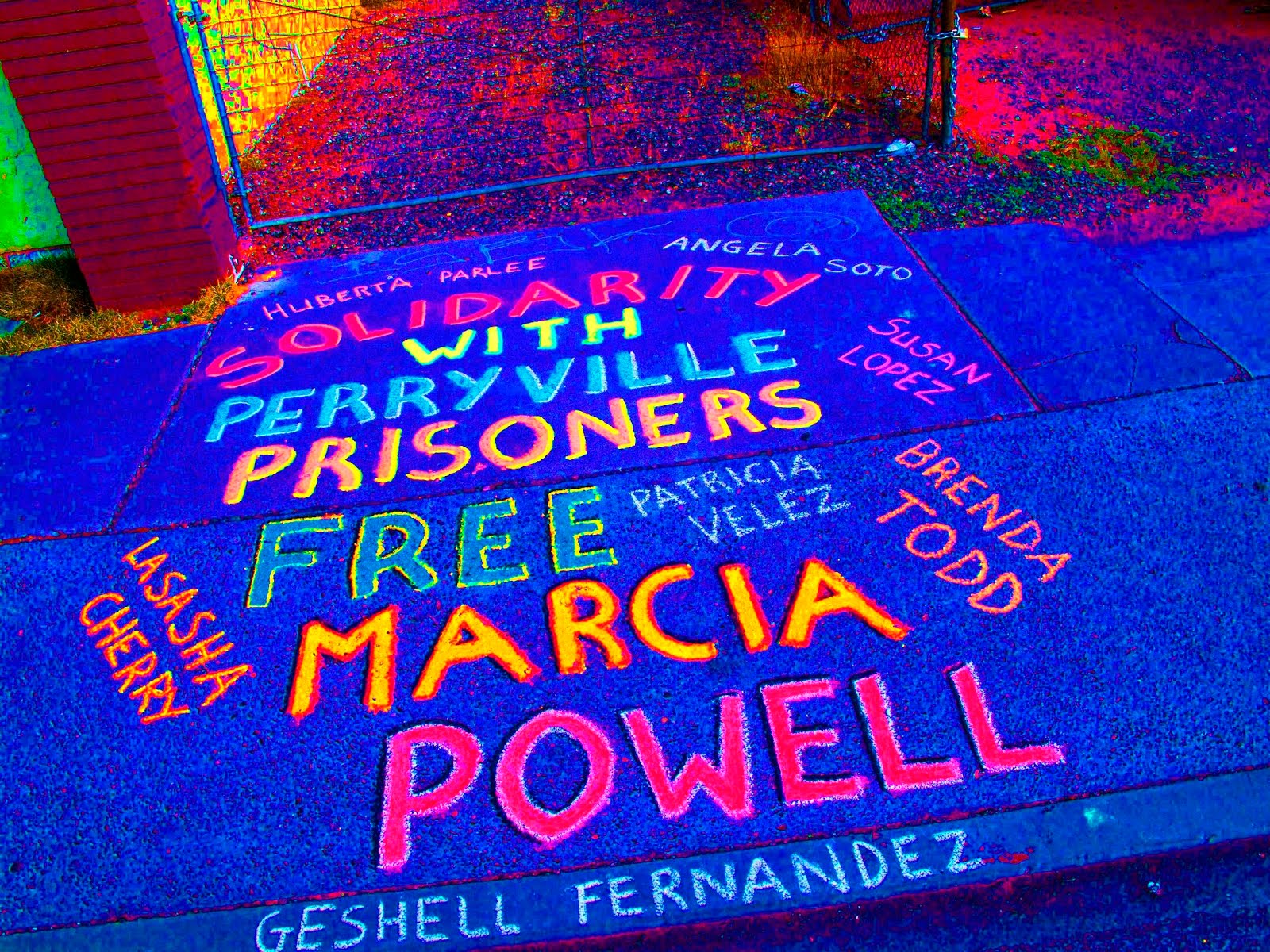

FreeMarciaPowellchalk3small.jpgMargaret Jean Plews
PO Box 20494
Phoenix, AZ 85036
480-580-6807


"Our strategy should be not only to confront empire, but to lay siege to it. To deprive it of oxygen. To shame it. To mock it. With our art, our music, our literature, our stubbornness, our joy, our brilliance, our sheer relentlessness, and our ability to tell our own stories..."


- Arundhati Roy

June 7, 2014

The Honorable Eric H. Holder, Jr.
Attorney General, US Department of Justice
950 Pennsylvania Avenue, NW
Washington, DC 20530-0001

Dear Attorney General Holder;

I am writing to provide a citizen’s rebuttal of Governor Jan Brewer’s statements of May 1, 2014 in her letter to you regarding the Prison Rape Elimination Act, which grossly misrepresented conditions in the state prison system during her reign. I am also intending this letter to serve as a formal request for a CRIPA Investigation into the pervasive patterns and practices at the Arizona Department of Corrections that place prisoners at exceptionally high risk for sexual victimization and complications from unresolved trauma, especially women, the mentally and otherwise-impaired, and LGBT prisoners.

I am emailing this letter with relevant links embedded, but will also be snail- mailing a copy to you with supporting documents (as well as some of my artwork, memorializing the ghosts of Jan Brewer and Chuck Ryan).

By way of introduction, I am the author/editor of the blog ARIZONAPRISONWATCH.ORG, which I began writing five years ago after the death of prisoner Marcia Powell revealed disturbing practices and attitudes at the Arizona Department of Corrections. My particular concern was the mentally ill women at ASPC-Perryville, at first. I recognized in Marcia’s life story the same elements of the numerous women I had come to know and love in my many years working with people who were trying to survive while homeless, addicted and severely mentally ill in Ann Arbor. I also identified with her - I myself am a recovering alcoholic and addict, and could have landed in prison under draconian drug war and repeat-offender sentencing  had I been caught at any number of things earlier in my life, especially if it was in Arizona (what but a “repeat offender” is an addict, anyway?). I also have bi-polar disorder and a bad attitude when it comes to authority, and could have easily been in Marcia’s cage that day myself.

If you are unfamiliar with the case, Marcia was doing 27 months for a $20 blow job she agreed to give an undercover Phoenix cop one fateful day, and died  in a cage in the Arizona sun in May of 2009, at ASPC-Perryville. That was after an extended “suicide watch” in the 107 degree heat, during which time a prisoner is supposed to be checked on every 10 minutes.  After ignoring Marcia’s pleas for relief for four hours (one guard walked away offering no aid knowing she had even defecated on herself) -  officers eventually noticed she had collapsed from the elements with second degree burns on her body and her organs failing; her core temperature at the hospital still exceeded the ability of thermometers to read it, which only went as high as 108 degrees. Not realizing she had a legal guardian and an adoptive mother, Ryan pulled the plug on her life support before the stroke of midnight - she died shortly thereafter.


 chalk art by margaret j plews                                          photo by PJ Starr

AZ DOC Central Office, Phoenix
(Thanksgiving 2011)

DOC officers never expected that Marcia Powell would die out there because they had just left another woman in that cage for 20 hours 3 days earlier, and she didn’t die. See, Marcia’s death was horrific, but it’s not really shocking that it happened - the only wonder was that the DOC got away with punishing prisoners in the heat that way for so long.

That was less than five months into Charles Ryan’s tenure as Interim Director at the Arizona Department of Corrections, but he had begun disassembling the more rehabilitative and empowering programs his predecessor had implemented and imposing new policies immediately upon taking office. A former DW of Ryan’s alleged to the AZ Attorney General that the change the new director made about how to house cellies resulted in at least two homicides within the first 18 months of his rise to power there.  But Ryan had moved up through the ranks under the more brutal directors whose bullying style of management he appears to have emulated, and thus played a large role for decades in cultivating the policies and ethos at the AZ DOC that are so deeply hostile towards prisoners who exercise their right to not be subjected to cruel and unusual punishment. That tendency to resolve issues with violence or the threat of it trickles down from admin to officers to prisoner, and eventually ignites the flames that can bring a prison to its knees.

The good governor talked about Arizona’s “long traditions” of protecting citizens in custody - wow, is she out of touch. She hasn’t read Prof. Mona Lynch’s “SUNBELT JUSTICE” yet, about the trailblazing role the state has played in implementing draconian sentencing and correctional practices over the past 3 decades - the increase in criminalization for politics and profit that the rest of the country has seen the folly of and begun to abandon.

Its actually because of this state’s long tradition of depriving prisoners both of their rights as well as the most basic tools they need in order to fight for them that the AZ DOC is in such shameful condition now. Arizona’s 1990 constitutional amendment excluding prisoners from the definition of crime victim (and related rights and resources), the Lewis v Casey decision in 1996 eliminating the right of prisoners to access a law library among other things, and the Clinton-era Prison Litigation Reform Act (heavily lobbied for by then DOC Director Terry Stewart) were collectively devastating.

I have volumes of letters that will lead you to both victims and perpetrators of countless civil rights abuses precisely because the grievance procedure on most yards is a sham and the DOC obstructs efforts by prisoners to file suit by creating obstacles - especially for illiterate, Spanish-speaking, and mentally ill or developmentally disabled prisoners. In fact, the DOC has NO POLICIES translated into Spanish, despite nearly 20% of their population being foreign nationals, mostly from Spanish-speaking countries. I’ve been recruiting people to do the translations myself, as this is not a concern of the DOC’s so long as no Spanish-speaking prisoners grieve the lack of Spanish-language policies.

This means that Spanish-speaking prisoners (and other non-English-speakers) apparently need to rely on the skills of untrained staff and fellow prisoners who happen to speak some dialect of Spanish when they need to speak to medical, for example, or appeal a disciplinary action, or grieve their housing assignment. Most just suffer their time in silence.

If prisoners could fight abuse and neglect more effectively themselves, the DOJ and ACLU wouldn’t have to do it for them, and you know it as well as I do, Mr Holder. So does the AZ DOC - they put an extraordinary amount of energy into preventing prisoners from learning to articulate their grievances and use persuasion, negotiation and civil law to effectively change their world. There’s a prisoner petition, of sorts, going around that expresses well the barriers they encounter on their way to the courts while trying to exhaust administrative remedies, and offers some proposed solutions, as I recall. It is worth a look by your people.

As a result of a disempowered prisoner population (and, some argue, extremely weak correctional officers unions in AZ), the state prisons are fire traps, and prisoners often complain they are in decaying facilities with mold growing freely in corners, rats and roaches competing for space with the people, feces and blood smeared on the wall in suicide watch cells, inoperable hot water heaters in the winter and non-existent air conditioning in the summer, and scarcely enough food in the sack-lunch “sedentary diets” given to those in detention, administrative segregation and maximum security to keep them from starving to death. More prisoners are fleeing the violence on the yards than are being punished for perpetrating it.

AZ DOC’s medical and psychiatric care is not just deplorable in its negligence, it’s outright abusive, and the DOC has as much to do with that as any of the other parties involved: Parsons v Ryan was filed before the system was even privatized, after all. When I started blogging on the prisons the only thing one could find about AZ DOC on the internet was pretty much what the state wanted you to see. Now you can easily Google “arizona prison health care” to see how much things got worse when Wexford and Corizon came in to feed off of the sick and dying; Director Ryan has lost control over the department’s squeaky clean public image, among other things. His own well-funded propaganda machine is failing him, as are all levels of management and administration, apparently.


 THE FIREHOUSE, Phoenix AZ
40-foot sidewalk mural memorializing the ghosts of jan brewer...


I met with director Ryan and his classification staff in December of 2013, along with Dianne Post from the NAACP here, the primary author of a lengthy letter to him about gay and trans prisoner safety based on my correspondents.  I don’t think he realized how much of what he and his people had to say was disturbing to the outside observer; some of the documents from that meeting - detailing how serious the need for safety is in the AZ DOC - are in the packet.

According to the DOC, 75% of detention cells are full of guys who are unacceptable to or just plain uncooperative with the racialized gangs running the yards - those are the prisoners I hear the most from. The guys pass my name and addy around the detention cells as they do the 805 dance from prison to prison, because I send them the info they need to fight the DOC - stuff like the Jailhouse Lawyers Handbook. It costs me a few hundred bucks a month in printing and postage to keep up with the need for assistance...but, some people spend their time and money on their gardens or pets or kids - I just happen to be a little eccentric about helping the underdog.  I think its a worthy investment, helping people help themselves.

Those prisoners filling the detention cells while fleeing the violence are either seeking Protective Custody (PC) or being punished for refusing their General Population (GP) housing assignments (with “refusal to house” tickets ) after being denied PC. The guys complaining about the assaults extortion and murders, in fact, are overwhelmingly being denied PC and maxed out (ie their good time and privileges are lost and their classification scores zoom up) on major disciplinary tickets for not doing anything to hurt anyone, while the ones behind the extortion, assaults and murders, drug trade and other evils are still free to dominate the prison yards and dictate the culture - often empowered by corrupt officers who want the gangs to help keep the grievances down on the yard, or to keep the assaults just between prisoners, or who just want to line their pockets to buy a new gun or truck.

I have read the Does v Stewart proposed settlement, by the way, and am well-familiarized with DOC policy - I can assure you that both the Does v Stewart agreement and the DO805 policy are routinely being blatantly violated by administrative staff at Central Office. I can say that with certainty after receiving hundreds of letters from prisoners and half as many more calls from family members over getting folks into safe housing since last winter. I have ample evidence the DOC is denying PC to almost ALL prisoners who seek it without the aid of an attorney or the very expensive assistance of Donna Hamm from Middle Ground Prison Reform.

(She’s done a lot of good work, don’t get me wrong - she just costs a pretty penny.)

Interestingly, Ms. Hamm, who charges a flat fee of $2500 to advocate for PC housing for a prisoner, claims a 85- 90% success rate for her clients, while about that same percentage of all PC requests each month are denied, according to the DOC, leaving hundreds of guys in detention each month awaiting the PC verdict. That alone should raise red flags that the DOC isn’t really using any real criteria when they decide who goes to PC and who goes back to the hole in the next GP yard to try again(or get killed), other than that prisoner’s or their family’s ability to litigate them.

And they don’t do the mental health checks they’re required to do on each guy who is turned down for PC to make sure he doesn’t kill himself out of terror. They can’t possibly meet that demand - Corizon isnt even meeting its minimum mental health care mandates.  Thus, I believe guys are still probably killing themselves in the wake of PC denials, like Rosario Rodriguez-Boroquez did in the fall of 2010. A rape victim in the hole on the same MAX unit in Florence followed in his footsteps a week later. That second prisoner might have been saved had the DOC debriefed affected prisoners, they way they do with staff after suicides, homicides and traumatic deaths of prisoners or staff; correctional “best practices” would suggest they should.

Over the course of the past 12 months I’ve corresponded with approximately 35 gay and transgender prisoners alone, some of whom the Navajo Nation’s Human Rights Commission and the NAACP of Maricopa County  have already contacted the DOJ about (and have heard nothing back). In the fall of 2013 a collective of concerned community members convened to study the data from my queer correspondents and draft a letter to Charles Ryan with concerns about the LGBT population being routinely denied PC by his staff when they seek it, even after reporting to the DOC that they had been sexually assaulted or exploited, extorted or beaten because of their sexual orientation or gender identity (the AZ DOC houses transgender women on GP yards in all-male prisons, FYI). In fact, right now there are several gay and transgender prisoners still in GP who have been trying to get into PC for up to and over a year now, unsuccessfully.

Most recently, one gay prisoner who I had intervened personally for to advocate that he receive PC was denied PC and subsequently raped by his cellie, only to be denied PC again and placed in another GP yard. He had initially sought PC because his crime was widely publicized and the media indicated that his male lover was an accomplice - he was  marked man on the yards, no matter what prison they put him in, and they knew it. That was not only deliberate indifference to his safety, I believe endangering that vulnerable prisoner -repeatedly -  was an act of malice and spite in retaliation for my criticisms of the DOC’s staff who make those decisions. And that, sir, is a federal crime, I believe, for a state agent to do. Mr Ryan cannot be trusted to hold those staff responsible for harming that victim, the only party to his rape - to my knowledge - who sits in a detention cell tonight. My correspondence with Director Ryan and his staff about that case is enclosed in the packet.

Even though the victim in the above case had to be taken to a hospital and rape kit was done, there’s no reason to think the perpetrator will actually be held responsible or that further rapes will be discouraged by how this one will be handled. According to the AZ DOC’s current PREA report as posted on their website, out of 54 alleged “inmate-on-inmate unwanted sexual acts” and 30 alleged “inmate-on-inmate abusive sexual contacts” (I think they mean RAPE!) reported to them in 2012, absolutely none could be substantiated by the DOC’s CIU. Either the entire DOC prisoner population lies about rape and it never really happens in our state, or the DOC has no sincere commitment to either preventing it or responding effectively to it when it occurs.

Why should anyone even report their sexual victimization to the DOC, I’m asked? They end up being labeled as a snitch and sitting in the hole for months on end seeking PC, while the perpetrator gets off scott free to rape again. It’s especially disturbing to prisoners when the perp is a gang leader or enforcer, too - which is too often the case, particularly in re: the exploitation and abuse of transgender prisoners. “PREA reporting” has become a sick joke at the AZ DOC - it only stigmatizes the victim, who too often gets no counseling, nor are they very often placed in protective custody or mental health programs beyond the term of the rape investigation, even though research shows that most prisoners are at exquisite risk for even further victimization and deterioration of their mental status once they are raped the first time.

In addition to the recent example of the prisoner who was deliberately placed at risk by DOC staff with a bone to pick with me, I know of one gay prisoner who was verbally abused expressly for being gay after he reported rape (along the lines of you deserved it you fucking fag), in an incident in which he ended up biting staff while being taken down when he refused to sit on the floor to take more of the abuse. The rape victim got an extra year and half added onto his sentence as a result, and had to beg his judge to tell the DOC to place him in PC before they finally relented and did so. I believe he was more traumatized and harmed (by way of being charged with assaulting the staff) by the DOC’s response to his rape report and request for PC than he was by the actual sexual assault on him in the first place.. He is more than willing to make a statement if you will interview him.

I’m also wondering if the DOC ever reported the suicide of Forrest Day as a potential PREA issue. She had reported to her sister before she died that she was being sexually pressured/propositioned by an officer which she found disturbing, but his identity wasn’t revealed to anyone before she was found hanging in her cell, so he couldn’t be investigated. It no doubt never would have been substantiated anyway - you know how it is, when it comes down to the word of a prisoner against a crooked cop: the bad guys in power always win. So, again, why bother reporting rape in Arizona’s DOC even if PREA was implemented, the prisoners want to know. What would be any different than it is now, in practice, even if the DOC did say they were on board with the feds? The culture is so misogynistic and transphobic that it will take not only re-training, but years of just cleaning house - all those good old boys of Chuck Ryan’s and Terry Stewart’s need to go in order to turn this Titanic around.

That isn’t about to happen if Jan Brewer  is left to her own devices here, though, because she has been unmoved by the needless tragic deaths, the abysmal medical care,  or the DOC’s brutal response to those trying to simply flee the violence - and its not like I haven’t been emailing her staff my blog posts all this time - they know, at least, even if she doesnt. No matter what new atrocity is perpetrated on prisoners at the AZ DOC, Jan stands by her man, and so is either completely fooled by him and sheltered from public opinion, or she is fully aware of all that I’ve told you about, and is flat out lying to you in that May letter. If that’s the case, I’d like to know why they’re so damned determined to keep the DOJ out of their prisons.

Either way, be it due to ignorance or complicity with evil, Jan Brewer has consistently failed to provide any leadership around protecting prisoners - not even the children. She says that Arizona is a “leader” in protecting our most vulnerable people, especially kids and the mentally ill. After all, everything she’s done to improve mental health care and child protection is going to be her legacy - which is truly sad, because she hasnt done much on those fronts short of the medicaid expansion, which was to save the hospitals from going under as much as it was for the good of the poor here.

I dont know if she recalls - or ever even knew - that the last kid to suicide at the Adobe Mountain Detention Center run by the AZ Department of Juvenile Corrections did so after some of the other kids relentlessly bullied him for being gay and mentally ill. It seems the staff didn’t know how to deal with either queer kids or serious mental illness. I hope they do now. Charles Flanagan who took over the AZDJC several years ago, has not invited nearly the scrutiny of his department by me that Ryan has, so he might be doing something right there - or at least not so horribly wrong as his former boss. I’ll be terribly disappointed if he advised the Governor not to comply with PREA as well, though.

What I’m saying here is that Jan Brewer is either deliberately whitewashing the prison picture here, or she just doesn’t know what she’s talking about when it comes to prison rape, plain and simple. I can verify myself that Chuck Ryan knows everything I’ve told you of and more because most of what was reported to me along those lines I passed on to him, personally. I have lots of emails documenting it all.

The problem is that Ryan doesn’t tell the truth about any of this, either - he even insists to the legislature that there’s NO SOLITARY CONFINEMENT practiced at the AZ DOC (that’s just semantics, but the legs accept his answer as evidence that the ACLU is hysterical and over-reacting) -  so you can’t count on him to give you an accurate assessment of whether or not the AZ DOC is doing its job when it comes to protecting prisoners from violence, exploitation,  and rape.

No, Mr. Holder, you really need to come talk to me and the families I work with- not just have the FBI spy on me and my buddies in black. Look at my files and analyze my data yourselves. Visit my correspondents. Chat with former employees like former Eyman DW Carl Toersbijns or former Perryville officer Gary Bullock, former ASPC-Lewis Lieutenant Chuck Bauer, former Corizon employee, Teresa Short, AZ State Representative Chad Campbell, who has called for Ryan’s resignation, or any number of other parties to this disaster who I could introduce you to so you can verify mine and the the prisoners’ accounts of prison conditions and the many assaults on their safety - including sexual assaults and exploitation -  in the AZ DOC.

While you’re at it, subpoena the records from the AZ Corrections and Peace Officers Association - they had thousands of DOC employees sign onto a letter of no confidence in Chuck Ryan to Jan Brewer not two years into his tenure. That letter alleged that, among other things:

“...There exists, within ADOC administration, a well-known pattern of obstructing the disclosure of hazards in time to prevent accidents, injury, illness, and deaths. Tragically, in these instances, danger is not "imminent" - it is past, and too late to respond. Employees are routinely ordered to falsify documents and when they proactively seek to report identified hazards, they face punishment and retaliation. Obtaining an accurate account of the range and extent of violations will be difficult from records alone. It is unlikely that ADOC will disclose information without well-planned intervention by authorities.”


These are strikingly similar to the allegations that prisoners make, which are often dismissed as  “unsubstantiated”. The Governor completely ignored the union’s letter, by the way, so its not the credibility of the source that's really the issue - it’s simply a critique she doesn’t want to hear.

In addition to the letters I get from current AZ DOC prisoners, I’ve reviewed hundreds of  death reports since the the start of the current administration. I call tell you that prisoners routinely die of both indifference and  outright abuse here, and Charles Ryan’s DOC sometimes uses their Criminal Investigations Unit to cover up homicides they didn’t feel like pursuing or listing for the feds as such.  Like PC and SP. The AZ DOC’s inspector general’s office didn’t even have the decency to tell PC's mother that his death was more likely than not a homicide, instead of a suicide. They just left her believing her child had taken his life. Fortunately, PC’s mom never bought it and had her own autopsy done - which revealed that there was plenty of evidence he was murdered the DOC never even bothered to look at...

(section edited out)

I dont know if the CIU is corrupt or just has an irresponsible ethos that has no regard for the survivors of victims of violence in their custody. Maybe they are all just lazy - though I suspect the Ryan administration calculated that they would be more liable to a mother whose child was murdered instead of one whose child committed suicide in custody, and decided that if she wasn’t going to sue over  a suicide, they better not tell her it was murder, or someone will start to dig...

(section edited out) 

In any case, the DOC can’t be trusted to investigate themselves and be forthright with their discoveries, and the ACLU is already busy with the health care and psychiatric concerns, including the abuse of solitary confinement for mentally ill prisoners. That’s why we need the feds in on this matter of prisoner safety and prison rape now. Charles Ryan’s Criminal Investigations Unit has no credibility with the prisoners, the staff, or the advocates who know what’s going on in there. Nor do his media and legislative liaisons - they outright lie to the public and elected officials about the heinous behavior of their employees and the corporate jackals who feed off the imprisoned population. Just ask the journalists who have been covering the DOC under Ryan’s tenure - like KPNX’s Wendy Halloran, who won an Emmy for pursuing the truth about the suicide of Tony Lester, or the AZ Republic’s Bob Ortega, who did a fantastic series on “Arizona’s Other Death Row” - that is, the mainstream prison population, which he noticed was dying by suicide, drug overdose, and homicide at unusually high rates after Ryan had been in charge for awhile.

I once had a contact at the DOJ’s Special Litigation Section - Aaron Zisser. I even sent him all the death records my mother bought from the AZ DOC for me to analyze. But I think Special Litigation abandoned AZ awhile ago, perhaps thinking the ACLU et al have it covered. Not hardly.  And Ryan knows no one will hold him accountable for prison rape if the feds don’t - just look at his annual reports. For the past two years in the Five-Year Plans, Director Ryan has managed to invisibilize rape victims in his custody - its not even an institutional goal to reduce the incidence of sexual assaults in the prisons anymore, much less a priority.

Do you understand where I’m coming from here, Mr Holder?

(section edited out)

By the way, Arizona’s sole Protection & Advocacy authority, the AZ Center for Disability Law, won’t help or visit or investigate abuse reports from SMI prisoners under any circumstances. It appears that they only joined Parsons v Ryan in name because they were coerced into doing so. Now, they are the only ones in this state with the authority to get into those prisons on demand to see disabled individuals reporting abuse, and yet they adamantly refuse to exercise it. Is that legal, for a P&A agency to flat out discriminate against an entire population of disabled people solely because the institution housing and abusing them is a prison or jail, instead of a school or a nursing home? If they refuse to exercise that authority, another agency should be identified that will do so, and should be funded to do so. That’s got to be unconstitutional.

Along those lines, I want to quote from a letter I received from the women’s prison just yesterday - this is from (a prisoner) on Death Row, in a building where other maximum security prisoners - like the mentally ill - are held as well. She (wrote) despite risking retaliation from the state because she is so troubled by what she’s hearing and is afraid the women who cry and plead all day and night are too mentally impaired, traumatized, and intimidated to know how to get help themselves via the grievance process and courts…

“They have watch cells below us and I’m very concerned about our mentally ill being pepper-sprayed and drug around naked by male guards and videoed by male guards over the simplest issue. They yell at the mentally ill, scare them. then when they don’t comply (usually strip out) they spray them. They are forced to strip out 3-4 times a day with male guards walking all over. I hear some of them crying “I don’t want to get naked”. I understand security, but not these measures on the mentally ill…”


That sounds like a violation of the agreement the DOC made with the AZDOC some 15 or so years ago to keep a sexual harassment/abuse CRIPA complaint from proceeding to trial, is it not? Let me remind you that I myself have a major mood disorder and PTSD - is this the kind of treatment I can expect as an American citizen in our women’s prisons, should I ever find myself there?

(She) also reports the male officers don’t announce themselves on Lumley. That comes as no surprise - as indicated by the good governor’s letter to you, the DOC doesn’t think it’s necessary for them to do so, even though they are citing women for sexual offenses if they accidentally expose themselves while changing, or toileting, or showering. You know as well as I that most women in prison - especially the severely mentally ill - are already traumatized. Best practices would not say that security demands the male guards come through without announcing themselves. Best practices in corrections now would look at trauma-informed care more closely than the security aspect of that  and say those women are being routinely retraumatized and violated by the AZ DOC’s policies and practices for no good penological reason. They are just not wanting to make sure female staff are available at all times for the women prisoners, though they are quite plentiful in the men’s prisons.

Well, I’ve covered a lot of ground, and there still so much more. I wish we could meet to discuss PREA and CRIPA matters further in person, but I know you have a lot on your hands already, so please have the appropriate staff contact me as soon as possible about this matter - I and the prisoners are requesting a DOJ CRIPA Investigation into these patterns and practices of violating prisoners civil rights, as well as the Governor’s decision to not bother with PREA mandates anymore. At the very least, you should call her out on that.

Thank you so much for reading this through, Mr Holder, if you’ve made it this far. I will be eagerly anticipating your reply. So will the prisoners and their loved ones.

Sincerely,

Margaret Jean Plews

Monday, April 7, 2014

MCSO Deaths in Custody: the homicides of John Klatt and Douglas Walker.


As some folks out there are well aware, cops and prison guards often collaborate with gang leaders to set up people they want to see shut up or executed  - often by celling them with a likely assailant/killer, then looking the other way long enough for the deed to be done. 

Last week a prisoner was killed in a case I think is very much related to the murder of an accused child predator, John Klatt, in MCSO's jail in January by similar means - except this time, I think the intended victim is the one who survived the confrontation.  

In the January killing, it looks like the MCSO placed Klatt in minimum security with a ton of child molestation charges against him - an obvious attempt to have him executed by other prisoners before trial. 20 yo. Nike Black likely did the deed under order of one of the gangs, leaving him no choice but to kill the guy and be the hero, or or die as a coward himself. All the gangs police and punish the members of their own race in prison, whether or not those prisoners are gang members. That kid had a fresh charge that would have forced him to either seek protective custody in prison or do the gang's dirty work. The gang and yard leaders usually tell guys with domestic violence charges (or any offense against a woman) that they can only clear their own name by taking out some prisoner whose crime is worse than their own. What would most guys in similar shoes choose - and how much of a real choice is that, anyway? The MCSO helped force Black into that position, too, by celling him with Klatt.

The community has a lot to do with these extra-judicial execution of prisoners, as well - just look at the comments after this news article about the first of these two killings. Friends and family of both suspect and victim are there, and lots of people are giving the killer props for a job well done. For those of you who think accused pedophiles deserve to be executed, do you also think their killers deserve to have their lives destroyed as well? Because that's part of the collateral damage of extra-judicial executions and vigilantism - someone else then has to be punished for doing that job. Your champion, Nike Black's life will now be spent in prison and most likely shortened by violence and trauma, heroin addiction, or Hepatitis C (which most prisoners in this state contract during their incarceration...). In the meantime, you will all forget his noble sacrifice and he will become like all the other faceless, dehumanized prisoners you like to know are suffering.
 

Arpaio insisted in January that nothing could have been done to prevent Klatt's killing (How about segregating your sex offenders and child molesters from the rest of the population, as the AZ DOC does?) I think they have the right to be safe in custody, be they pre-trial or post-conviction. For those to whom guilt and innocence matters in prisoner rights cases, you're wrong. Let one be abused, and all are at risk - justifying punishments above and beyond those already sanctioned by the court, like rape of child predators, puts everyone in prison at greater risk, even the "good guys". But you should also be aware that up to 15% of convicted sex offenders may actually be innocent. What might the innocence rate be among those who have simply been accused? Sadly, all are condemned as soon as the news of their charges hits the media. Look at Courtney Bisbee.

So now we come to the current killing - a convicted prisoner awaiting sentencing on a violent crime who fears for his own safety is celled with an accused (and confessed) seriously mentally ill child killer awaiting trial, also fearing for his safety. If I was Walker's family's attorney, I'd look closely at Arpaio's refusal to take responsibility for re-visiting policies around celling people with crimes the rest of the prisoner population would find repugnant as the very reason that Walker ended up dead, even if Ward claims self-defense. As I observed earlier, the public was so pleased that the victim of the January attack was an accused pedophile that the MCSO wouldn't have felt much pressure to keep any other child predator in their custody safe from similar treatment. They were outright encouraged to set it up, in fact. It was ordained by that decision to cell those two together that one of the two parties would leave in a body bag - that was a reasonably forseeable event after the January homicide of John Klatt. That spells major liability.


In this more recent homicide,  I wouldn't be surprised if Walker was celled with Ward by folks at the MCSO wagering on whether or not he would kill him. Walker did time before and was on his way back to the joint - I guarantee the gangs would have put a green light on Ward to "discipline" him for the way he killed his 12 year old younger brother; his celly would be the most likely person they'd order to do it, regardless of whether or not the guy was in a gang. If Walker didn't follow those orders he'd be hitting the prison gates as a target himself in a short two weeks - he was expressing fear for his safety as it was, according to this report. I think everyone just underestimated Ward's determination to stay alive, and his capacity for fighting back.

Really, all of these men's families need to sue, with Arpaio's name at the top of the list. MCSO complicity will likely not be proven in criminal court, of course - the investigators handling these cases will never even try to hold officers or Arpaio accountable in their reports. Only the prisoners will appear to be the violent ones in all this - that's consistent with the way the good Sheriff Joe implements justice in the community, too: he subverts it and ducks responsibility every chance he can.


I'm sure I'll have more to say about this case down the road, as more is learned about what community-based psychiatric help, if any, Ward and his family got before he killed his brother. For now, though, I think the real story is about the proclivity of law enforcement officers to act as judges, juries and executioners (or their accomplices); moreover, the willingness of their adoring public to accept it. 


-------------------------

Phoenix man accused of killing brother now accused of killing cellmate

Vianka Villa, The Republic |
azcentral.com  
 April 4, 2014

A Maricopa County inmate charged in the fatal stabbing of his 12-year-old brother in Phoenix now stands accused of killing his cellmate in a frenzied attack on Wednesday night.

Andrew Ward, 27, was arrested early Thursday on suspicion of killing Douglas William Walker, who was awaiting sentencing on an armed robbery conviction, according to the Maricopa County Sheriff's Office.
Sheriff's officials said Walker was found "beaten, stabbed with a golf pencil and smeared with peanut butter over his head." He was discovered at about 7:30 p.m. when inmates notified detention officers on a security walk of a fight inside the cell.

Phoenix fire paramedics pronounced Walker dead on scene. Paramedics also determined that a plastic bag had been placed in Walker's nose and throat and obstructed his breathing.

Ward reportedly admitted to a play-by-play of the attack in an interview with detectives and told investigators that he had "no regrets," according to a sheriff's statement.

Ward relayed that he had cut Walker's throat with a plastic playing card, stabbed him in the eyes and throat with a golf pencil and finished the assault by stuffing a plastic bag down Walker's throat, according to a sheriff's statement.

Sheriff's Office spokesman Chris Hegstrom said Ward has been re-classifiedd and housed by himself in the Fourth Avenue Jail.

Both Ward and Walker were placed in segregated custody in the county jail system after each told jail administrators they feared for their safety, according to the Sheriff's Office.

Ward was arrested March 12 on suspicion of stabbing and killing his 12-year-old brother in a north Phoenix home last month, and pleaded not guilty to the allegations in a brief court hearing.

Walker pleaded guilty to armed robbery charges last month and was due to be sentenced, and likely transferred to the Department of Corrections, on April 11.

In September 2013 Walker and an accomplice robbed a man in a McDonald's parking lot on Indian School, threatening him with a knife and an Airsoft gun, a type of replica toy gun that fires plastic BB's, according to court documents.


Walker and his accomplice demanded money from the man and took his iPhone, which they later tried to sell after they fled the scene, court documents show. He was charged with armed robbery.


It is the second murder Ward has been accused of in the past three weeks.

Police said Ward called 911 on March 12 from a convenience store and reported he had stabbed someone at a house off 35th Avenue south of Deer Valley Road.

Officers found Austin Tapia with multiple and fatal stab wounds when they arrived at the home at about 5:30 p.m.

Ward had blood on his clothing and was believed to be carrying a knife in his pants pocket when he was taken into custody at the convenience store, said Sgt. Steve Martos, a Phoenix police spokesman.

Police said Ward was alone with his brother, whose mother and two sisters were out to dinner.

Austin had decided to stay home.

Detectives said that when they asked Ward why he killed his brother he told them, "Honestly, I just felt like killing."

Court records suggest Ward struggled with drugs and alcohol.

In filing the probable-cause statement, police suggested Ward may be an addict and mentally ill and had asked to "go to (a) mental hospital" instead of jail when he called police.

The report said Ward's family reported that he suffered from depression and had a history of domestic violence in the home.

The family also said Ward had threatened them in the past and that his siblings had called the police on him before.

Ward's previous convictions included DUI, assault, marijuana possession and resisting arrest, according to court records.

Monday, March 31, 2014

ASPC-Winslow/Kaibab lockdown: Racial conflict, violence escalating.

UPDATE: as of Friday, May 16, 2014

Former DW: Brown on Black DOC race war fueled by institutional white supremacy.


---------------------Original Post (3/31/14)--------------------

This is why Winslow has been on lockdown lately. Why can't you guys see that you're only doing yourselves in when you attack each other this way? All the state has to do is let you kill each other off, then you'll never be a threat to them or the authority of the AB. The enemy, you see, is not the guy you were told to hit - its the one standing on the sidelines laughing at you all.

Here's the news I received of the situation on Kaibab from a prisoner caught in the middle. If anyone else has direct info about what's going down on Kaibab, please contact me:


--------------------below is from the AZ Republic on Friday------------------

Inmates hospitalized after Ariz. prison brawl

D.S. Woodfill, The Republic | azcentral.com  

3/28/14


State prison officials said prisoners are recovering in the hospital after a fight between "several dozen" Black and Hispanic inmates on March 20.

Doug Nick, communication director for the Arizona Department of Corrections, said the fight at the Arizona State Prison Complex- Winslow prison was between Hispanics and Blacks.

"That would be an indicator there were some disputes of (a racial) nature," he said.

Nick said he could not disclose many details because the fight is the subject of a criminal investigation, but that none of the inmates have life threatening injuries.

The fight broke out on prison grounds at some point in the afternoon of March 20, and guards rushed in using several non-lethal measures to suppress the disturbance, Nick said. A unit at the prison was then locked down.

No employees were injured, he said.

It's not clear what if any weapons were used in the fight, he said

"Inmate altercations are not – sad to say –uncommon," Nick said.

Sunday, March 2, 2014

Resistance from Solitary and Beyond: The Great California Prison Hunger Strike.

Incredible story of prisoner solidarity and resistance, from New York Magazine. There are postcards with artwork by some of the SHU collective members who staged this hunger strike at the Firehouse Gallery, 1015 N. 1st. Street, PHX for anyone interested in supporting them.

-----------------------------------

The Plot From Solitary

New York Magazine

Four alleged members of rival gangs launched a hunger strike 30,000 strong from the isolation of their Supermax cells. Was the prison system that corralled them not strong enough, or is solitary confinement an impossible idea?

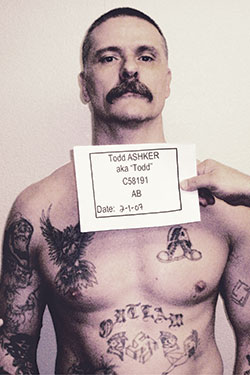
Todd Ashker, alleged member of the Aryan Brotherhood.   
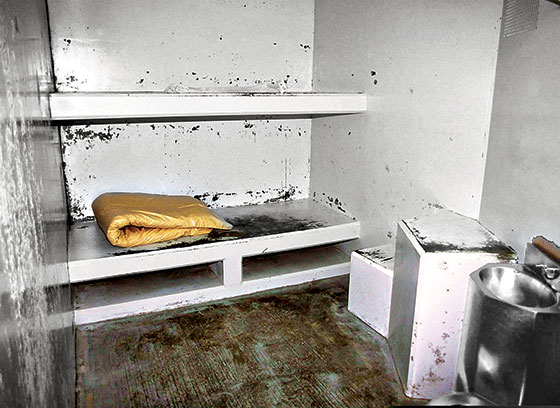
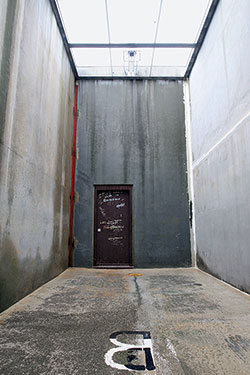
On July 8 of last year, a 50-year-old man named Todd Ashker, an inmate at California’s Pelican Bay State Prison, began a hunger strike. He had compiled a list of demands, but the essential one was that the policy that dictated the terms of his imprisonment be abolished. Ashker was housed in Pelican Bay’s Security Housing Unit, the most restrictive prison unit in California and a place of extreme isolation. Convicts stay in their cells 23 hours a day and leave only to exercise in a concrete room, alone; their meals are fed into their cell through a slot. Other than an awareness that they are staring at the same blank wall as seven other men kept in their “pod,” they are completely alone. Ashker has been there since 1990; in his view, he has been subject to nearly a quarter-­century of continuous torture. “I have not had a normal face-to-face conversation with another human being in 23 years,” he told me recently, speaking from the other side of a thick plate of glass.

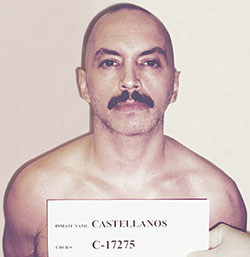
The sheer length of time inmates spend here has made Pelican Bay a novel experiment in social control. The California prison system allows any confirmed gang member to be kept in the SHU indefinitely, with a review of his status only every six years. (Prisoners who kill a guard or another inmate, by contrast, are given a five-year term in the SHU.) This policy has filled Pelican Bay with men considered the most influential and dangerous gang leaders in California. Ashker, allegedly a senior member of the Aryan Brotherhood, had for years shared a pod with Sitawa Jamaa, allegedly the minister of education of the Black Guerrilla Family, and Arturo Castellanos, allegedly an important leader of the Mexican Mafia. In the next pod over was Antonio Guillen, allegedly one of three “generals” of Nuestra Familia. According to the state, these men have spent much of their lives running rival, racially aligned criminal organizations dedicated, often, to killing one another. But over a period of years, through an elaborate and extremely patient series of conversations yelled across the pod and through the concrete walls of the exercise room, the four men had formed a political alliance. They had a shared interest in protesting the conditions of their confinement and, eventually, a shared strategy. They became collaborators.

The men planned for the hunger strike meticulously. They had staged two more modest strikes in 2011, and afterward some had staged private fasts in their cells to try to learn how long they might be able to go without food. The four men had spent the spring putting on weight. Ashker had calculated how much water he needed to drink to keep his electrolytes ­balanced, his heart pumping: 240 ounces a day. In June, the men sent letters to an activist group detailing their grievances, explaining when the strike would begin, and asking other prisoners to join them. In letters to families and friends, they spread the word. Corrections officers throughout the state heard the news; on July 2, a few senior officials visited from Sacramento to meet with the prisoners and measure their intent. They left ­convinced the men were serious. Then, a few days later, the prisoners stopped eating.

The severity of his isolation meant that as the strike began, Ashker had little idea of what effect it was having or how many other prisoners had decided to join him. It turned out to be the largest coordinated hunger strike in American history. On the first day, 30,000 prisoners across the state refused their meals. Three days in, more than 11,000 still had not eaten. “We had expected hundreds, even thousands,” says Dr. Ricki Barnett, a senior official in the state’s correctional health-care system. “We did not expect tens of thousands.”

From the beginning, even the most basic matters about the strike—what Ashker and the others were after, why so many people joined them, what the strike ­demonstrated—were opaque, and profoundly disputed. To the prisoners and their supporters, this was a protest against barbaric treatment, and the SHU was both an outrage in itself and a symbol of the arbitrariness and brutality of the prison system across the nation. The strike’s leaders had challenged the SHU’s constitutionality in court, arguing that the limits it placed on social interaction violated the Eighth ­Amendment’s prohibition on cruel and unusual punishment, and they had watched closely as a few other states, some pressured by prisoners and others mandated by judges, had de-emphasized solitary confinement. They believed they were part of a human-rights movement. But the prison officials saw something far simpler at work: a tactical maneuver by the gangs, acting in collusion, to end a system that had made it much more difficult for them to operate as they pleased.

A cell in the Pelican Bay SHU.  
No one had any idea how long the strike would last. For an action like this to have any effect, the four prisoners believed, it needed to be open-ended—the risk needed to mount that they might die on the prison’s watch. Ashker had studied the story of Bobby Sands, the IRA hunger striker who had lasted 66 days and whose death was horrible: He had gone blind, had begun to bleed from bedsores, had lost his mental capacities. The prison health department had done its own research and distributed a medical notice to all state inmates: Those without other health conditions can in most cases expect to live at least several weeks on a hunger strike. This was a tentative statement, though. Hunger strikes are rare enough that there is no good data, and the doctors had been reading up on histories of Civil War internment camps.

Jamaa thought his fellow inmates might need some concrete encouragement. His private fast the previous fall had lasted 33 days, and he believed he could have gone longer. Soon after last summer’s strike began, the four leaders were moved from the SHU to a unit called Administrative Segregation, and Jamaa, entering the unit, started to holler, “Forty days and 40 nights! Forty days and 40 nights!” If prisoners can be counted upon to know any literature, it is the literature of suffering that in the Bible precedes redemption. Jamaa had chosen his slogan with intent: They were Moses in the desert. At night, Jamaa would drop on his knees, put his mouth to the crack between the door and the floor, and yell: “Forty days and 40 nights!” Soon, new hunger strikers arriving in AdSeg were shouting the slogan as they were hustled in. It was then that Jamaa began to believe their movement had some possibility, some momentum.

At first, the fasting prisoners at Pelican Bay were lethargic. Then, after about a week, the nurses found them suddenly chatty and energized. “There were these pockets of brilliant clarity,” says Bill Woods, the chief nurse at the prison. “There is a certain point where your body equalizes out. It has this mechanism to survive.” In their temporary home at AdSeg, the hunger strikers exercised outdoors in individual metal cages, which for some prisoners provided their first view of the horizon in decades. Frogs crawled into the cages; the prisoners could see small wildflowers in the grass. For the first time in years, the men could look into one another’s faces. Jamaa told his sister, 20 days in, that he thought they could last another 60 days, which terrified her. When lawyers asked how they were holding up, one of the prisoners replied, “Not too bad. I can feel the breeze.”

This didn’t last. By late July, the prisoners in AdSeg were cold all the time. Ashker developed a constant pain underneath his collarbone. He started to notice symptoms of claustrophobia—tightness, panic—which in all his time in isolation he had never suffered before. Ashker has a thick chest, and he was convinced that the pain was his body consuming itself, hunting for nutrients. “I could feel the muscle flowing off my body,” he told me.

Over time, the Corrections Department emptied most of AdSeg, transporting dozens of hunger strikers to the state prison at Sacramento, closer to major hospitals. Ashker and his three collaborators were considered too influential and dangerous to transport, and so they were left behind—four prisoners alone, spaced out in an ­otherwise empty corridor of cells as long as a city block. On the weekends, they met with attorneys, and they learned that though the hunger strike had greatly diminished, a hundred prisoners around the state were still refusing food. At night, sometimes, they would try to strategize, shouting at one another underneath their doors, but often they found they were too weak to make themselves heard, and so they would return to their bunks and cover themselves with blankets to conserve energy. It was in this manner that the leaders of the California prison hunger strike approached the end of a summer spent without food, in the same way that they had spent much of their adult lives: in tense, anticipatory solitude.

Picture yourself in a car heading north from San Francisco. Six hours after you leave that spotless city—after you pass the blissful yuppie towns of California wine country, and then the redwoods and hippie outposts of Mendocino and Humboldt, and then two hours of vacant, foggy coast north of Eureka—you arrive in Crescent City, 13 miles from the Oregon border. Physically, culturally, Pelican Bay is as remote from the rest of California as the state’s borders permit. Plaques in the motels warn visitors of the danger of tsunamis. Topographically speaking, the place is a fortress of isolation: Alaska-like, rocky and vertical and misty. It is an amazing place to put a prison.

An exercise yard in the Pelican Bay SHU.  
It is also an amazing prison. Pelican Bay opened in 1989 in response not just to the escalation of crime during the 1980s but to the particular shape that crime had taken. In California, where the inmate population had quadrupled in a decade, prison gangs had been strengthened by the sheer number of people moving through the system. What were at first temporary self-defense cadres became more permanent, and powerful, until they grew into umbrella groups of street gangs. In 1989, a member of the Black Guerrilla Family, a gang formed in prison, shot and killed Huey Newton, the founder of the Black Panther Party, on a West Oakland street. Within a few years, senior leaders of the Mexican Mafia, another prison gang, were asserting control over all of the Hispanic street crews in Southern California: The Mafia taxed street drug sales in return for protecting affiliated gang members who entered the system. Throughout the ’80s, the state had been building ever-more-restrictive units in an effort to quarantine the most influential gang leaders, but none had been effective enough. Pelican Bay was meant to solve that problem.
“From the time it opened, Pelican Bay was seen as having some historical significance,” says Craig Haney, a psychology professor at the University of California, Santa Cruz, who studies prisons. “Many of us saw Pelican Bay as perhaps the wave of the future, and that’s what it became.”


The Pelican Bay SHU, which houses 1,100 prisoners in almost as many cells, takes up half of the prison and operates under policies designed less to punish prisoners than to isolate them from other members of their gangs. Arriving inmates are often told that there are only three ways to leave the SHU: “Parole, snitch, or die.” But parole boards routinely inform SHU inmates that they will not be granted parole until they agree to leave their gang and explain its operations, a formal process known as debriefing. Doing so would send them back to a regular prison, where they would likely become gang targets. So many SHU inmates believe they only really have one option. “A while back, I realized I was probably going to spend the rest of my life in the SHU,” Ashker told me.

Haney visited Pelican Bay three years after it opened and surveyed 100 SHU inmates as an expert consultant to a prisoner lawsuit challenging the unit’s constitutionality. On his first day at the prison, the psychologist saw such florid psychosis that he called the attorneys and urged them to emphasize the confinement of the mentally ill. Once Haney began his interviews, he found serious psychological disturbances in nearly every prisoner. More than 70 percent exhibited symptoms of “impending nervous breakdown”; more than 40 percent suffered from hallucinations; 27 percent had suicidal thoughts. Haney noticed something subtler, too: A pervasive asociality, a distancing. More than three-quarters of the prisoners exhibited symptoms of social withdrawal. Even longtime prisoners reported feeling a profound loss of control when they entered the SHU, in part because they weren’t sure whether they’d ever be released. Many reported waking up with a rolling, nonspecific anxiety. The SHU “hovers on the edge of what is humanly tolerable,” wrote Thelton Henderson, the federal judge who decided the prisoner lawsuit in 1995. You can sense a vast uncertainty in that first word, hovers. The judge ordered major reforms—the seriously mentally ill, for instance, could no longer be housed there—but he let the SHU stand.

That was more than 18 years ago. Some of the same prisoners are still there. Haney returned to Pelican Bay last year, for a ­follow-up study, and found that these ­patterns of self-isolation had deepened. Many inmates had discouraged family members from visiting, and some seemed to consider all social interactions a nuisance. “They have systematically extinguished all of the social skills they need to survive,” Haney says. Those inmates who do comparatively well tend to replace the social networks outside the SHU with those within it—which, in a society composed of alleged gang members, often means gangs. “In isolation,” he says, “gang activity is the only contact that is possible; it is the only loyalty that is possible; it is the only connection that is possible.”

This is one way of understanding the paradox of American mass incarceration: There are 2.4 million prisoners across the country, four times more than in 1980, and Supermax facilities managed similar to Pelican Bay in at least 44 states, and though this corresponds with a dramatic drop in street crime, the system of prison gangs has flourished. In Pelican Bay, there are significantly fewer murders in the prison than there were a decade ago, but the gangs’ power has hardly softened: Prosecutors allege that current SHU inmates manage the affairs of street gangs in Los Angeles and direct negotiations with Mexican cartels. Elsewhere, the situation is even less stable. Baltimore’s city jail had, by 2012, fallen so ­completely under the control of a prison gang that, according to prosecutors, its leader not only maintained a network of guards who smuggled in drugs and weapons, but also impregnated four guards while behind bars. Last year in Colorado, an alleged member of a white prison gang, who had served several years in SHU-like isolation, assassinated the executive director of the state’s prison system on the official’s own doorstep.

Arturo Castellanos   
These are signs that the system either isn’t working well enough or isn’t working at all. Over the summer, when international television broadcasts began to pick up the news of the hunger strike and demonstrations were staged in Berkeley and Los Angeles and celebrities like Jay Leno and Bonnie Raitt wrote letters of support, Ashker and the others began to talk more broadly about what was possible. “A worldwide movement against solitary confinement,” Ashker explained. This was rhetoric, but sometimes the medium is more important than the message. The fact of the hunger strike—that men who had spent decades in as restrictive a prison as has been devised had convinced a quarter of the state’s prison population to starve itself—did not necessarily prove that their conditions amounted to torture. But it did suggest something else: that perhaps human isolation of the kind that Pelican Bay was built to achieve was impossible. Every hunger strike is a form of Roman advertising, a demand to be recognized: I am still here. The leaders of the Pelican Bay hunger strike, conscious of it or not, were making a second statement, too: Look at what we can do. 

In 1987, Ashker killed another white inmate at New Folsom prison, entering the man’s cell and stabbing him 26 times. Prosecutors were convinced the murder had been an Aryan Brotherhood hit, ordered because the victim had refused to cut the gang in on his methamphetamine deals. When the case came to trial, Ashker persuaded his court-appointed attorney, Philip Cozens, to call another inmate, an Aryan Brother named Paul Schneider, as a witness. Prison guards brought ­Schneider to the courthouse in leg irons, and he and Cozens spoke about the upcoming testimony in a side corridor. When the conversation had finished, and Cozens, back turned, was walking away, Schneider attacked the lawyer from behind, with an eight-inch blade he had hidden in his rectum. Cozens survived the stabbing. He believes that Ashker was behind the attack, that the knifing was an attempt to provoke a mistrial. But the judge refused to halt the case, and Cozens, now accompanied by a bodyguard, continued to serve as defense counsel. Ashker was convicted of second-degree murder. Schneider wound up testifying anyway. Ashker, he ­reportedly told the jury, was “a good white dude.”

Ashker got his first swastika tattoo when he was 19, a seventh-grade dropout in prison for burglary. He says he was motivated partly by white pride and partly by the sheer juvenile thrill of doing something outrageous. He describes himself then as “a rebel at heart.” This identity exchange happens often in prison: an inmate fuzzes out the specific parts of his personhood and instead inhabits the most threatening idea of his race. But that tattoo, and the others that followed, have a context, prison officials say: They advertised that he was affiliated with the Aryan Brotherhood, the white prison gang that was then warring with the Black Guerrilla Family. Ashker denies membership in a gang, but by 1990, three years after the murder, prison officials had pinpointed him as an Aryan Brother. Pelican Bay was built to house “the worst of the worst.” Ashker fit the bill. In he went.

Ashker is six feet tall, with a handlebar mustache and somewhat wild eyes, but his speech is direct and tautly compressed. Even his handwriting exhibits extreme control: His script is impeccable. “Eager to talk,” is how a fellow inmate describes him. “They don’t give us a lot of time,” Ashker said tensely when we met. Because Ashker has few connections to family (his mother has visited exactly once, in 1993) and because there are few whites in the Pelican Bay SHU, the pressures of isolation fell more heavily on him than on most other prisoners. “You do a lot of self-­reflection—you don’t have a choice,” he said. “If you think too much about the past, or the future, it gets real depressing. I look at it as, my life has been a waste of space.” He said this very matter-of-factly.

Prisoners in the SHU look for a salve against this abyss or a distraction from it. Often they nurse a grievance. “You get through the first four or five years on anger alone,” Jamaa told me. Ashker is, unexpectedly, an optimist, and he learned to channel his anger through the law. Shortly after moving to the SHU, he was shot in his right arm by a guard. Three weeks later, while under treatment by prison doctors, an artery in his arm burst and he nearly lost his hand. Ashker sued, and a federal jury awarded him $225,000. This opened his mind. He earned a paralegal’s certificate through a correspondence course. He has now sued the prison system 15 times—for forbidding SHU inmates from sending letters to inmates in other prisons, for refusing to let him buy thermal shirts to keep his injured arm warm. Once, after Ashker had represented himself at a legal hearing in San Francisco in which the judge ruled in his favor, he was driven back across the Golden Gate Bridge in chains. It was one of those perfect California days—sun shining everywhere. “There are these moments,” he told me, remembering, “when you realize that you are still alive.”

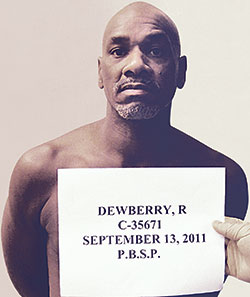
Sitawa Jamaa (known by officials as Ron Dewberry)  
In 2006, authorities at Pelican Bay reorganized the SHU. Until then, the prison had often rubber-stamped SHU inmates’ requests to be moved to another pod, meaning that members of the same gang were often housed together. The reorganization created a prison within a prison within the prison, moving the most influential leaders of each gang to a wing called the Short Corridor, isolating them from lieutenants who had been doing their bidding. Which is how, not by accident but by some warped genius of institutional design, four men with what officials believe to be vast influence over the entire state’s inmate population came to be housed within shouting distance.

The men were wary around one another at first. But they were aging, and perhaps growing more reflective, and they had nothing to do but talk with neighbors they couldn’t see; the experience of the SHU is monotony in motion. Guillen talked about his son, who had been arrested; Castellanos about his brother, who was also in the SHU. They had grievances in common, too: Their isolation in the Short Corridor seemed to confirm to them that they had been singled out. Ashker grew particularly close to an older, politically minded white inmate on the pod named Danny Troxell. Eventually, ­Troxell and Ashker became something of a revolutionary book club. They read Naomi Wolf, Howard Zinn, Michel Foucault. The ideas that stayed with Ashker the longest came from Zinn: that they were all members of a single prisoner class and that racial animosities had been leveraged by the guards to divide them. “One of their purposes,” he told me, “is to sever all your ties to humanity.”

By 2009, Ashker was corresponding with a sociologist at SUNY-Binghamton named Denis O’Hearn, and on O’Hearn’s suggestion, he read a copy of a book the professor had written, a biography of Bobby Sands. O’Hearn had, in his book, emphasized that even though Sands had died during his protest, he had achieved a great deal in winning political sympathy for his cause. In studying Sands, Ashker read of an ancient Irish tradition called the King’s ­Threshold, in which a commoner who believed that he had been wronged by a nobleman would fast on the aristocrat’s door to gain attention and public sympathy. Ashker found this incredibly moving. He and Troxell began to talk about Sands’s example and about the risks and possibilities a hunger strike might offer. Jamaa, a studied revolutionary who had been reading about Sands and other hunger ­strikers for two decades, listened to Ashker’s epiphany with jaded amusement. But he did listen. “Every time we’d start talking about it, we’d notice the pod going quiet—we knew people were listening,” Ashker told me.

What Ashker and Troxell represented was a kind of “split faction” within the Aryan Brotherhood, Lieutenant Jeremy Frisk explained in a ­conference room in Pelican Bay’s headquarters building earlier this winter. Projected onto a screen was a diagram of the Aryan Brotherhood’s hierarchy. The three men at the top of the diagram, who he said composed the gang’s “commission,” had been ambivalent about the project, in part because Ashker was not especially popular within the Brotherhood and in part because they saw little advantage. But Guillen, Castellanos, and Jamaa, Frisk said, each had more personal pull among their racial groups. The Black Guerrilla Family has long been the most political gang, and its members could be expected to participate. The Pelican Bay gang-investigations unit soon noticed coded messages discussing the wisdom of a hunger strike passed among members of the two Hispanic groups and to their allies on the outside. In these deliberations, Frisk believes, Castellanos and Guillen were decisive. “Castellanos is, if not the most influential Mexican Mafia member, right there at the top. Once you put his name on something with orders, the southern Hispanics are going to do it,” he said. “And Guillen is the street-regiment general for the NF.” One former Nuestra Familia member says that his gang’s participation had been all Guillen’s doing: “It was Chuco Guillen, 100 percent.”

To see the yard as the prison guards do is to become alert to a hidden social physics in which the real actors are not individuals but networks. There is never just a hotheaded punch to a guard’s cranium, never just an enterprising drug dealer caught smuggling in supply. Political protests are never just that; they are always a conversation, in thug semiotics, among gangs and between gangs and guards, each move deliberated over with great care by a council of elders isolated in solitary cells. Guards talk with respect about the ingenuity of gang leaders, and with exasperation at the ends to which it is put (“a waste of human talent,” Frisk says about the SHU). Prison officials believe that gangs control most of what goes on among the state’s inmate population. In the high-security prisons, “almost everything happening out there has some influence of gang activity,” says Michael Stainer, a deputy commissioner of the California prison system.

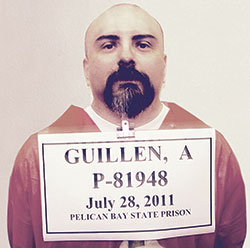
Antonio Guillen  
This means that most convicts sentenced to prison in California are also sentenced to a relationship with a gang. Each of the four major gangs in the system enjoy something close to a racial monopoly on membership: the Aryan Brotherhood for whites, the Black Guerrilla Family for African-Americans, the Mexican Mafia for Hispanics from the southern part of the state, and Nuestra Familia for Hispanics from the Central Valley and farther north. Prisons sometimes institute separate exercise schedules for each racial group, and it is very rare to find two cell mates in California from different ones. These practices have helped to reduce gang conflict but also, obviously, strengthen the gang system. ­Corrections officials at Pelican Bay will often switch, sometimes in midsentence, between referring to a “gang” and a “race” and a “group.”

This ambiguity has long been institutionalized in the “validation” process through which alleged gang members are committed to the SHU. Investigators must document three pieces of evidence confirming an inmate’s gang membership. Often this is a tattoo or the statement of an anonymous informant. But expressions of ­ethnic identity and radicalism—black nationalist writings, for instance—can also be counted as gang-related. Even social ­relationships between members of the same ethnic group can be outlawed: Some prisoners have been validated for speaking with a known gang member from their own racial group. The prison officials, Jamaa told me, “blur the line between what is a gang and what is a racial group. They have to, because they don’t understand where a gang ends and a racial group begins.”

Pelican Bay is a strange hybrid of a place: Systems of isolation and communication vie constantly for control. SHU prisoners learned the architecture of the toilet drains and have used them to shout messages to other pods. Members of Nuestra Familia developed a system of information exchange through the law library—ghostwriting messages in legal books and then sending coded messages in letters to family members explaining which page in which book fellow gang members ought to consult. In gang lore, Pelican Bay has assumed a mythic place: The Mexican Mafia calls it La Playa Azul (“the Blue Beach”), and the bylaws of Nuestra Familia stipulate that its core leaders must be housed there. When a court order temporarily increased mail monitoring at Pelican Bay last fall, Frisk heard from gang investigators in the Los Angeles area: The crews were saying that there were no instructions coming from headquarters, that they did not know what to do. But most of the time, despite extreme restrictions, gangs find a way to function. “All Aryan Brotherhood decisions, including membership and the decision to murder another member, are conducted by vote,” says Bryan Elrod, a former Aryan Brotherhood member who recently “debriefed” and was transferred out of Pelican Bay. “Sometimes it could take months to complete voting in SHU.” But the votes did happen.

The central mystery of this summer’s hunger strike lies in its scope. Why did 30,000 prisoners around the state join a protest called by four men in the SHU? Most prison officials contend that these prisoners were prodded by the gangs. “There was a high element of coercion going on,” Stainer says. Many of the inmates who went on strike lasted just three days—proof, another senior prison official told me, that many participants were only joining to get credit from their gang. Javier Zubiate, a former Nuestra Familia member, was asked during his debriefing interviews why he had joined the strike. He said that he had seen the public letter from Antonio Guillen, and “we took that as an order from a general.”

Even so, prison officials had documented only one example of explicit coercion: an inmate at Corcoran state prison who was beaten after he refused to help his cell mate participate. Beyond that, there was nothing violent. In Pelican Bay, things were quiet. “They had said that they wanted the protest to be peaceful, and by and large it was,” says Clark Ducart, the chief deputy warden. Which suggests that perhaps the protesting prisoners were motivated by something other than simply pressure and that the allegiance they feel to their gang is not only a matter of intimidation and racial supremacy.

At every stage in the criminal-justice system, its basic moral complexity recurs: What part of a criminal act is an individual’s responsibility alone, and what part is the consequence of his circumstances—of poverty or racial alienation? In Pelican Bay, the prisoner is treated not as an individual but as a soldier for the group to which he belongs. The crucial question the validation process has asked, for years, has not been “What has this man done?” but “To what does this man belong?” But there has been a self-fulfilling element to this approach: Treat prisoners as racial blocs and all social networks as if they are gangs, and for all of its essential violence and brutality, the gang will retain some of the warmth, the underlying human attachment, of the social network on which it is built. “To this day, I love some of those men,” Elrod told me earlier this month from the secure unit at Kern Valley State Prison where he is now housed to keep him safe from the revenge violence of his former brothers.

Once the Short Corridor Collective, as Ashker and his conspirators started to call themselves, had a hunger strike in mind, even ordinary grievances acquired weight. In 2011, the SHU was put on lockdown after a disturbance in the general population. “We hadn’t even done anything,” Ashker told me. “I said, ‘Hey, this is just gonna be the norm. Everything that happens, they’re gonna come back on us.’ ” Among the Brotherhood, word circulated that Ashker and Troxell were “willing to go out in a box.” Jamaa wrote letters to prisoners-rights groups; if the Collective was serious, they needed some support from outside. That summer, the Collective staged their first two brief hunger strikes, which resulted in minor victories, like getting a pull-up bar and a handball in the exercise room. Even here, though, gang activity and political activity were hard to separate: Elrod says that when he and Ashker were briefly moved into AdSeg together, they took the chance to discuss Aryan Brotherhood business.

The next year, the Collective published a joint letter calling for the cessation of all hostilities among racial groups in prison. Jamaa had written the original draft and read it out to the others on the cell block, who each helped to edit it. To the four men in the Collective, the document felt like a great accomplishment, an end to the interracial prison wars in which they had spent their adult lives. They had some hope that the truce could eventually extend to the streets. “This is an historical document,” Jamaa said. “We are a prisoner class now.”
They asked the Corrections Department to post the letter in each of their facilities, and they imagined videos broadcast in prisons around the state in which they urged inmates to cooperate rather than to fight one another. The officials refused and issued Castellanos a rules violation when he discussed it with his family. The men in the Collective took it hard. Soon those same family and neighborhood networks that prison officials believe are often used to convey gang commands out to the street were carrying news of a coming hunger strike, and inside the Short Corridor the inmates were putting on weight in anticipation.

It felt freezing in AdSeg, all the time. The four remaining prisoners were convinced that the guards were blasting in cold air, trying to freeze them into ­submission. But each time the prison doctor, Donna Jacobsen, visited the AdSeg, she checked the thermometer, and it always read normal. Their bodies, she thought, must simply have lost the ability to regulate temperature.

Negotiations were static. The prisoners were demanding face-to-face meetings with top state correctional officials; these were refused. But the medical threat was escalating. Jacobsen, a former HIV physician from Miami, was focused less on the prisoners’ steady deterioration than on what might happen to them once they started to eat again. “Being on hunger strike isn’t the riskiest part; it’s the refeeding that can be incredibly dangerous,” Jacobsen says. The longer the prisoners went without nutrients, the more their electrochemical systems slipped out of balance. Refeeding “can basically stop your heart if you don’t have the right levels.” Her staff had offered vitamin supplements to the men to try to stabilize their electrolytes. After some initial resistance, they were accepted. But there was a paradoxical effect: “The vitamins rejuvenated us,” Jamaa told me. When a low-ranking official from Sacramento came up to meet with the prisoners, Jamaa rebuffed him. “I said, ‘I’m willing to die right now.’ ”

Each weekend, a veteran Oakland activist lawyer named Anne Butterfield Weills made the long drive up to Crescent City to meet with the prisoners. “I literally saw them shrink,” Weills says. She received a call from strikers who had been transported down to Sacramento: Did Ashker, Jamaa, Castellanos, and Guillen want them to continue to strike? What should they do? Newspaper and television stations were reporting a macabre daily watch—how many men were still on strike, how long had they each gone. One hunger striker had died already, though the coroner would later rule that he had strangled himself. There were still 69 men who had not eaten at all in more than 40 days, and many of them had written letters saying they would not cave. Weills was spending some of her time at Pelican Bay working on advance medical directives.

Then the standoff ended. On the 43rd day of the strike, Judge Henderson (the same judge who had, nearly two decades earlier, ordered reforms to the SHU) issued an order giving the state permission to force-feed prisoners who were at “near-term risk of death or acute bodily injury.” The order also allowed the state to override prisoners’ Do Not Resuscitate orders, if it had a reason to believe they had been coerced. Health officials, worried about the escalating risks, had joined the Corrections Department’s petition for the order. “I was concerned that the 40 or 50 leftover people might die,” says Barnett, the senior official at the department.

The leaders of the strike “were blindsided,” Weills says. The protocols for force-­feeding, in place for a decade at the Guantánamo Bay prisons, are medically straightforward but still deeply invasive: A tube is inserted up a patient’s nose and down into his stomach, and restraints are used if the patient physically resists. Of the dozens of prisoners on strike, the leaders wondered, how many would go through with force-feeding? And would there be any power in resisting? “Our leverage was the threat of death,” Ashker told me. Now that was gone.

Until this point, the prisoners had thought of the guards—and, more broadly, the state—as their captors. But the state is also their warden and their protector: A prison is designed to separate convicts from society and prevent them from doing more harm, but also to shelter them and keep them alive. The judge’s order returned repeatedly to the problem of coercion. The specter of gang influence was so strong, Henderson’s ruling suggested, that the state could not trust that a prisoner’s advance medical directive had been made freely—that he had made his own decision about the terms under which he was willing to die. The strike leaders had thought that by volunteering to risk their own deaths they could compel the state to see them as individuals, and that in at least this one instance they could reassert freedom of control over their lives. But they had been wrong.

The men were still not eating, but they were debating how to proceed. Two prominent state legislators offered to hold a special hearing on conditions in the SHU. During the first hunger strikes, in 2011, Jamaa had been the hard-liner, but he is also the most politically attuned, and the promise of ongoing legislative scrutiny, something the prisoners had never managed to win, seemed to him a breakthrough. “That is a victory,” he told the others.

Eventually, somewhat reluctantly, they all agreed. On September 5, the 59th day of the hunger strike, the leaders of the Short Corridor Collective announced that they were “suspending” their action. The next day, Jacobsen met with each of the prisoners in their cells to explain the dangers of refeeding and the ideal way to manage it. Their sustenance once more in the hands of the state, they were gingerly, carefully, fed.
The end of the hunger strike was so deflating that it wasn’t until the second legislative hearing into SHU conditions was held, this month in Sacramento, that it began to seem plausible that Jamaa had been right, and that the hunger strikers had won something meaningful. At that hearing, even officials with the Corrections Department seemed to acknowledge that change to the SHU was inevitable. “We all agree that it is far too easy to get in and too hard to get out, and the stays in this environment have been far too long,” Martin Hoshino, an undersecretary of Corrections, testified. Hoshino and Stainer presented the Department of Corrections’ new validation process, which is meant to emphasize not associations but behavior. Tom Ammiano, the chair of the Assembly’s Committee on Public Safety, introduced a bill that would prohibit any prisoner from being kept in isolation indefinitely.

Prison policy is usually shaped out of public view, but the duration and visibility of the hunger strike has helped make the subject politically urgent. Last week, New York State agreed to extensive new restrictions on whom it could confine to its SHU. This week, in Washington, the Senate Judiciary Committee is holding a hearing titled “Reassessing Solitary Confinement.” Other states have also curtailed the use of isolation recently—Indiana, where change was compelled by a federal judge’s ruling, and Maine, Mississippi, and Colorado, which had faced pressure from prisoners’-rights groups. These changes are too few to constitute a total rejection of the practice. But for the first time, it has begun to seem plausible that the American attachment to this special kind of imprisonment is not a national peculiarity so much as a generational one, and that a 25-year experiment may be ending.

To Ashker, these changes are the subject of much attention and contemplation. But they are also very abstract. Since the hunger strike, he has been more isolated than ever. Before last year’s strike began, he was moved to a new pod, which had the effect of breaking up the Short Corridor Collective and separating him from Danny Troxell, his good friend. Troxell had given Ashker a small photograph of himself as a memento. When the guards found it, they took it away and gave Ashker a major rules violation for having secreted it. “They said it was gang-related,” he said bitterly when we spoke in December. “I mean, it’s a photograph.”

His television has been taken away from him as a consequence of the rules violation. For all of his legal endeavors and strategic planning, he has received only two social visits since 2007. He is the only white man in his new pod and is surrounded by strangers speaking Spanish. On some Sunday afternoons, he listens to a D.J. called Sista Soul on a public radio station that broadcasts from Humboldt County and plays recorded messages to the men in Pelican Bay sent in by family members, ex-girlfriends, female pen pals. A rare recent call for Ashker, from a woman whom he has never met: “This is a shout-out of love and admiration to Todd in the SHU from Julie in Western Australia. I hope hearing my voice brightens your day. Bye for now, my love.”

He has had trouble getting comfortable in his new cell. The problem is his mattress. It is too short, and his feet dangle off the end. It is also too thin. “As soon as I laid on it, it flattened out,” he told me. He tried shaking out the padding, smoothing it out with his palm. “It’s good for a minute, but then as time passes, it collapses again.” The padding is now permanently separated to the sides of his mattress, so that as he enters his sixth decade of life, he is sleeping on a thin plastic sleeve on a stone bench.

“I feel like exploding,” Ashker said.