Retiring Arizona Prison Watch...


This site was originally started in July 2009 as an independent endeavor to monitor conditions in Arizona's criminal justice system, as well as offer some critical analysis of the prison industrial complex from a prison abolitionist/anarchist's perspective. It was begun in the aftermath of the death of Marcia Powell, a 48 year old AZ state prisoner who was left in an outdoor cage in the desert sun for over four hours while on a 10-minute suicide watch. That was at ASPC-Perryville, in Goodyear, AZ, in May 2009.

Marcia, a seriously mentally ill woman with a meth habit sentenced to the minimum mandatory 27 months in prison for prostitution was already deemed by society as disposable. She was therefore easily ignored by numerous prison officers as she pleaded for water and relief from the sun for four hours. She was ultimately found collapsed in her own feces, with second degree burns on her body, her organs failing, and her body exceeding the 108 degrees the thermometer would record. 16 officers and staff were disciplined for her death, but no one was ever prosecuted for her homicide. Her story is here.

Marcia's death and this blog compelled me to work for the next 5 1/2 years to document and challenge the prison industrial complex in AZ, most specifically as manifested in the Arizona Department of Corrections. I corresponded with over 1,000 prisoners in that time, as well as many of their loved ones, offering all what resources I could find for fighting the AZ DOC themselves - most regarding their health or matters of personal safety.

I also began to work with the survivors of prison violence, as I often heard from the loved ones of the dead, and learned their stories. During that time I memorialized the Ghosts of Jan Brewer - state prisoners under her regime who were lost to neglect, suicide or violence - across the city's sidewalks in large chalk murals. Some of that art is here.

In November 2014 I left Phoenix abruptly to care for my family. By early 2015 I was no longer keeping up this blog site, save occasional posts about a young prisoner in solitary confinement in Arpaio's jail. I'm deeply grateful to the prisoners who educated, confided in, and encouraged me throughout the years I did this work. My life has been made all the more rich and meaningful by their engagement.

I've linked to some posts about advocating for state prisoner health and safety to the right, as well as other resources for families and friends.

until all are free -

MARGARET J PLEWS (June 1, 2015)
arizonaprisonwatch@gmail.com


INDIGENOUS ACTION MEDIA

INDIGENOUS ACTION MEDIA
ANTICOLONIAL zines, stickers, actions, power

Taala Hooghan Infoshop

Kinlani/Flagstaff Mutual AID

MASS LIBERATION AZ

MASS LIBERATION AZ
The group for direct action against the prison state!

Black Lives Matter PHOENIX METRO

Black Lives Matter PHOENIX METRO
(accept no substitutions)

BLACK PHX ORGANIZING COLLECTIVE

BLACK PEOPLE's JUSTICE FUND

PHOENIX: Trans Queer Pueblo

COVID Mutual AID PHOENIX

AZ Prison Watch BLOG POSTS:


Showing posts with label LGBT. Show all posts

Tuesday, June 10, 2014

AZ state prisoners and activists call for DOJ Investigation into rape and gang violence in AZ DOC.


QUEER PRISON WALLS
chalk art by Margie Diddams
Photography by Margaret Jean Plews
Phoenix City Hall (02/26/2103)


(EDITED to remove sensitive information on June 26, 2014) 


NOTE: This is my response to reading  Jan Brewer's May 1, 2014 letter to US Attorney General Eric Holder about Arizona's decision to refuse to comply with the Prison Rape Elimination Act. I actually finished and sent this on June 9, also posting it to the Daily Kos

I encourage all prisoners, former prisoners, and families of those presently in the custody of the AZ Department of Corrections to contact Attorney General Holder, as well, with your personal stories related to your safety or that of a loved one  in prison. Now is the time to strike - the feds need to be dragged into this by more than just me. They need to hear all of you calling them out to take some responsibility for neglecting this mess. It's not like this is the first time they have heard from me, anyway...

Please send me a copy of what you write so I can post it here, too.

----------------

chalk art on sidewalk: margaret jean plews
photograph: PJ Starr (phoenix 2011)
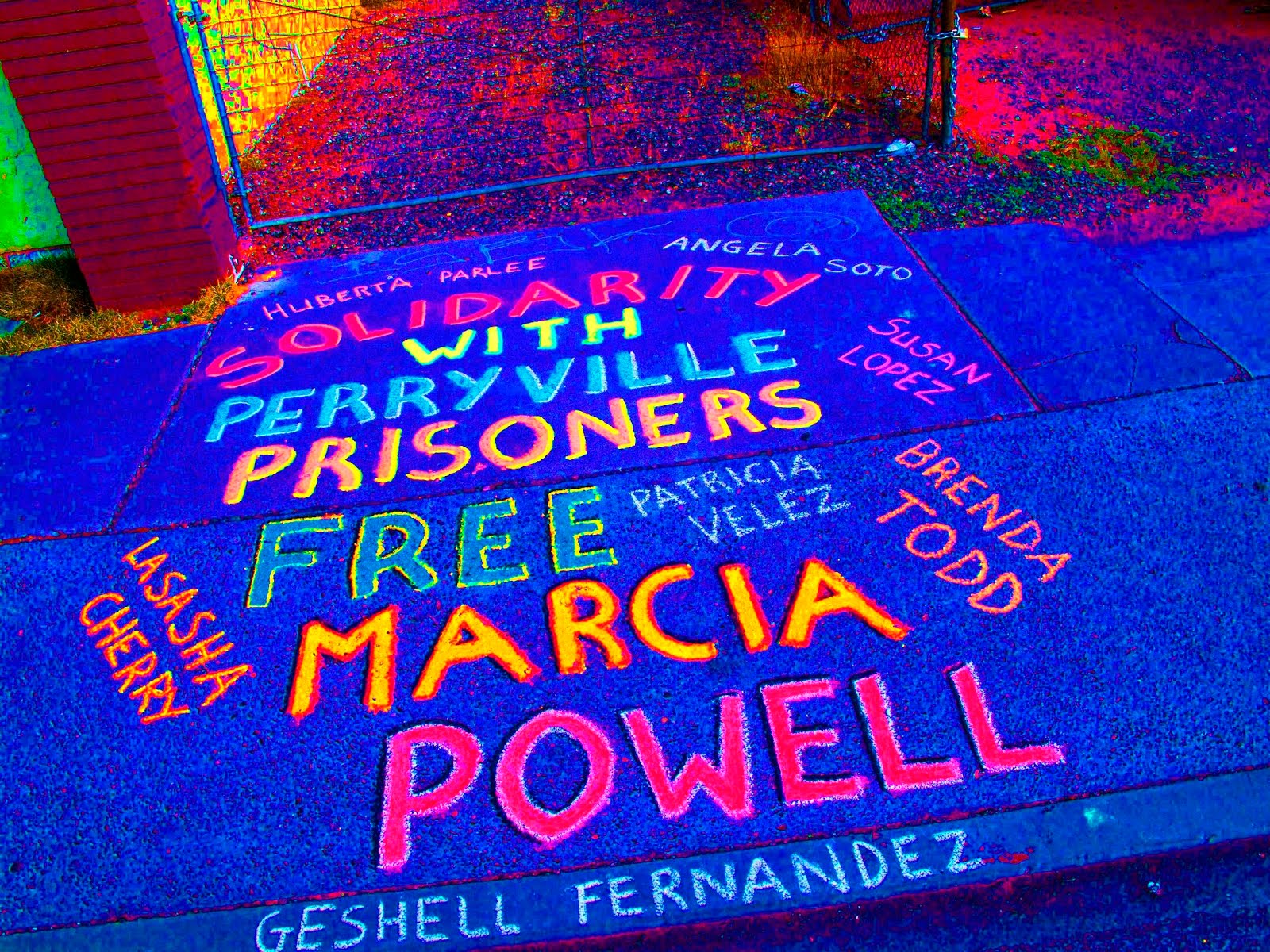

FreeMarciaPowellchalk3small.jpgMargaret Jean Plews
PO Box 20494
Phoenix, AZ 85036
480-580-6807


"Our strategy should be not only to confront empire, but to lay siege to it. To deprive it of oxygen. To shame it. To mock it. With our art, our music, our literature, our stubbornness, our joy, our brilliance, our sheer relentlessness, and our ability to tell our own stories..."


- Arundhati Roy

June 7, 2014

The Honorable Eric H. Holder, Jr.
Attorney General, US Department of Justice
950 Pennsylvania Avenue, NW
Washington, DC 20530-0001

Dear Attorney General Holder;

I am writing to provide a citizen’s rebuttal of Governor Jan Brewer’s statements of May 1, 2014 in her letter to you regarding the Prison Rape Elimination Act, which grossly misrepresented conditions in the state prison system during her reign. I am also intending this letter to serve as a formal request for a CRIPA Investigation into the pervasive patterns and practices at the Arizona Department of Corrections that place prisoners at exceptionally high risk for sexual victimization and complications from unresolved trauma, especially women, the mentally and otherwise-impaired, and LGBT prisoners.

I am emailing this letter with relevant links embedded, but will also be snail- mailing a copy to you with supporting documents (as well as some of my artwork, memorializing the ghosts of Jan Brewer and Chuck Ryan).

By way of introduction, I am the author/editor of the blog ARIZONAPRISONWATCH.ORG, which I began writing five years ago after the death of prisoner Marcia Powell revealed disturbing practices and attitudes at the Arizona Department of Corrections. My particular concern was the mentally ill women at ASPC-Perryville, at first. I recognized in Marcia’s life story the same elements of the numerous women I had come to know and love in my many years working with people who were trying to survive while homeless, addicted and severely mentally ill in Ann Arbor. I also identified with her - I myself am a recovering alcoholic and addict, and could have landed in prison under draconian drug war and repeat-offender sentencing  had I been caught at any number of things earlier in my life, especially if it was in Arizona (what but a “repeat offender” is an addict, anyway?). I also have bi-polar disorder and a bad attitude when it comes to authority, and could have easily been in Marcia’s cage that day myself.

If you are unfamiliar with the case, Marcia was doing 27 months for a $20 blow job she agreed to give an undercover Phoenix cop one fateful day, and died  in a cage in the Arizona sun in May of 2009, at ASPC-Perryville. That was after an extended “suicide watch” in the 107 degree heat, during which time a prisoner is supposed to be checked on every 10 minutes.  After ignoring Marcia’s pleas for relief for four hours (one guard walked away offering no aid knowing she had even defecated on herself) -  officers eventually noticed she had collapsed from the elements with second degree burns on her body and her organs failing; her core temperature at the hospital still exceeded the ability of thermometers to read it, which only went as high as 108 degrees. Not realizing she had a legal guardian and an adoptive mother, Ryan pulled the plug on her life support before the stroke of midnight - she died shortly thereafter.


 chalk art by margaret j plews                                          photo by PJ Starr

AZ DOC Central Office, Phoenix
(Thanksgiving 2011)

DOC officers never expected that Marcia Powell would die out there because they had just left another woman in that cage for 20 hours 3 days earlier, and she didn’t die. See, Marcia’s death was horrific, but it’s not really shocking that it happened - the only wonder was that the DOC got away with punishing prisoners in the heat that way for so long.

That was less than five months into Charles Ryan’s tenure as Interim Director at the Arizona Department of Corrections, but he had begun disassembling the more rehabilitative and empowering programs his predecessor had implemented and imposing new policies immediately upon taking office. A former DW of Ryan’s alleged to the AZ Attorney General that the change the new director made about how to house cellies resulted in at least two homicides within the first 18 months of his rise to power there.  But Ryan had moved up through the ranks under the more brutal directors whose bullying style of management he appears to have emulated, and thus played a large role for decades in cultivating the policies and ethos at the AZ DOC that are so deeply hostile towards prisoners who exercise their right to not be subjected to cruel and unusual punishment. That tendency to resolve issues with violence or the threat of it trickles down from admin to officers to prisoner, and eventually ignites the flames that can bring a prison to its knees.

The good governor talked about Arizona’s “long traditions” of protecting citizens in custody - wow, is she out of touch. She hasn’t read Prof. Mona Lynch’s “SUNBELT JUSTICE” yet, about the trailblazing role the state has played in implementing draconian sentencing and correctional practices over the past 3 decades - the increase in criminalization for politics and profit that the rest of the country has seen the folly of and begun to abandon.

Its actually because of this state’s long tradition of depriving prisoners both of their rights as well as the most basic tools they need in order to fight for them that the AZ DOC is in such shameful condition now. Arizona’s 1990 constitutional amendment excluding prisoners from the definition of crime victim (and related rights and resources), the Lewis v Casey decision in 1996 eliminating the right of prisoners to access a law library among other things, and the Clinton-era Prison Litigation Reform Act (heavily lobbied for by then DOC Director Terry Stewart) were collectively devastating.

I have volumes of letters that will lead you to both victims and perpetrators of countless civil rights abuses precisely because the grievance procedure on most yards is a sham and the DOC obstructs efforts by prisoners to file suit by creating obstacles - especially for illiterate, Spanish-speaking, and mentally ill or developmentally disabled prisoners. In fact, the DOC has NO POLICIES translated into Spanish, despite nearly 20% of their population being foreign nationals, mostly from Spanish-speaking countries. I’ve been recruiting people to do the translations myself, as this is not a concern of the DOC’s so long as no Spanish-speaking prisoners grieve the lack of Spanish-language policies.

This means that Spanish-speaking prisoners (and other non-English-speakers) apparently need to rely on the skills of untrained staff and fellow prisoners who happen to speak some dialect of Spanish when they need to speak to medical, for example, or appeal a disciplinary action, or grieve their housing assignment. Most just suffer their time in silence.

If prisoners could fight abuse and neglect more effectively themselves, the DOJ and ACLU wouldn’t have to do it for them, and you know it as well as I do, Mr Holder. So does the AZ DOC - they put an extraordinary amount of energy into preventing prisoners from learning to articulate their grievances and use persuasion, negotiation and civil law to effectively change their world. There’s a prisoner petition, of sorts, going around that expresses well the barriers they encounter on their way to the courts while trying to exhaust administrative remedies, and offers some proposed solutions, as I recall. It is worth a look by your people.

As a result of a disempowered prisoner population (and, some argue, extremely weak correctional officers unions in AZ), the state prisons are fire traps, and prisoners often complain they are in decaying facilities with mold growing freely in corners, rats and roaches competing for space with the people, feces and blood smeared on the wall in suicide watch cells, inoperable hot water heaters in the winter and non-existent air conditioning in the summer, and scarcely enough food in the sack-lunch “sedentary diets” given to those in detention, administrative segregation and maximum security to keep them from starving to death. More prisoners are fleeing the violence on the yards than are being punished for perpetrating it.

AZ DOC’s medical and psychiatric care is not just deplorable in its negligence, it’s outright abusive, and the DOC has as much to do with that as any of the other parties involved: Parsons v Ryan was filed before the system was even privatized, after all. When I started blogging on the prisons the only thing one could find about AZ DOC on the internet was pretty much what the state wanted you to see. Now you can easily Google “arizona prison health care” to see how much things got worse when Wexford and Corizon came in to feed off of the sick and dying; Director Ryan has lost control over the department’s squeaky clean public image, among other things. His own well-funded propaganda machine is failing him, as are all levels of management and administration, apparently.


 THE FIREHOUSE, Phoenix AZ
40-foot sidewalk mural memorializing the ghosts of jan brewer...


I met with director Ryan and his classification staff in December of 2013, along with Dianne Post from the NAACP here, the primary author of a lengthy letter to him about gay and trans prisoner safety based on my correspondents.  I don’t think he realized how much of what he and his people had to say was disturbing to the outside observer; some of the documents from that meeting - detailing how serious the need for safety is in the AZ DOC - are in the packet.

According to the DOC, 75% of detention cells are full of guys who are unacceptable to or just plain uncooperative with the racialized gangs running the yards - those are the prisoners I hear the most from. The guys pass my name and addy around the detention cells as they do the 805 dance from prison to prison, because I send them the info they need to fight the DOC - stuff like the Jailhouse Lawyers Handbook. It costs me a few hundred bucks a month in printing and postage to keep up with the need for assistance...but, some people spend their time and money on their gardens or pets or kids - I just happen to be a little eccentric about helping the underdog.  I think its a worthy investment, helping people help themselves.

Those prisoners filling the detention cells while fleeing the violence are either seeking Protective Custody (PC) or being punished for refusing their General Population (GP) housing assignments (with “refusal to house” tickets ) after being denied PC. The guys complaining about the assaults extortion and murders, in fact, are overwhelmingly being denied PC and maxed out (ie their good time and privileges are lost and their classification scores zoom up) on major disciplinary tickets for not doing anything to hurt anyone, while the ones behind the extortion, assaults and murders, drug trade and other evils are still free to dominate the prison yards and dictate the culture - often empowered by corrupt officers who want the gangs to help keep the grievances down on the yard, or to keep the assaults just between prisoners, or who just want to line their pockets to buy a new gun or truck.

I have read the Does v Stewart proposed settlement, by the way, and am well-familiarized with DOC policy - I can assure you that both the Does v Stewart agreement and the DO805 policy are routinely being blatantly violated by administrative staff at Central Office. I can say that with certainty after receiving hundreds of letters from prisoners and half as many more calls from family members over getting folks into safe housing since last winter. I have ample evidence the DOC is denying PC to almost ALL prisoners who seek it without the aid of an attorney or the very expensive assistance of Donna Hamm from Middle Ground Prison Reform.

(She’s done a lot of good work, don’t get me wrong - she just costs a pretty penny.)

Interestingly, Ms. Hamm, who charges a flat fee of $2500 to advocate for PC housing for a prisoner, claims a 85- 90% success rate for her clients, while about that same percentage of all PC requests each month are denied, according to the DOC, leaving hundreds of guys in detention each month awaiting the PC verdict. That alone should raise red flags that the DOC isn’t really using any real criteria when they decide who goes to PC and who goes back to the hole in the next GP yard to try again(or get killed), other than that prisoner’s or their family’s ability to litigate them.

And they don’t do the mental health checks they’re required to do on each guy who is turned down for PC to make sure he doesn’t kill himself out of terror. They can’t possibly meet that demand - Corizon isnt even meeting its minimum mental health care mandates.  Thus, I believe guys are still probably killing themselves in the wake of PC denials, like Rosario Rodriguez-Boroquez did in the fall of 2010. A rape victim in the hole on the same MAX unit in Florence followed in his footsteps a week later. That second prisoner might have been saved had the DOC debriefed affected prisoners, they way they do with staff after suicides, homicides and traumatic deaths of prisoners or staff; correctional “best practices” would suggest they should.

Over the course of the past 12 months I’ve corresponded with approximately 35 gay and transgender prisoners alone, some of whom the Navajo Nation’s Human Rights Commission and the NAACP of Maricopa County  have already contacted the DOJ about (and have heard nothing back). In the fall of 2013 a collective of concerned community members convened to study the data from my queer correspondents and draft a letter to Charles Ryan with concerns about the LGBT population being routinely denied PC by his staff when they seek it, even after reporting to the DOC that they had been sexually assaulted or exploited, extorted or beaten because of their sexual orientation or gender identity (the AZ DOC houses transgender women on GP yards in all-male prisons, FYI). In fact, right now there are several gay and transgender prisoners still in GP who have been trying to get into PC for up to and over a year now, unsuccessfully.

Most recently, one gay prisoner who I had intervened personally for to advocate that he receive PC was denied PC and subsequently raped by his cellie, only to be denied PC again and placed in another GP yard. He had initially sought PC because his crime was widely publicized and the media indicated that his male lover was an accomplice - he was  marked man on the yards, no matter what prison they put him in, and they knew it. That was not only deliberate indifference to his safety, I believe endangering that vulnerable prisoner -repeatedly -  was an act of malice and spite in retaliation for my criticisms of the DOC’s staff who make those decisions. And that, sir, is a federal crime, I believe, for a state agent to do. Mr Ryan cannot be trusted to hold those staff responsible for harming that victim, the only party to his rape - to my knowledge - who sits in a detention cell tonight. My correspondence with Director Ryan and his staff about that case is enclosed in the packet.

Even though the victim in the above case had to be taken to a hospital and rape kit was done, there’s no reason to think the perpetrator will actually be held responsible or that further rapes will be discouraged by how this one will be handled. According to the AZ DOC’s current PREA report as posted on their website, out of 54 alleged “inmate-on-inmate unwanted sexual acts” and 30 alleged “inmate-on-inmate abusive sexual contacts” (I think they mean RAPE!) reported to them in 2012, absolutely none could be substantiated by the DOC’s CIU. Either the entire DOC prisoner population lies about rape and it never really happens in our state, or the DOC has no sincere commitment to either preventing it or responding effectively to it when it occurs.

Why should anyone even report their sexual victimization to the DOC, I’m asked? They end up being labeled as a snitch and sitting in the hole for months on end seeking PC, while the perpetrator gets off scott free to rape again. It’s especially disturbing to prisoners when the perp is a gang leader or enforcer, too - which is too often the case, particularly in re: the exploitation and abuse of transgender prisoners. “PREA reporting” has become a sick joke at the AZ DOC - it only stigmatizes the victim, who too often gets no counseling, nor are they very often placed in protective custody or mental health programs beyond the term of the rape investigation, even though research shows that most prisoners are at exquisite risk for even further victimization and deterioration of their mental status once they are raped the first time.

In addition to the recent example of the prisoner who was deliberately placed at risk by DOC staff with a bone to pick with me, I know of one gay prisoner who was verbally abused expressly for being gay after he reported rape (along the lines of you deserved it you fucking fag), in an incident in which he ended up biting staff while being taken down when he refused to sit on the floor to take more of the abuse. The rape victim got an extra year and half added onto his sentence as a result, and had to beg his judge to tell the DOC to place him in PC before they finally relented and did so. I believe he was more traumatized and harmed (by way of being charged with assaulting the staff) by the DOC’s response to his rape report and request for PC than he was by the actual sexual assault on him in the first place.. He is more than willing to make a statement if you will interview him.

I’m also wondering if the DOC ever reported the suicide of Forrest Day as a potential PREA issue. She had reported to her sister before she died that she was being sexually pressured/propositioned by an officer which she found disturbing, but his identity wasn’t revealed to anyone before she was found hanging in her cell, so he couldn’t be investigated. It no doubt never would have been substantiated anyway - you know how it is, when it comes down to the word of a prisoner against a crooked cop: the bad guys in power always win. So, again, why bother reporting rape in Arizona’s DOC even if PREA was implemented, the prisoners want to know. What would be any different than it is now, in practice, even if the DOC did say they were on board with the feds? The culture is so misogynistic and transphobic that it will take not only re-training, but years of just cleaning house - all those good old boys of Chuck Ryan’s and Terry Stewart’s need to go in order to turn this Titanic around.

That isn’t about to happen if Jan Brewer  is left to her own devices here, though, because she has been unmoved by the needless tragic deaths, the abysmal medical care,  or the DOC’s brutal response to those trying to simply flee the violence - and its not like I haven’t been emailing her staff my blog posts all this time - they know, at least, even if she doesnt. No matter what new atrocity is perpetrated on prisoners at the AZ DOC, Jan stands by her man, and so is either completely fooled by him and sheltered from public opinion, or she is fully aware of all that I’ve told you about, and is flat out lying to you in that May letter. If that’s the case, I’d like to know why they’re so damned determined to keep the DOJ out of their prisons.

Either way, be it due to ignorance or complicity with evil, Jan Brewer has consistently failed to provide any leadership around protecting prisoners - not even the children. She says that Arizona is a “leader” in protecting our most vulnerable people, especially kids and the mentally ill. After all, everything she’s done to improve mental health care and child protection is going to be her legacy - which is truly sad, because she hasnt done much on those fronts short of the medicaid expansion, which was to save the hospitals from going under as much as it was for the good of the poor here.

I dont know if she recalls - or ever even knew - that the last kid to suicide at the Adobe Mountain Detention Center run by the AZ Department of Juvenile Corrections did so after some of the other kids relentlessly bullied him for being gay and mentally ill. It seems the staff didn’t know how to deal with either queer kids or serious mental illness. I hope they do now. Charles Flanagan who took over the AZDJC several years ago, has not invited nearly the scrutiny of his department by me that Ryan has, so he might be doing something right there - or at least not so horribly wrong as his former boss. I’ll be terribly disappointed if he advised the Governor not to comply with PREA as well, though.

What I’m saying here is that Jan Brewer is either deliberately whitewashing the prison picture here, or she just doesn’t know what she’s talking about when it comes to prison rape, plain and simple. I can verify myself that Chuck Ryan knows everything I’ve told you of and more because most of what was reported to me along those lines I passed on to him, personally. I have lots of emails documenting it all.

The problem is that Ryan doesn’t tell the truth about any of this, either - he even insists to the legislature that there’s NO SOLITARY CONFINEMENT practiced at the AZ DOC (that’s just semantics, but the legs accept his answer as evidence that the ACLU is hysterical and over-reacting) -  so you can’t count on him to give you an accurate assessment of whether or not the AZ DOC is doing its job when it comes to protecting prisoners from violence, exploitation,  and rape.

No, Mr. Holder, you really need to come talk to me and the families I work with- not just have the FBI spy on me and my buddies in black. Look at my files and analyze my data yourselves. Visit my correspondents. Chat with former employees like former Eyman DW Carl Toersbijns or former Perryville officer Gary Bullock, former ASPC-Lewis Lieutenant Chuck Bauer, former Corizon employee, Teresa Short, AZ State Representative Chad Campbell, who has called for Ryan’s resignation, or any number of other parties to this disaster who I could introduce you to so you can verify mine and the the prisoners’ accounts of prison conditions and the many assaults on their safety - including sexual assaults and exploitation -  in the AZ DOC.

While you’re at it, subpoena the records from the AZ Corrections and Peace Officers Association - they had thousands of DOC employees sign onto a letter of no confidence in Chuck Ryan to Jan Brewer not two years into his tenure. That letter alleged that, among other things:

“...There exists, within ADOC administration, a well-known pattern of obstructing the disclosure of hazards in time to prevent accidents, injury, illness, and deaths. Tragically, in these instances, danger is not "imminent" - it is past, and too late to respond. Employees are routinely ordered to falsify documents and when they proactively seek to report identified hazards, they face punishment and retaliation. Obtaining an accurate account of the range and extent of violations will be difficult from records alone. It is unlikely that ADOC will disclose information without well-planned intervention by authorities.”


These are strikingly similar to the allegations that prisoners make, which are often dismissed as  “unsubstantiated”. The Governor completely ignored the union’s letter, by the way, so its not the credibility of the source that's really the issue - it’s simply a critique she doesn’t want to hear.

In addition to the letters I get from current AZ DOC prisoners, I’ve reviewed hundreds of  death reports since the the start of the current administration. I call tell you that prisoners routinely die of both indifference and  outright abuse here, and Charles Ryan’s DOC sometimes uses their Criminal Investigations Unit to cover up homicides they didn’t feel like pursuing or listing for the feds as such.  Like PC and SP. The AZ DOC’s inspector general’s office didn’t even have the decency to tell PC's mother that his death was more likely than not a homicide, instead of a suicide. They just left her believing her child had taken his life. Fortunately, PC’s mom never bought it and had her own autopsy done - which revealed that there was plenty of evidence he was murdered the DOC never even bothered to look at...

(section edited out)

I dont know if the CIU is corrupt or just has an irresponsible ethos that has no regard for the survivors of victims of violence in their custody. Maybe they are all just lazy - though I suspect the Ryan administration calculated that they would be more liable to a mother whose child was murdered instead of one whose child committed suicide in custody, and decided that if she wasn’t going to sue over  a suicide, they better not tell her it was murder, or someone will start to dig...

(section edited out) 

In any case, the DOC can’t be trusted to investigate themselves and be forthright with their discoveries, and the ACLU is already busy with the health care and psychiatric concerns, including the abuse of solitary confinement for mentally ill prisoners. That’s why we need the feds in on this matter of prisoner safety and prison rape now. Charles Ryan’s Criminal Investigations Unit has no credibility with the prisoners, the staff, or the advocates who know what’s going on in there. Nor do his media and legislative liaisons - they outright lie to the public and elected officials about the heinous behavior of their employees and the corporate jackals who feed off the imprisoned population. Just ask the journalists who have been covering the DOC under Ryan’s tenure - like KPNX’s Wendy Halloran, who won an Emmy for pursuing the truth about the suicide of Tony Lester, or the AZ Republic’s Bob Ortega, who did a fantastic series on “Arizona’s Other Death Row” - that is, the mainstream prison population, which he noticed was dying by suicide, drug overdose, and homicide at unusually high rates after Ryan had been in charge for awhile.

I once had a contact at the DOJ’s Special Litigation Section - Aaron Zisser. I even sent him all the death records my mother bought from the AZ DOC for me to analyze. But I think Special Litigation abandoned AZ awhile ago, perhaps thinking the ACLU et al have it covered. Not hardly.  And Ryan knows no one will hold him accountable for prison rape if the feds don’t - just look at his annual reports. For the past two years in the Five-Year Plans, Director Ryan has managed to invisibilize rape victims in his custody - its not even an institutional goal to reduce the incidence of sexual assaults in the prisons anymore, much less a priority.

Do you understand where I’m coming from here, Mr Holder?

(section edited out)

By the way, Arizona’s sole Protection & Advocacy authority, the AZ Center for Disability Law, won’t help or visit or investigate abuse reports from SMI prisoners under any circumstances. It appears that they only joined Parsons v Ryan in name because they were coerced into doing so. Now, they are the only ones in this state with the authority to get into those prisons on demand to see disabled individuals reporting abuse, and yet they adamantly refuse to exercise it. Is that legal, for a P&A agency to flat out discriminate against an entire population of disabled people solely because the institution housing and abusing them is a prison or jail, instead of a school or a nursing home? If they refuse to exercise that authority, another agency should be identified that will do so, and should be funded to do so. That’s got to be unconstitutional.

Along those lines, I want to quote from a letter I received from the women’s prison just yesterday - this is from (a prisoner) on Death Row, in a building where other maximum security prisoners - like the mentally ill - are held as well. She (wrote) despite risking retaliation from the state because she is so troubled by what she’s hearing and is afraid the women who cry and plead all day and night are too mentally impaired, traumatized, and intimidated to know how to get help themselves via the grievance process and courts…

“They have watch cells below us and I’m very concerned about our mentally ill being pepper-sprayed and drug around naked by male guards and videoed by male guards over the simplest issue. They yell at the mentally ill, scare them. then when they don’t comply (usually strip out) they spray them. They are forced to strip out 3-4 times a day with male guards walking all over. I hear some of them crying “I don’t want to get naked”. I understand security, but not these measures on the mentally ill…”


That sounds like a violation of the agreement the DOC made with the AZDOC some 15 or so years ago to keep a sexual harassment/abuse CRIPA complaint from proceeding to trial, is it not? Let me remind you that I myself have a major mood disorder and PTSD - is this the kind of treatment I can expect as an American citizen in our women’s prisons, should I ever find myself there?

(She) also reports the male officers don’t announce themselves on Lumley. That comes as no surprise - as indicated by the good governor’s letter to you, the DOC doesn’t think it’s necessary for them to do so, even though they are citing women for sexual offenses if they accidentally expose themselves while changing, or toileting, or showering. You know as well as I that most women in prison - especially the severely mentally ill - are already traumatized. Best practices would not say that security demands the male guards come through without announcing themselves. Best practices in corrections now would look at trauma-informed care more closely than the security aspect of that  and say those women are being routinely retraumatized and violated by the AZ DOC’s policies and practices for no good penological reason. They are just not wanting to make sure female staff are available at all times for the women prisoners, though they are quite plentiful in the men’s prisons.

Well, I’ve covered a lot of ground, and there still so much more. I wish we could meet to discuss PREA and CRIPA matters further in person, but I know you have a lot on your hands already, so please have the appropriate staff contact me as soon as possible about this matter - I and the prisoners are requesting a DOJ CRIPA Investigation into these patterns and practices of violating prisoners civil rights, as well as the Governor’s decision to not bother with PREA mandates anymore. At the very least, you should call her out on that.

Thank you so much for reading this through, Mr Holder, if you’ve made it this far. I will be eagerly anticipating your reply. So will the prisoners and their loved ones.

Sincerely,

Margaret Jean Plews

Thursday, June 5, 2014

De-criminalize Queerness and HIV: A Roadmap for Change!


"QUEER PRISON WALLS"
art by Margie Diddams / Photography by Margaret Jean Plews
Phoenix, AZ February 2013


Over the course of the past 12 months or so, I've had intensive correspondence with a number of gay men and transgender women imprisoned in the AZ Department of Corrections. Of all the stuff I've read on the LGBT community and criminalization, the best stuff seems to come from the prison abolitionists, like Dean Spade. This PDF is worth reading if you're studying or planning to act on issues related to the criminalization of LGBT people and people living with HIV.

A Roadmap for Change: Federal Policy Recommendations for Addressing the Criminalization of LGBT People and People with HIV by Catherine Hanssens, Aisha C. Moodie-Mills, Andrea J. Ritchie, Dean Spade, and Urvashi Vaid

the following graphic from American Progress introduces the document well...


---------------

Infographic: Why Are So Many LGBT People and People Living with HIV Behind Bars?

The pervasive profiling, arrest, and incarceration of lesbian, gay, bisexual, and transgender, or LGBT, people and people living with HIV, or PLWH—especially those who are people of color—are not simply a response to higher rates of illicit behavior within those communities. The range of unequal laws and policies that dehumanize, victimize, and criminalize people because of their sexual orientation, gender identity, or HIV status perpetuates these high rates of contact with the criminal system. In fact, one study found that a startling 73 percent of LGBT people and PLWH have had run-ins with police in the past five years. 


Police, for example, often profile transgender women and use possession of condoms as evidence of prostitution-related offenses and grounds for arrest. Additionally, PLWH in 36 states can be charged with felonies for having consensual sex, biting, and spitting—even when there is no transmission of the virus. And LGBT youth are more likely to be arrested for status offenses—charges that relate to family rejection and hostile school climates, such as running away, sleeping outside, violating curfew laws, and truancy infractions—than criminal activity.

What’s more, LGBT people and PLWH often experience police misconduct such as false arrests and verbal, physical, and sexual abuse while in police custody. They also face harsh sentences, experience a lack of appropriate healthcare, and are sometimes placed in solitary confinement as a safeguard—although this isolation is often more punitive and stigmatizing than protective.

These cycles of criminalization and discriminatory treatment of LGBT people and PLWH often trigger a lifetime of economic and social instability. We can and must dismantle these cycles through federal policy measures that address abusive policing practices, improve conditions
for LGBT prisoners and immigrants in detention, decriminalize HIV, and prevent LGBT
youth from coming into contact with the system in the first place.

Learn more: A Roadmap for Change: Federal Policy Recommendations for Addressing the Criminalization of LGBT People and People with HIV by Catherine Hanssens, Aisha C. Moodie-Mills, Andrea J. Ritchie, Dean Spade, and Urvashi Vaid

Aisha C. Moodie-Mills is a Senior Fellow and Director of the FIRE Initiative at the Center for American Progress.

Friday, May 23, 2014

End the solitary confinement of transgender youth, Jane Doe.


REMINDER: There is a Mothers Against Solitary Confinement Rally today at the AZ Capitol (1700 W. Washington St, PHX) at 5pm - please come early if you can but come late if you have to - just come so you can organize with other family members affected by the prison industrial complex.

-----------------

 From Jane Doe to Connecticut Governor Malloy  (May 08, 2014)
(who announced the following day that Jane will be moved to a more appropriate setting ASAP.)


Dear Governor Malloy, I am writing you to let you know that today is my anniversary. I have been sitting in this prison for a month now and there is no plan to get me out. I am suffering in here. I’m having trouble sleeping and I’m not eating much. I cry in bed every night.

I can’t be myself in this place.

I feel forgotten and thrown away. As you probably know, these feeling are not new for me. This is the way my life has been going since I was a little kid. My lawyer says that Commissioner Katz is the only one who can fix this but when I wrote her a letter it didn’t help. She has given up on me. If you’re her boss you can do something, right? Everyone says I need to be somewhere where I can get help and Katz keeps telling everyone that she is working to get me out of here but I don’t believe her. I think this is just another one of her stories that isn’t true. I want to call her a liar but people tell me that I shouldn’t say that about someone important like her. All I know is that she has said a lot of things about me that aren’t true. She was on TV telling people I blinded someone and broke their jaw. That was a lie. She said that she never asked that I go to Manson. That was a lie. She told everyone that I should be going to that new girls program at Riverview. That was a lie. Now she is telling people she is trying to get me out of here but nothing is happening. I hear people talking and they are saying that I am going to be here till I’m 18. I am done with DCF. They just want to make up stuff about me so that everyone thinks I am some kind of wild animal. Is it Ok for them to do this? To just lie about me and throw me in prison and forget about me?

If I was in charge I wouldn’t let this happen. If you’re the Governor then you are in charge of everyone who works for the state. DCF is supposed to be helping me, right? If this is helping me then I’m all set with being helped. I would be a lot better off being on my own. It seems like you’re my last chance to get out of here. 


Don’t forget about me. I can’t take another month of this.

Jane Doe


-----from Mother Jones Magazine-----

"I can't take another month of this."

Mother Jones Magazine

| Fri May 23, 2014 6:00 AM EDT

There is a 16-year-old transgender girl in an adult prison in Connecticut right now. She isn't there to serve a sentence. There are no charges against her. Still, she has been there for more than six weeks, with no indication of when she might be released.

Until last week, the girl, whom I'll call Jane Doe because she is a juvenile, was in solitary confinement in the mental health unit where, according to a letter she wrote, she cried in bed every night. She heard adult inmates crying, screaming, and banging on the walls. A guard observed her day and night, even when she showered or used the toilet. When other inmates caught sight of her, they yelled and made fun of her.

"I feel forgotten and thrown away," she wrote to the governor of Connecticut from her solitary cell. "As you probably know, these feeling are not new for me. This is the way my life has been going since I was a little kid."


The state became involved in Jane Doe's life when she was five, according to her affidavit, because her father was incarcerated and her mom was using crack and heroin. She was born a boy; after she was placed in the care of her extended family, she said, one relative caught her playing with dolls and bashed her head into the wall. She said another relative raped her at age eight, as did others as she grew older. Doe would only allow herself to look like a girl in secret. Around age 11, a relative caught her in the bathroom wearing her dress and lipstick and slapped her, shouting, "You are a boy! What the fuck is wrong with you?"

"I feel forgotten and thrown away. As you probably know, these feelings are not new for me. This is the way my life has been going since I was a little kid."

At 12, the Connecticut Department of Children and Families (DCF) became her legal guardian. While in group homes, she says she was sexually assaulted by staffers, and at 15, she became a sex worker and was once locked up for weeks and forced to have sex with "customers" until she escaped. "I wanted to be a little kid again in my mother's arms and all I wanted was someone to tell me they loved me, that everything would be alright, and that I will never have to live the way I was again."

Here is how Jane Doe ended up in prison. On January 28, while living at a juvenile facility in Massachusetts—where she was serving a sentence for assault—she allegedly attacked a staff member, biting her, pulling her hair and kicking her in the head. This kind of behavior wasn't new for Doe. The director of the Connecticut Juvenile Training School, a correctional facility for boys, later testified in court that, since Doe was nine, police have been called 11 times while she was in state facilities. He said she sometimes smeared feces on herself. Another supervisor claimed Doe regularly "exhibited assaultive behaviors," targeting female staff and other juveniles.

According to Jane Doe's lawyer, Aaron Romano, the most recent incident was sparked when a male staffer at the Massachusetts facility put Doe in a bear hug restraint from behind. "This is a girl who has been sexually abused," Romano says. "She is inclined to interpret actions with that view." DCF declined to comment on the incident, but the female staff member Doe allegedly attacked did not press charges. The male staffer has since been dismissed.

In order to move Doe to an adult prison, DCF cited an obscure statute that allows doing so when it is in the "best interest" of the child. Initially, the state sought to place Doe in a men's prison, but her lawyers objected and she was sent to a women's facility. There, she was placed in solitary confinement because under federal law, juveniles cannot be detained "in any institution in which they have contact with adult inmates."

State officials have been well aware of Doe's situation: In February, DCF commissioner Joette Katz cited her case—incorrectly claiming that she had broken a staff member's jaw—when she asked the Connecticut legislature for funds to open a new girls' prison. She said it showed why high-security facility for juveniles was needed. The legislature appropriated $2.6 million, and the facility has since been opened. But Doe, officials say, is too dangerous to be placed in that facility.

Abby Anderson, executive director of the Connecticut Juvenile Justice Alliance, says Doe's incarceration is the result of a broken system of juvenile care. "We don't have a good sense of where our system has its strengths and weaknesses," she says. One problem, she says, is a lack of adequate mental health care: Government data shows that 52 percent of girls in DCF custody or on parole have trauma disorders, and 89 percent had more than one diagnosed psychological disorder. Anderson says the state also doesn't have enough mechanisms for detecting and preventing sexual abuse. "We need to make sure this system is shored up so this never happens again…If you have a 16 year old, you need to make her feel safe and put her in a place where she can trust people."

DCF declined to comment on the record about the case, but in a press release, the agency said, "There is no identified foster home that can reasonably be expected to safely care for this youth." Romano says people licensed to take foster children in Connecticut and elsewhere have contacted him, offering to take Doe in. He says he passed the information on to DCF, but they have refused the offers.

One month into her confinement, Doe wrote a letter to governor Dannel Malloy. "Is it Ok for them to do this?" she wrote. "If I was in charge I wouldn't let this happen.  If you're the Governor then you are in charge of everyone who works for the state…Don’t forget about me. I can’t take another month of this."

Days after writing the letter, she was transferred out of the prison's mental health unit to another building on prison grounds with access to private recreational space and educational services. But she is still on her own, with no contact with other inmates, and there is still no date for her release.

Tuesday, May 20, 2014

Protected and Served? LGBT people and people living with HIV on criminalization, cops, and prisons.

QUEER PRISON WALLS
chalk art by Margie Diddams
Photography by Margaret Jean Plews
Phoenix City Hall (02/26/2103)


From Lambda Legal:

Protected and Served?

Are government institutions properly protecting and serving LGBT people and people living with HIV? Lambda Legal conducted a national study of the experiences individuals have with police, courts, prisons and school security. A total of 2,376 people completed the survey, the results of which are reported below...

Introduction

"I was 14 years old when my adoptive sisters and I were in a severe accident. The damages and injuries were extensive. My older sister was asked who our parents were, and she told them the names of our two moms. The officer gave my sister a puzzled look and asked, 'Who is your father?' My sister responded with, 'We have lesbian parents.' The officer without hesitation told her, 'We don't recognize that in this state.' This incident only added to the horror of the terrible accident we were in. Our moms reported the incident, but nothing was done about it." —Michael, Menomonie, WI
"I was arrested and charged with prostitution at a local casino. While the case was subsequently dismissed without going to court, during my arrest, I was physically and verbally assaulted by the arresting officers and others. I was put in handcuffs so tight that my wrists swelled up and turned purple. My face was shoved into a wall while I was handcuffed. The officers threatened, mocked and demeaned me for being transsexual." —Natalie, Las Vegas, NV
As part of the Protected and Served? survey, Lambda Legal asked respondents to share their personal stories of mistreatment by police, in courts, in prisons and by school security toward LGBT and HIV-positive people. See other stories or contribute your own here.

Police officers are charged with serving and protecting the public—all of the public. Yet lesbian, gay, bisexual and transgender (LGBT) people and people living with HIV have often been given good reason to be wary of whether that responsibility includes them. Police have targeted LGBT people and the places they congregate and socialize, including certain bars and parks, for unwarranted searches, arrests and raids. Some police officers have also demonstrated prejudice and hostility based on actual or perceived sexual orientation, gender identity or HIV status.


In 2012, Lambda Legal—a national organization committed to achieving full recognition of the civil rights of LGBT people and people living with HIV through impact litigation, education and public policy work—conducted a national study exploring the issue of government misconduct by the police, courts, prisons and school security against LGBT people as well as people living with HIV in the United States. (Note that in our findings, one of the categories we use, based on self-definitions, is “transgender or gender-nonconforming [TGNC]”).

A total of 2,376 people completed the individual survey. Respondents were also given the opportunity to share their own accounts of their experiences with government misconduct and some of those stories are also incorporated into this report.

Among the survey respondents, 1682 (73% of those responding to this question) said they had face-to-face contact with the police within the past five years. Many LGBT people and people with HIV reported that they felt discriminated against when dealing with police department officers and personnel.

In recent years Lambda Legal has filed discrimination lawsuits against police on behalf of LGBT people who have experienced harassment and unfair treatment. Defendants in these cases have included:
  • Westchester County Police in New York for releasing sealed information—including names, photos, towns of residence, and original arrest charges—about more than a dozen men whose charges had been dropped, as part of "Operation Overexposed," a police sting targeting gay men.
  • the Atlanta Police Department for aggressively and illegally raiding a gay bar called the Atlanta Eagle. During the raid, police detained and searched the bar’s patrons, forced them to lie face-down on the floor, and subjected them to verbal abuse. Not a single patron was charged with any crime as a result of that raid.
  • the Johnson City Police Department (JCPD) in Tennessee for issuing a press release that included photos of 40 men arrested in a public sex sting. Lambda Legal reviewed hundreds of news releases issued by the JCPD and found that no other release about arrests included photos. Lambda Legal client, Kenneth Giles said he lost his job because of the publicity about his arrest.


What the Study Found

"I was called a faggot and beaten up by police officers right here in the nation’s capital, then charged with assaulting them and forced to plead guilty to being under the influence of my HIV meds." —Andrew, Washington, DC
Our survey responses included many aspects of interactions with police, which broadly can be described by the following two categories: 1) Misconduct and 2) Unsatisfactory Response.
Sometimes police officers themselves harass and assault LGBT people and people living with HIV. These serious forms of police misconduct are damaging and illegal. Police harassment and assault are destructive to the lives of victims, obviously, and they are also destructive to the prospect for the police of building trust within LGBT communities and people living with HIV.


Hostile attitudes

Many respondents reported that police officers’ attitudes toward them had been hostile. Among the 1682 respondents who reported having face-to-face contact with police in the past five years, the percentages who reported hostile attitudes from officers included:
  • 21% of all relevant survey respondents
  • 31% of respondents age 30 and under
  • 32% of respondents of color (including 26% of Native American, 27% of African American and 40% of Latina/o respondents)
  • 32% of TGNC respondents (30% of transgender)
  • 35% of low-income respondents
  • 38% of respondents of color under 30


Harassment and assault

Harassment and assault by police are far too common occurrences in LGBT and HIV-affected communities. More than one in eight respondents (14%) who had police contact in the past five years reported verbal harassment by police, while 3% reported sexual harassment and 2% reported physical assault.

People of color, low-income people, and people living with HIV reported harassment and assault by police more frequently than survey respondents as a whole. The percentage of respondents with police contact in the past five years who reported harassment or assault by police included:
Physically assaulted by police:
  • 2% of all respondents
  • 4% of respondents of color
  • 4% of TGNC respondents
  • 5% of low-income respondents
  • 6% of HIV-positive respondents
Sexually harassed by police:
  • 3% of all respondents
  • 5% of respondents of color
  • 5% of HIV-positive respondents
  • 7% of low-income respondents
  • 7% of TGNC respondents
Verbally assaulted by police:
  • 14% of all relevant respondents
  • 21% of relevant HIV-positive respondents
  • 22% of relevant TGNC respondents
  • 24% of relevant respondents of color
  • 25% of relevant low-income respondents


Immigration Checks and Physical Searches

Only 1% of survey respondents with police contact in the past five years who reported their race as white said that police asked them to prove their immigration status. In contrast, certain groups of respondents were more likely to be asked for proof of their immigration status, including:
  • 2% of all respondents with police contact in the past five years
  • 2% of TGNC respondents
  • 5% of Native American respondents
  • 6% of black respondents
  • 8% of Latina/o respondents
(A statistically insignificant number of respondents identified as immigrants).
Black and Latina/o respondents were also much more likely than LGBT or HIV-positive people of other races to be physically searched during their police contact within the past five years, including:
  • 10% of all respondents with police contact in the past five years
  • 18% of TGNC respondents
  • 21% of black respondents
  • 21% of Latina/o respondents
  • 22% of similar Native American respondents

False Accusation and False Arrest

It is important to note that our survey’s responses are self-reported incidents of false accusation and false arrest, and that those responses have not been verified by Lambda Legal. Still, these numbers indicate troubling disparities in police treatment of people who are LGBT and people with HIV according to race/ethnicity, income level and gender identity.
Those who say they were falsely accused during police contact within the past five years include:
  • 20% of all respondents with police contact in the past five years
  • 28% of respondents of color
  • 30% of low-income respondents
  • 34% of TGNC respondents
Those who say they were falsely arrested during police contact within the past five years include:
  • 4% of all respondents with police contact in the past five years
  • 8% of respondents of color
  • 8% of low-income respondents
  • 6% of TGNC respondents


Neglect of Police Misconduct Complaints

When LGBT and HIV-affected people experience police misconduct, many file complaints about their negative experiences, either with other police officers or police monitoring boards. However, among the 205 (out of 2,376 total) respondents who complained about police misconduct in the last five years, 71% said that their complaint was not fully addressed by those they reported it to.
Low-income and TGNC respondents reported higher levels of neglect of a police misconduct complaint: 84% of low-income complainants and 83% of TGNC complainants reported that at least one police misconduct complaint in the last five years was not fully addressed.


Unsatisfactory Police Response

Many respondents reported inadequate or indifferent responses by law enforcement officials to reports of property crimes and assaults. The rate of dissatisfaction was significantly higher when the person reporting the crime is low-income or a person of color. (Our survey respondents’ self-reported experiences with police are not the equivalent of an objective evaluation of the adequacy of police response to reported crimes).

Inadequate Response to Complaints of Physical Assault

Eleven percent of all survey respondents reported that they were a victim of physical assault (of all types, not just those related to their orientation, identity, or expression) in the last five years. TGNC people (35% of all TGNC respondents) and low-income people (44% of all low-income respondents) are much more likely to report having been the victim of physical assault.
Of the 238 respondents who experienced physical assault:
  • nearly two-thirds (62%) reported experiencing at least one incident in which police failed to fully address their complaints about physical assault.
  • HIV-positive respondents and transfeminine respondents reported having experienced police neglect of physical assault at higher rates: 73% of HIV-positive personal assault victims and 70% of transfeminine respondents say they experienced police neglect of their physical assault complaint, compared to 59% of HIV-negative physical assault victims and 60% percent of cisgender (non-TGNC) assault victims.


Inadequate Response to Reports of Property Crime

One-third of our survey respondents (33%) had been the victim of property crime in the previous five years. Of those 772 respondents, nearly half (49%) said they experienced at least one incident in which police failed to fully address their complaints about property crime.

Within this pool of 772 respondents, transgender and gender-nonconforming people (TGNC) and people of color were more likely than other respondents to report police indifference or lack of proper response to property crime. This included:
  • 58% of TGNC respondents
  • 59% of African-American respondents
  • 62% of Latina/o respondents
  • 70% of Native American respondents

Inadequate Response to Reports of Intimate Partner Violence (IPV)

More than one out of ten respondents (11%, or 251 respondents) had been the victim of IPV (or domestic violence) in the previous five years.
The percentages of certain respondent groups who experienced IPV are higher than the survey sample as a whole, including:
  • TGNC people (28%)
  • people of color (32%)
  • low-income people (42%)
  • and people under 30 (43%)
Of the 251 respondents who experienced IPV, 41% reported experiencing at least one incident in which police failed to fully address their complaints about IPV. Some respondents were even more likely to report experiencing police neglect of IPV than others. Of those who reported IPV to the police, an inadequate response was reported by:
  • 48% of African-American respondents
  • 49% of TGNC respondents (56% of transfeminine and 46% of transmasculine respondents)
  • 54% of HIV-positive respondents


Inadequate Response to Reports of Sexual Assault

More than one out of 20 respondents (6%, or 135) had been the victim of sexual assault in the previous five years. The percentages are higher for particular groups of respondents, including:
  • African American respondents (8.2%)
  • Latina/o respondents (8.9%)
  • TGNC respondents (15.5%)
  • Native Americans respondents (16%)
Of the 135 respondents who reported that they had been sexually assaulted, 39% experienced at least one incident in which police failed to fully address their complaint. Some groups were more likely to report police neglect of sexual assault complaints than others, including:
  • 45% of low-income respondents
  • 46% of disabled respondents
  • 52% of TGNC respondents
  • 53% of respondents of color
  • 60% of Native American respondents
  • 62% of Latina/o respondents
  • 65% of TGNC respondents of color
Overall, respondents in this survey reported much higher levels of police neglect than did respondents in a 2011 national survey by the Bureau of Justice Statistics on the general population (although the questions were not fully comparable), which found that 18% were not satisfied by the police response to a reported crime, disturbance, or suspicious activity.


Key Recommendations

Police departments should:
  • include sexual orientation, gender identity and expression, as well as HIV status, sex, race and ethnicity, in nondiscrimination policies, guidelines and resolutions. While our constitution commands equal treatment of people without regard to these characteristics, including an express prohibition increases the likelihood of compliance, and makes it easier to enforce.
  • ensure that Police Patrol Guides and similar guidelines explicitly include a commitment to equal and respectful treatment of people who are LGBT, people living with HIV, and people of all racial and ethnic backgrounds, including explicit procedures for the respectful treatment of transgender people. These guidelines should specifically explain that police officers will be held accountable for failing to comply. For examples, see the patrol guides and policy manuals of New York City, New Orleans and Los Angeles, all of which were adopted after intense, long-term community pressure.
  • adopt or amend policies prohibiting discriminatory practices, such as profiling based on race, ethnicity, HIV status, sex, sexual orientation, and gender identity and expression — practices that disproportionately affect people of color, low-income people, LGBT people, and gender non-conforming people.
  • hire and promote qualified police officers and leaders across all levels of the department who demonstrate the interpersonal skills necessary to get along with peers, instructors, supervisors, and others, and demonstrate that they are able to interact professionally, regardless of the social standing, ethnic background, culture, gender, gender identity or expression, sexual orientation, or religion of other people.
  • institute “early warning systems” to flag officers who have engaged in insensitive or abusive behavior and follow up with training, discipline or reassignment as necessary. When hiring police chiefs and related leadership positions, states and municipalities should ensure that final candidates are supportive of the rights of LGBT people and people living with HIV.
  • implement mandatory cultural competency training for employees at all levels of the department, with content specific to the duties of the personnel being trained. The training should address issues relevant to the LGBT community. These trainings should be led by non-police personnel and with participation and input of community members.
  • implement mandatory training about HIV for employees at all levels of the department, with content specific to the duties of the personnel being trained. The training should address issues like the need for confidentiality and accurate information about how HIV is transmitted. These trainings should be led by non-police personnel and with participation and input of community members.
  • incorporate nondiscrimination policies and disciplinary consequences for non-compliance into union contracts to ensure consistent implementation.
  • adopt a community-based complaint mechanism where victims of police misconduct and discrimination can report incidents in a safe, welcoming environment, with options for anonymous reporting (For example, the Civilian Complaint Review Board, an independent agency in charge of monitoring New York Police Department behavior). Adopt internal complaint mechanisms that ensure that those who report misconduct, including officers, are not retaliated against, and that any retaliation by officers or commanders against either community members or other officers is severely punished.
  • designate personnel or an advisory board to be liaisons with the LGBT and HIV-affected communities, whose mission includes improving communications and relationships with those communities, and increasing departmental awareness, training and knowledge of LGBT and HIV-related issues.
  • capture and track complaints alleging racial and other profiling based on bias with regard to sexual orientation or gender identity or expression. Data collected should include characteristics of the complainants (including but not limited to sexual orientation and gender identity or expression) as well as the outcome of investigations and any disciplinary actions taken. Regularly report on the number of complaints of misconduct based on sexual orientation or gender identity.
  • work with LGBT community advocates and anti-violence groups to maintain up-to-date training and to ensure that policies and procedures are successfully implemented.
All government agencies included in the Protected and Served? survey, including police departments, courts, prisons and schools, should adopt comprehensive non-discrimination policies that:
  • prohibit bias and discrimination based on sexual orientation, gender identity and expression and HIV status;
  • ensure that culturally competent services and treatment are provided to LGBT and HIV-positive detainees. Police, court, jail/prison and school staff (including but not limited to police officers, police clerks, attorneys, judges, guards, schools security guards, school-based police and school safety officers) should undergo significant cultural competency trainings about sexual orientation, gender identity and expression, and HIV status so they will be able to treat all members of the LGBT community in a respectful, nondiscriminatory manner. These trainings should have a particular focus on gender identity and expression cultural competency, to emphasize the importance of improving the treatment of TGNC people. Additionally, these trainings should address HIV confidentiality and transmission, to improve the treatment of HIV-positive people;
  • provide a transparent and accessible oversight process for reporting and redressing discrimination complaints, combined with clear and enforced disciplinary procedures;
  • include employment policies that can help improve the hiring and retention of LGBT employees as well as contribute to a more LGBT-friendly environment.
 -------------

PROTECTED AND SERVED?: Jails and Prisons

Introduction

As part of the Protected and Served? survey, Lambda Legal asked respondents to share their personal stories of mistreatment by police, in courts, in prisons and by school security toward LGBT and HIV-positive people. See other stories or contribute your own here.

Lambda Legal is a national organization committed to achieving full recognition of the civil rights of LGBT people and people living with HIV through impact litigation, education and public policy work.

In 2012, Lambda Legal conducted a national study, Protected and Served?, exploring the issue of government misconduct by the police, courts, jails/prisons and school security against lesbian, gay, bisexual and transgender (LGBT) people as well as people living with HIV in the United States. A total of 2,376 people completed the individual survey. Respondents were also given the opportunity to share their own accounts of their experiences with government misconduct and some of those stories are also incorporated into this report. (Note that in our findings, one of the categories we use, based on self-definitions, is “transgender or gender-nonconforming [TGNC]”).

Among the areas of government misconduct which Lambda Legal’s Protected and Served? survey sought to explore is the discrimination and misconduct experienced by LGBT or HIV-positive people incarcerated in jails and prisons.

Among the respondents in the Protected and Served? survey, 5% (or 120) reported that they had been incarcerated in the past five years. Lambda Legal’s survey did not make a distinction among different types of institutions nor the reasons for imprisonment, so these results almost certainly include responses from individuals who were held before trial as well as those imprisoned after being convicted of a crime.

While 5% of our respondents reported having been imprisoned in the previous five years, the following subgroups of survey respondents were significantly more likely to report having been incarcerated:
  • respondents with disabilities (9%) were nearly twice as likely to have been in jail or prison than respondents overall.
  • transgender and gender-nonconforming (TGNC) respondents (10%) and Latina/o (10%) respondents were also nearly twice more likely to have been in jail or prison than respondents overall.
  • African Americans (12%), Native Americans (13%), respondents living with HIV (11%) and low-income respondents (11%) were more than twice as likely to have been incarcerated than respondents overall.
  • TGNC respondents of color (20%) were four times more likely to have been incarcerated than survey respondents overall.

LGBT People and People With HIV Are Particularly Vulnerable to Mistreatment When Incarcerated

Prisons too often fail to meet general standards for fair and humane treatment, especially of prisoners who are LGBT and people living with HIV. According to the American Bar Association’s Standards on Treatment of Prisoners, correctional facilities “should protect prisoners from harm from other prisoners and staff,” “correctional authorities should respect the human rights and dignity of prisoners,” and “[n]o prisoner should be subjected to cruel, inhuman, or degrading treatment or conditions.” The standards include specific nondiscrimination provisions as to sexual orientation, gender identity and HIV-positive status.

But in many cases these standards are simply not upheld. LGBT people, particularly youths, who are detained and incarcerated are at high risk for physical abuse, psychological abuse, being denied medical care and other forms of discrimination from other prisoners as well as from guards and prison staff.

Transgender and gender-nonconforming people have faced particularly severe mistreatment by jails and prisons. As documented in joint testimony to Congress by several LGBT organizations: “Nearly all transgender inmates are placed in sex-segregated facilities based on their sex assigned at birth and not on their gender identity. Transgender women are frequently placed in men’s facilities, and transgender men are frequently placed in women’s facilities. When prison officials make these incongruous placements, inmates are singled-out for scrutiny, harassment, and abuse by other inmates and prison staff.” A 2011 study by the National Gay and Lesbian Task Force concluded, “In jail and prison, abuse and violence continues in situations where transgender and gender-nonconforming inmates often have no protection or escape.

Correctional staff are frequently cited as participating in harassment, violence, and sexual assault — a serious abuse of authority.” Transgender prisoners may also be subjected to abusive physical searches to examine their genitalia and may be left unclothed to be demeaned and put on display for guards and other staff.

To address the crisis of sexual abuse in prison, Congress unanimously passed the Prison Rape Elimination Act (PREA) in 2003. In 2013, standards written by the U.S. Department of Justice to implement PREA finally took effect. These standards apply to federal, state and local prisons and jails; states risk forfeiting federal funds for noncompliance. However, several LGBT organizations have noted that the standards fall short of the measures needed to protect the safety of rape survivors.


What the Study Found

Assault and Harassment

Survey respondents reported harassment and abuse by jail or prison staff. Of all respondents who spent time in jail or prison in the five years before the survey:
  • 7% reported sexual assault;
  • 12% reported physical assault (beat up, hit, attacked with a weapon);
  • 27% reported sexual harassment;
  • 57% reported verbal assault or harassment (shouted at, taunted, called names) by prison or jail staff.
Of the survey respondents who had spent time in jail or prison in the five years prior to the survey, respondents who were TGNC, had physical or mental disabilities, or were living with HIV were much more likely than respondents overall to report harassment and/or assault by jail or prison staff. Among TGNC respondents, people of color reported harassment and assault more often than TGNC respondents overall.
Experienced physical assault:
  • overall respondents: 12%
  • respondents with HIV: 18%
  • respondents with physical or mental disabilities (may include HIV): 21%
  • TGNC respondents: 22%
  • TGNC respondents of color: 28%
  • TGNC feminine respondents: 33%
Experienced sexualharassment:
  • overall respondents: 27%
  • TGNC respondents: 34%
  • TGNC respondents of color: 37%
  • low-income respondents: 38%
  • respondents with disabilities: 38%
  • respondents with physical or mental disabilities (may include HIV): 39%
  • transgender respondents: 44%
Experienced verbal assault:
  • overall respondents: 57%
  • respondents of color: 65%
  • TGNC respondents: 66%
  • respondents with physical or mental disabilities (may include HIV): 67%
  • respondents with HIV: 71%
Nearly one-third (30%) of survey respondents who experienced harassment or assault by jail or prison staff reported their negative experiences to other jail or prison staff or to a prison monitoring board. Only 2% of the respondents who reported misconduct felt that the staff or monitoring board fully addressed their complaint.


Improper Placement

Transgender prisoners face unique dangers, in no small part because most jails and prisons incarcerate people according to the sex assigned at birth as opposed to their gender identity. Transgender prisoners may also be subjected to abusive physical searches to examine their genitalia and may be left unclothed to be demeaned and put on display for guards and other staff.
  • one out of three (33%) Protected and Served? respondents who were in jail or prison in the last five years identified as transgender, genderqueer, gender-nonconforming, two-spirit, or “other” gender identity (abbreviated TGNC).
  • the majority (60%) of TGNC respondents who had been in jail or prison reported being placed in a single-gender section of that jail or prison that did not match their gender identity.
TGNC respondents with feminine identities reported being wrongly placed far more often than TGNC respondents with masculine identities:
  • 70% of TGNC-feminine respondents reported being wrongly placed.
  • 47% of TGNC-masculine respondents reported being wrongly placed.

Key Recommendations

Correctional departments and prisons specifically should:
  • respect the rights of TGNC people to identify their gender identity and be placed in facilities according to their self-identification. Jails and prisons should adopt policies in accordance with the Prison Rape Elimination Act (PREA) (and similar to those of the United Kingdom) in which the preference is to place individuals according to their gender identity, with exceptions made on a case-by-case basis at the preference of the individuals being held. The PREA standards state:
    “Decisions about where a transgender person, or a person with an intersex condition, is housed must be made on a case-by-case basis; they cannot be made solely on the basis of a person’s anatomy or gender assigned at birth. This means that, for example, every transgender woman must be assessed individually to determine whether she would be best housed with other women instead of in a men’s facility. An individual’s views regarding their personal safety must be seriously considered.
    “These decisions must be reassessed at least twice per year to consider changed circumstances such as incidents of abuse or changes in an individual’s appearance or medical treatment.
    “All transgender people and people with intersex conditions must be given the opportunity to shower separately from other inmates if they wish, regardless of where they are housed.”
  • prohibit the use of solitary confinement, which is harmful and meant as a severe punishment, as an option for routine placement of people who are LGBT or people with HIV.
    “Facilities too often respond to the problem of abuse by placing survivors and those most at risk in isolation. When prolonged, this isolation can amount to torture. The Standards restrict such uses of “protective custody” by requiring that all available alternatives be assessed before placing an inmate involuntarily in segregated housing. Alternatives might include relocating a perpetrator of abuse, providing heightened supervision, changing housing placement or cellmates, placement in a single-occupancy cell within the general population, or transfer from a men’s to a women’s facility or vice versa.
    “In cases where inmates must be placed in segregation or isolation, access to programs, education, and other opportunities must continue to the greatest extent possible. Moreover, segregation—when it must be used—should not last for longer than 30 days. Agencies must document the reasons for any restrictions on programs or other opportunities and any use of segregation beyond 30 days.”
  • eliminate policies and procedures that provide for differential treatment or enhanced disciplinary measures based solely on an inmate’s HIV-positive status.  Inmates should not, for instance, be excluded from particular jobs or refused placement into certain programs based on their HIV status.  Furthermore, it is inappropriate to subject any individual to more severe disciplinary or corrective measures, such as placement in administrative segregation or reassignment to a higher level of security, simply because that person is living with HIV.  The policies and procedures that require such differential treatment are based on inaccurate, outdated information about HIV and its transmission and/or misguided conceptions regarding the scientifically-based approach to preventing HIV transmission that is supported by medical professionals and public health officials.
  • follow PREA standards regarding searches, and train staff in conducting professional and respectful searches. PREA prohibits all cross-gender strip searches and cavity searches except in emergencies, or those conducted by a medical professional. Any cross-gender searches that occur must be documented. Transgender individuals should be allowed to make a choice at admission as to whether they will be searched by male or female officers for purposes of these requirements. No search or physical exam may be conducted when the only purpose is to determine the inmate’s genital status.
  • put measures in place to ensure that transgender people and people with HIV have access to all medically necessary health care. Transgender people and people with HIV have serious medical needs that must not be denied during their incarceration. For transgender people, possible medically necessary treatments include hormone therapy and transition-related care. Jails and prisons should adopt affirmative policies and procedures to ensure that transgender prisoners have access to evaluation by a doctor and any medically necessary treatments related to gender transition, including hormone treatment and surgeries. Jails and prisons should ensure that prisoners with HIV have uninterrupted access to the medication and the range of care they need.
  • implement transparent complaint review processes, so victims of misconduct have a form of recourse.
  • require correctional staff to undergo cultural competency trainings about sexual orientation, gender identity and expression and HIV so they will treat all people who are LGBT or who have HIV in a manner that respects their rights and needs in a nondiscriminatory manner. Training should include a particular focus cultural competency concerning gender identity and expression to address unfounded and incorrect assumptions about the needs of TGNC people and people with HIV.
All government agencies included in the Protected and Served? survey, including police departments, courts, prisons and schools, should adopt comprehensive non-discrimination policies that:
  • prohibit bias and discrimination based on sexual orientation, gender identity and expression and HIV status;
  • ensure that culturally competent services and treatment are provided to LGBT and HIV-positive detainees. Police, court, jail/prison and school staff (including but not limited to police officers, police clerks, attorneys, judges, guards, schools security guards, school-based police and school safety officers) should undergo significant cultural competency trainings about sexual orientation, gender identity and expression, and HIV status so they will be able to treat all members of the LGBT community in a respectful, nondiscriminatory manner. These trainings should have a particular focus on gender identity and expression cultural competency, to emphasize the importance of improving the treatment of TGNC people. Additionally, these trainings should address HIV confidentiality and transmission, to improve the treatment of HIV-positive people;
  • provide a transparent and accessible oversight process for reporting and redressing discrimination complaints, combined with clear and enforced disciplinary procedures;
  • include employment policies that can help improve the hiring and retention of LGBT employees as well as contribute to a more LGBT-friendly environment.


Further Discussion

Lambda Legal Fighting Discrimination in Jails and Prisons

Lambda Legal has been at the forefront of work to protect the rights of LGBT and HIV-positive people in prisons and jails. Recent cases include:
  • a 2011 win in the U.S. Court of Appeals for the Seventh Circuit, affirming a judgment for Lambda Legal’s clients in Fields v. Smith, a federal lawsuit on behalf of transgender women incarcerated in a men’s prison in Wisconsin. The suit challenged a law (with the hostile title “The Inmate Sex Change Prevention Act”) that barred medically necessary transition-related health care for transgender prisoners in state custody, in violation of the federal Constitution’s guarantee against cruel and unusual punishment.
  • In Melody Rose v. Steven M. Cahee, M.D., Fond du Lac Regional Clinic, S.C., and Agnesian Healthcare, Inc., a 2009 lawsuit, Lambda Legal sued the off-site healthcare providers for a Wisconsin correctional institution on behalf of inmate Melody Rose, who needed to have her gallbladder removed. When the defendant doctor to whom she was referred found out she was living with HIV, he refused to perform the procedure, stating in his notes that he was concerned about exposing the surgical team to HIV. The case was resolved to Ms. Rose’s satisfaction in 2010.
  • a 2012 friend-of-the-court brief in the U.S. Supreme Court on behalf of inmate Kim Millbrook, who was sexually assaulted twice by prison staff members at two different prisons. After the second attack, prison guards threatened to kill him if he told anyone about the assault. Lambda Legal argued that Millbrook had a valid claim to sue the U.S. government. In March 2013, the U.S. Supreme Court agreed, reversing the lower courts’ determination that the officials were immune from suit and remanding the case for further proceedings.


Isolating LGBT Prisoners and Prisoners With HIV

Because of the high risk for violence, many prisons have segregated LGBT prisoners by putting them in LGBT sections, “solitary confinement” or “protective custody,” which the PREA standards now disallow. Such segregation does not provide real protection and creates other forms of abuse by limiting access to privileges, stigmatizing prisoners, and causing psychological damage because of long-term isolation.

Until recently, some prisons had similarly sought to isolate prisoners with HIV into separate wings, or sometimes entirely separate facilities—often claiming that such action is needed to “protect” the rest of the prison population from alleged risk of infection. The U.S. Centers for Disease Control and Prevention has opposed segregation of HIV-positive prisoners as irrational and counterproductive. In 2013, after succesful litigation by the ACLU, South Carolina became the last of a series of states, mainly in the South, that abolished their policies of segregating HIV-positive prisoners from others.


Denial of Health Care

While Lambda Legal’s Protected and Served? survey did not ask about the denial of health care, transgender people and people with HIV are particularly vulnerable when it comes to accessing appropriate health care while in prison. A  2011 national survey by the National Gay and Lesbian Task Force of transgender people found that 12% of people who had been in jails or prisons reported denial of routine health care and 17% (and 30% of Black respondents) reported denial of hormones.

Prison authorities’ failure to understand the medical necessity of transition-related health care such as hormone therapy and surgeries has led to unnecessary suffering. As the National Center for Transgender Equality and the National Gay and Lesbian Task Force have noted, “denial of hormone treatment to transgender inmates … has serious health consequences. Interruptions in hormone therapy can be physically painful and damaging to a person’s physical and mental health, and the initiation of hormone therapy for those who need it is highly important.”
 --------------

Founded in 1973, Lambda Legal is the oldest and largest national legal organization whose mission is to achieve full recognition of the civil rights of lesbians, gay men, bisexuals, transgender people and those with HIV through impact litigation, education and public policy work.

As a nonprofit organization, we do not charge our clients for legal representation or advocacy, and we receive no government funding. We depend on contributions from supporters around the country.