Retiring Arizona Prison Watch...


This site was originally started in July 2009 as an independent endeavor to monitor conditions in Arizona's criminal justice system, as well as offer some critical analysis of the prison industrial complex from a prison abolitionist/anarchist's perspective. It was begun in the aftermath of the death of Marcia Powell, a 48 year old AZ state prisoner who was left in an outdoor cage in the desert sun for over four hours while on a 10-minute suicide watch. That was at ASPC-Perryville, in Goodyear, AZ, in May 2009.

Marcia, a seriously mentally ill woman with a meth habit sentenced to the minimum mandatory 27 months in prison for prostitution was already deemed by society as disposable. She was therefore easily ignored by numerous prison officers as she pleaded for water and relief from the sun for four hours. She was ultimately found collapsed in her own feces, with second degree burns on her body, her organs failing, and her body exceeding the 108 degrees the thermometer would record. 16 officers and staff were disciplined for her death, but no one was ever prosecuted for her homicide. Her story is here.

Marcia's death and this blog compelled me to work for the next 5 1/2 years to document and challenge the prison industrial complex in AZ, most specifically as manifested in the Arizona Department of Corrections. I corresponded with over 1,000 prisoners in that time, as well as many of their loved ones, offering all what resources I could find for fighting the AZ DOC themselves - most regarding their health or matters of personal safety.

I also began to work with the survivors of prison violence, as I often heard from the loved ones of the dead, and learned their stories. During that time I memorialized the Ghosts of Jan Brewer - state prisoners under her regime who were lost to neglect, suicide or violence - across the city's sidewalks in large chalk murals. Some of that art is here.

In November 2014 I left Phoenix abruptly to care for my family. By early 2015 I was no longer keeping up this blog site, save occasional posts about a young prisoner in solitary confinement in Arpaio's jail. I'm deeply grateful to the prisoners who educated, confided in, and encouraged me throughout the years I did this work. My life has been made all the more rich and meaningful by their engagement.

I've linked to some posts about advocating for state prisoner health and safety to the right, as well as other resources for families and friends.

until all are free -

MARGARET J PLEWS (June 1, 2015)
arizonaprisonwatch@gmail.com


INDIGENOUS ACTION MEDIA

INDIGENOUS ACTION MEDIA
ANTICOLONIAL zines, stickers, actions, power

Taala Hooghan Infoshop

Kinlani/Flagstaff Mutual AID

MASS LIBERATION AZ

MASS LIBERATION AZ
The group for direct action against the prison state!

Black Lives Matter PHOENIX METRO

Black Lives Matter PHOENIX METRO
(accept no substitutions)

BLACK PHX ORGANIZING COLLECTIVE

BLACK PEOPLE's JUSTICE FUND

PHOENIX: Trans Queer Pueblo

COVID Mutual AID PHOENIX

AZ Prison Watch BLOG POSTS:


Showing posts with label pelican bay. Show all posts

Sunday, March 2, 2014

Resistance from Solitary and Beyond: The Great California Prison Hunger Strike.

Incredible story of prisoner solidarity and resistance, from New York Magazine. There are postcards with artwork by some of the SHU collective members who staged this hunger strike at the Firehouse Gallery, 1015 N. 1st. Street, PHX for anyone interested in supporting them.

-----------------------------------

The Plot From Solitary

New York Magazine

Four alleged members of rival gangs launched a hunger strike 30,000 strong from the isolation of their Supermax cells. Was the prison system that corralled them not strong enough, or is solitary confinement an impossible idea?
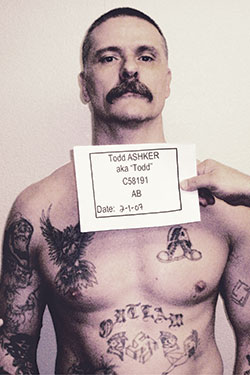
Todd Ashker, alleged member of the Aryan Brotherhood.   
On July 8 of last year, a 50-year-old man named Todd Ashker, an inmate at California’s Pelican Bay State Prison, began a hunger strike. He had compiled a list of demands, but the essential one was that the policy that dictated the terms of his imprisonment be abolished. Ashker was housed in Pelican Bay’s Security Housing Unit, the most restrictive prison unit in California and a place of extreme isolation. Convicts stay in their cells 23 hours a day and leave only to exercise in a concrete room, alone; their meals are fed into their cell through a slot. Other than an awareness that they are staring at the same blank wall as seven other men kept in their “pod,” they are completely alone. Ashker has been there since 1990; in his view, he has been subject to nearly a quarter-­century of continuous torture. “I have not had a normal face-to-face conversation with another human being in 23 years,” he told me recently, speaking from the other side of a thick plate of glass.

The sheer length of time inmates spend here has made Pelican Bay a novel experiment in social control. The California prison system allows any confirmed gang member to be kept in the SHU indefinitely, with a review of his status only every six years. (Prisoners who kill a guard or another inmate, by contrast, are given a five-year term in the SHU.) This policy has filled Pelican Bay with men considered the most influential and dangerous gang leaders in California. Ashker, allegedly a senior member of the Aryan Brotherhood, had for years shared a pod with Sitawa Jamaa, allegedly the minister of education of the Black Guerrilla Family, and Arturo Castellanos, allegedly an important leader of the Mexican Mafia. In the next pod over was Antonio Guillen, allegedly one of three “generals” of Nuestra Familia. According to the state, these men have spent much of their lives running rival, racially aligned criminal organizations dedicated, often, to killing one another. But over a period of years, through an elaborate and extremely patient series of conversations yelled across the pod and through the concrete walls of the exercise room, the four men had formed a political alliance. They had a shared interest in protesting the conditions of their confinement and, eventually, a shared strategy. They became collaborators.

The men planned for the hunger strike meticulously. They had staged two more modest strikes in 2011, and afterward some had staged private fasts in their cells to try to learn how long they might be able to go without food. The four men had spent the spring putting on weight. Ashker had calculated how much water he needed to drink to keep his electrolytes ­balanced, his heart pumping: 240 ounces a day. In June, the men sent letters to an activist group detailing their grievances, explaining when the strike would begin, and asking other prisoners to join them. In letters to families and friends, they spread the word. Corrections officers throughout the state heard the news; on July 2, a few senior officials visited from Sacramento to meet with the prisoners and measure their intent. They left ­convinced the men were serious. Then, a few days later, the prisoners stopped eating.

The severity of his isolation meant that as the strike began, Ashker had little idea of what effect it was having or how many other prisoners had decided to join him. It turned out to be the largest coordinated hunger strike in American history. On the first day, 30,000 prisoners across the state refused their meals. Three days in, more than 11,000 still had not eaten. “We had expected hundreds, even thousands,” says Dr. Ricki Barnett, a senior official in the state’s correctional health-care system. “We did not expect tens of thousands.”

From the beginning, even the most basic matters about the strike—what Ashker and the others were after, why so many people joined them, what the strike ­demonstrated—were opaque, and profoundly disputed. To the prisoners and their supporters, this was a protest against barbaric treatment, and the SHU was both an outrage in itself and a symbol of the arbitrariness and brutality of the prison system across the nation. The strike’s leaders had challenged the SHU’s constitutionality in court, arguing that the limits it placed on social interaction violated the Eighth ­Amendment’s prohibition on cruel and unusual punishment, and they had watched closely as a few other states, some pressured by prisoners and others mandated by judges, had de-emphasized solitary confinement. They believed they were part of a human-rights movement. But the prison officials saw something far simpler at work: a tactical maneuver by the gangs, acting in collusion, to end a system that had made it much more difficult for them to operate as they pleased.
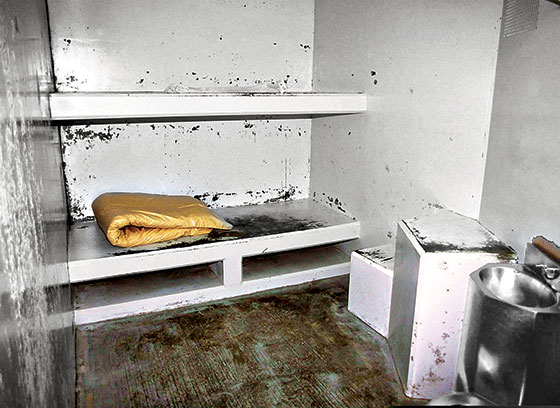
A cell in the Pelican Bay SHU.  
No one had any idea how long the strike would last. For an action like this to have any effect, the four prisoners believed, it needed to be open-ended—the risk needed to mount that they might die on the prison’s watch. Ashker had studied the story of Bobby Sands, the IRA hunger striker who had lasted 66 days and whose death was horrible: He had gone blind, had begun to bleed from bedsores, had lost his mental capacities. The prison health department had done its own research and distributed a medical notice to all state inmates: Those without other health conditions can in most cases expect to live at least several weeks on a hunger strike. This was a tentative statement, though. Hunger strikes are rare enough that there is no good data, and the doctors had been reading up on histories of Civil War internment camps.

Jamaa thought his fellow inmates might need some concrete encouragement. His private fast the previous fall had lasted 33 days, and he believed he could have gone longer. Soon after last summer’s strike began, the four leaders were moved from the SHU to a unit called Administrative Segregation, and Jamaa, entering the unit, started to holler, “Forty days and 40 nights! Forty days and 40 nights!” If prisoners can be counted upon to know any literature, it is the literature of suffering that in the Bible precedes redemption. Jamaa had chosen his slogan with intent: They were Moses in the desert. At night, Jamaa would drop on his knees, put his mouth to the crack between the door and the floor, and yell: “Forty days and 40 nights!” Soon, new hunger strikers arriving in AdSeg were shouting the slogan as they were hustled in. It was then that Jamaa began to believe their movement had some possibility, some momentum.

At first, the fasting prisoners at Pelican Bay were lethargic. Then, after about a week, the nurses found them suddenly chatty and energized. “There were these pockets of brilliant clarity,” says Bill Woods, the chief nurse at the prison. “There is a certain point where your body equalizes out. It has this mechanism to survive.” In their temporary home at AdSeg, the hunger strikers exercised outdoors in individual metal cages, which for some prisoners provided their first view of the horizon in decades. Frogs crawled into the cages; the prisoners could see small wildflowers in the grass. For the first time in years, the men could look into one another’s faces. Jamaa told his sister, 20 days in, that he thought they could last another 60 days, which terrified her. When lawyers asked how they were holding up, one of the prisoners replied, “Not too bad. I can feel the breeze.”

This didn’t last. By late July, the prisoners in AdSeg were cold all the time. Ashker developed a constant pain underneath his collarbone. He started to notice symptoms of claustrophobia—tightness, panic—which in all his time in isolation he had never suffered before. Ashker has a thick chest, and he was convinced that the pain was his body consuming itself, hunting for nutrients. “I could feel the muscle flowing off my body,” he told me.

Over time, the Corrections Department emptied most of AdSeg, transporting dozens of hunger strikers to the state prison at Sacramento, closer to major hospitals. Ashker and his three collaborators were considered too influential and dangerous to transport, and so they were left behind—four prisoners alone, spaced out in an ­otherwise empty corridor of cells as long as a city block. On the weekends, they met with attorneys, and they learned that though the hunger strike had greatly diminished, a hundred prisoners around the state were still refusing food. At night, sometimes, they would try to strategize, shouting at one another underneath their doors, but often they found they were too weak to make themselves heard, and so they would return to their bunks and cover themselves with blankets to conserve energy. It was in this manner that the leaders of the California prison hunger strike approached the end of a summer spent without food, in the same way that they had spent much of their adult lives: in tense, anticipatory solitude.

Picture yourself in a car heading north from San Francisco. Six hours after you leave that spotless city—after you pass the blissful yuppie towns of California wine country, and then the redwoods and hippie outposts of Mendocino and Humboldt, and then two hours of vacant, foggy coast north of Eureka—you arrive in Crescent City, 13 miles from the Oregon border. Physically, culturally, Pelican Bay is as remote from the rest of California as the state’s borders permit. Plaques in the motels warn visitors of the danger of tsunamis. Topographically speaking, the place is a fortress of isolation: Alaska-like, rocky and vertical and misty. It is an amazing place to put a prison.
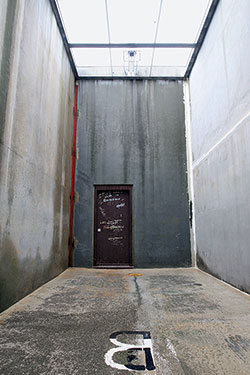
An exercise yard in the Pelican Bay SHU.  
It is also an amazing prison. Pelican Bay opened in 1989 in response not just to the escalation of crime during the 1980s but to the particular shape that crime had taken. In California, where the inmate population had quadrupled in a decade, prison gangs had been strengthened by the sheer number of people moving through the system. What were at first temporary self-defense cadres became more permanent, and powerful, until they grew into umbrella groups of street gangs. In 1989, a member of the Black Guerrilla Family, a gang formed in prison, shot and killed Huey Newton, the founder of the Black Panther Party, on a West Oakland street. Within a few years, senior leaders of the Mexican Mafia, another prison gang, were asserting control over all of the Hispanic street crews in Southern California: The Mafia taxed street drug sales in return for protecting affiliated gang members who entered the system. Throughout the ’80s, the state had been building ever-more-restrictive units in an effort to quarantine the most influential gang leaders, but none had been effective enough. Pelican Bay was meant to solve that problem.
“From the time it opened, Pelican Bay was seen as having some historical significance,” says Craig Haney, a psychology professor at the University of California, Santa Cruz, who studies prisons. “Many of us saw Pelican Bay as perhaps the wave of the future, and that’s what it became.”


The Pelican Bay SHU, which houses 1,100 prisoners in almost as many cells, takes up half of the prison and operates under policies designed less to punish prisoners than to isolate them from other members of their gangs. Arriving inmates are often told that there are only three ways to leave the SHU: “Parole, snitch, or die.” But parole boards routinely inform SHU inmates that they will not be granted parole until they agree to leave their gang and explain its operations, a formal process known as debriefing. Doing so would send them back to a regular prison, where they would likely become gang targets. So many SHU inmates believe they only really have one option. “A while back, I realized I was probably going to spend the rest of my life in the SHU,” Ashker told me.

Haney visited Pelican Bay three years after it opened and surveyed 100 SHU inmates as an expert consultant to a prisoner lawsuit challenging the unit’s constitutionality. On his first day at the prison, the psychologist saw such florid psychosis that he called the attorneys and urged them to emphasize the confinement of the mentally ill. Once Haney began his interviews, he found serious psychological disturbances in nearly every prisoner. More than 70 percent exhibited symptoms of “impending nervous breakdown”; more than 40 percent suffered from hallucinations; 27 percent had suicidal thoughts. Haney noticed something subtler, too: A pervasive asociality, a distancing. More than three-quarters of the prisoners exhibited symptoms of social withdrawal. Even longtime prisoners reported feeling a profound loss of control when they entered the SHU, in part because they weren’t sure whether they’d ever be released. Many reported waking up with a rolling, nonspecific anxiety. The SHU “hovers on the edge of what is humanly tolerable,” wrote Thelton Henderson, the federal judge who decided the prisoner lawsuit in 1995. You can sense a vast uncertainty in that first word, hovers. The judge ordered major reforms—the seriously mentally ill, for instance, could no longer be housed there—but he let the SHU stand.

That was more than 18 years ago. Some of the same prisoners are still there. Haney returned to Pelican Bay last year, for a ­follow-up study, and found that these ­patterns of self-isolation had deepened. Many inmates had discouraged family members from visiting, and some seemed to consider all social interactions a nuisance. “They have systematically extinguished all of the social skills they need to survive,” Haney says. Those inmates who do comparatively well tend to replace the social networks outside the SHU with those within it—which, in a society composed of alleged gang members, often means gangs. “In isolation,” he says, “gang activity is the only contact that is possible; it is the only loyalty that is possible; it is the only connection that is possible.”

This is one way of understanding the paradox of American mass incarceration: There are 2.4 million prisoners across the country, four times more than in 1980, and Supermax facilities managed similar to Pelican Bay in at least 44 states, and though this corresponds with a dramatic drop in street crime, the system of prison gangs has flourished. In Pelican Bay, there are significantly fewer murders in the prison than there were a decade ago, but the gangs’ power has hardly softened: Prosecutors allege that current SHU inmates manage the affairs of street gangs in Los Angeles and direct negotiations with Mexican cartels. Elsewhere, the situation is even less stable. Baltimore’s city jail had, by 2012, fallen so ­completely under the control of a prison gang that, according to prosecutors, its leader not only maintained a network of guards who smuggled in drugs and weapons, but also impregnated four guards while behind bars. Last year in Colorado, an alleged member of a white prison gang, who had served several years in SHU-like isolation, assassinated the executive director of the state’s prison system on the official’s own doorstep.
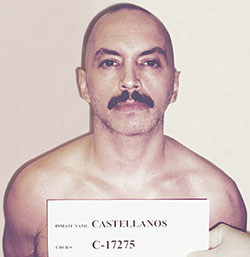
Arturo Castellanos   
These are signs that the system either isn’t working well enough or isn’t working at all. Over the summer, when international television broadcasts began to pick up the news of the hunger strike and demonstrations were staged in Berkeley and Los Angeles and celebrities like Jay Leno and Bonnie Raitt wrote letters of support, Ashker and the others began to talk more broadly about what was possible. “A worldwide movement against solitary confinement,” Ashker explained. This was rhetoric, but sometimes the medium is more important than the message. The fact of the hunger strike—that men who had spent decades in as restrictive a prison as has been devised had convinced a quarter of the state’s prison population to starve itself—did not necessarily prove that their conditions amounted to torture. But it did suggest something else: that perhaps human isolation of the kind that Pelican Bay was built to achieve was impossible. Every hunger strike is a form of Roman advertising, a demand to be recognized: I am still here. The leaders of the Pelican Bay hunger strike, conscious of it or not, were making a second statement, too: Look at what we can do. 

In 1987, Ashker killed another white inmate at New Folsom prison, entering the man’s cell and stabbing him 26 times. Prosecutors were convinced the murder had been an Aryan Brotherhood hit, ordered because the victim had refused to cut the gang in on his methamphetamine deals. When the case came to trial, Ashker persuaded his court-appointed attorney, Philip Cozens, to call another inmate, an Aryan Brother named Paul Schneider, as a witness. Prison guards brought ­Schneider to the courthouse in leg irons, and he and Cozens spoke about the upcoming testimony in a side corridor. When the conversation had finished, and Cozens, back turned, was walking away, Schneider attacked the lawyer from behind, with an eight-inch blade he had hidden in his rectum. Cozens survived the stabbing. He believes that Ashker was behind the attack, that the knifing was an attempt to provoke a mistrial. But the judge refused to halt the case, and Cozens, now accompanied by a bodyguard, continued to serve as defense counsel. Ashker was convicted of second-degree murder. Schneider wound up testifying anyway. Ashker, he ­reportedly told the jury, was “a good white dude.”

Ashker got his first swastika tattoo when he was 19, a seventh-grade dropout in prison for burglary. He says he was motivated partly by white pride and partly by the sheer juvenile thrill of doing something outrageous. He describes himself then as “a rebel at heart.” This identity exchange happens often in prison: an inmate fuzzes out the specific parts of his personhood and instead inhabits the most threatening idea of his race. But that tattoo, and the others that followed, have a context, prison officials say: They advertised that he was affiliated with the Aryan Brotherhood, the white prison gang that was then warring with the Black Guerrilla Family. Ashker denies membership in a gang, but by 1990, three years after the murder, prison officials had pinpointed him as an Aryan Brother. Pelican Bay was built to house “the worst of the worst.” Ashker fit the bill. In he went.

Ashker is six feet tall, with a handlebar mustache and somewhat wild eyes, but his speech is direct and tautly compressed. Even his handwriting exhibits extreme control: His script is impeccable. “Eager to talk,” is how a fellow inmate describes him. “They don’t give us a lot of time,” Ashker said tensely when we met. Because Ashker has few connections to family (his mother has visited exactly once, in 1993) and because there are few whites in the Pelican Bay SHU, the pressures of isolation fell more heavily on him than on most other prisoners. “You do a lot of self-­reflection—you don’t have a choice,” he said. “If you think too much about the past, or the future, it gets real depressing. I look at it as, my life has been a waste of space.” He said this very matter-of-factly.

Prisoners in the SHU look for a salve against this abyss or a distraction from it. Often they nurse a grievance. “You get through the first four or five years on anger alone,” Jamaa told me. Ashker is, unexpectedly, an optimist, and he learned to channel his anger through the law. Shortly after moving to the SHU, he was shot in his right arm by a guard. Three weeks later, while under treatment by prison doctors, an artery in his arm burst and he nearly lost his hand. Ashker sued, and a federal jury awarded him $225,000. This opened his mind. He earned a paralegal’s certificate through a correspondence course. He has now sued the prison system 15 times—for forbidding SHU inmates from sending letters to inmates in other prisons, for refusing to let him buy thermal shirts to keep his injured arm warm. Once, after Ashker had represented himself at a legal hearing in San Francisco in which the judge ruled in his favor, he was driven back across the Golden Gate Bridge in chains. It was one of those perfect California days—sun shining everywhere. “There are these moments,” he told me, remembering, “when you realize that you are still alive.”
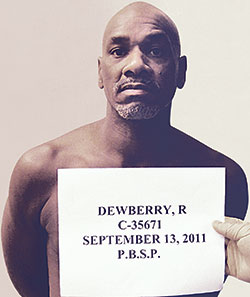
Sitawa Jamaa (known by officials as Ron Dewberry)  
In 2006, authorities at Pelican Bay reorganized the SHU. Until then, the prison had often rubber-stamped SHU inmates’ requests to be moved to another pod, meaning that members of the same gang were often housed together. The reorganization created a prison within a prison within the prison, moving the most influential leaders of each gang to a wing called the Short Corridor, isolating them from lieutenants who had been doing their bidding. Which is how, not by accident but by some warped genius of institutional design, four men with what officials believe to be vast influence over the entire state’s inmate population came to be housed within shouting distance.

The men were wary around one another at first. But they were aging, and perhaps growing more reflective, and they had nothing to do but talk with neighbors they couldn’t see; the experience of the SHU is monotony in motion. Guillen talked about his son, who had been arrested; Castellanos about his brother, who was also in the SHU. They had grievances in common, too: Their isolation in the Short Corridor seemed to confirm to them that they had been singled out. Ashker grew particularly close to an older, politically minded white inmate on the pod named Danny Troxell. Eventually, ­Troxell and Ashker became something of a revolutionary book club. They read Naomi Wolf, Howard Zinn, Michel Foucault. The ideas that stayed with Ashker the longest came from Zinn: that they were all members of a single prisoner class and that racial animosities had been leveraged by the guards to divide them. “One of their purposes,” he told me, “is to sever all your ties to humanity.”

By 2009, Ashker was corresponding with a sociologist at SUNY-Binghamton named Denis O’Hearn, and on O’Hearn’s suggestion, he read a copy of a book the professor had written, a biography of Bobby Sands. O’Hearn had, in his book, emphasized that even though Sands had died during his protest, he had achieved a great deal in winning political sympathy for his cause. In studying Sands, Ashker read of an ancient Irish tradition called the King’s ­Threshold, in which a commoner who believed that he had been wronged by a nobleman would fast on the aristocrat’s door to gain attention and public sympathy. Ashker found this incredibly moving. He and Troxell began to talk about Sands’s example and about the risks and possibilities a hunger strike might offer. Jamaa, a studied revolutionary who had been reading about Sands and other hunger ­strikers for two decades, listened to Ashker’s epiphany with jaded amusement. But he did listen. “Every time we’d start talking about it, we’d notice the pod going quiet—we knew people were listening,” Ashker told me.

What Ashker and Troxell represented was a kind of “split faction” within the Aryan Brotherhood, Lieutenant Jeremy Frisk explained in a ­conference room in Pelican Bay’s headquarters building earlier this winter. Projected onto a screen was a diagram of the Aryan Brotherhood’s hierarchy. The three men at the top of the diagram, who he said composed the gang’s “commission,” had been ambivalent about the project, in part because Ashker was not especially popular within the Brotherhood and in part because they saw little advantage. But Guillen, Castellanos, and Jamaa, Frisk said, each had more personal pull among their racial groups. The Black Guerrilla Family has long been the most political gang, and its members could be expected to participate. The Pelican Bay gang-investigations unit soon noticed coded messages discussing the wisdom of a hunger strike passed among members of the two Hispanic groups and to their allies on the outside. In these deliberations, Frisk believes, Castellanos and Guillen were decisive. “Castellanos is, if not the most influential Mexican Mafia member, right there at the top. Once you put his name on something with orders, the southern Hispanics are going to do it,” he said. “And Guillen is the street-regiment general for the NF.” One former Nuestra Familia member says that his gang’s participation had been all Guillen’s doing: “It was Chuco Guillen, 100 percent.”

To see the yard as the prison guards do is to become alert to a hidden social physics in which the real actors are not individuals but networks. There is never just a hotheaded punch to a guard’s cranium, never just an enterprising drug dealer caught smuggling in supply. Political protests are never just that; they are always a conversation, in thug semiotics, among gangs and between gangs and guards, each move deliberated over with great care by a council of elders isolated in solitary cells. Guards talk with respect about the ingenuity of gang leaders, and with exasperation at the ends to which it is put (“a waste of human talent,” Frisk says about the SHU). Prison officials believe that gangs control most of what goes on among the state’s inmate population. In the high-security prisons, “almost everything happening out there has some influence of gang activity,” says Michael Stainer, a deputy commissioner of the California prison system.
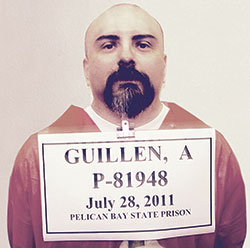
Antonio Guillen  
This means that most convicts sentenced to prison in California are also sentenced to a relationship with a gang. Each of the four major gangs in the system enjoy something close to a racial monopoly on membership: the Aryan Brotherhood for whites, the Black Guerrilla Family for African-Americans, the Mexican Mafia for Hispanics from the southern part of the state, and Nuestra Familia for Hispanics from the Central Valley and farther north. Prisons sometimes institute separate exercise schedules for each racial group, and it is very rare to find two cell mates in California from different ones. These practices have helped to reduce gang conflict but also, obviously, strengthen the gang system. ­Corrections officials at Pelican Bay will often switch, sometimes in midsentence, between referring to a “gang” and a “race” and a “group.”

This ambiguity has long been institutionalized in the “validation” process through which alleged gang members are committed to the SHU. Investigators must document three pieces of evidence confirming an inmate’s gang membership. Often this is a tattoo or the statement of an anonymous informant. But expressions of ­ethnic identity and radicalism—black nationalist writings, for instance—can also be counted as gang-related. Even social ­relationships between members of the same ethnic group can be outlawed: Some prisoners have been validated for speaking with a known gang member from their own racial group. The prison officials, Jamaa told me, “blur the line between what is a gang and what is a racial group. They have to, because they don’t understand where a gang ends and a racial group begins.”

Pelican Bay is a strange hybrid of a place: Systems of isolation and communication vie constantly for control. SHU prisoners learned the architecture of the toilet drains and have used them to shout messages to other pods. Members of Nuestra Familia developed a system of information exchange through the law library—ghostwriting messages in legal books and then sending coded messages in letters to family members explaining which page in which book fellow gang members ought to consult. In gang lore, Pelican Bay has assumed a mythic place: The Mexican Mafia calls it La Playa Azul (“the Blue Beach”), and the bylaws of Nuestra Familia stipulate that its core leaders must be housed there. When a court order temporarily increased mail monitoring at Pelican Bay last fall, Frisk heard from gang investigators in the Los Angeles area: The crews were saying that there were no instructions coming from headquarters, that they did not know what to do. But most of the time, despite extreme restrictions, gangs find a way to function. “All Aryan Brotherhood decisions, including membership and the decision to murder another member, are conducted by vote,” says Bryan Elrod, a former Aryan Brotherhood member who recently “debriefed” and was transferred out of Pelican Bay. “Sometimes it could take months to complete voting in SHU.” But the votes did happen.

The central mystery of this summer’s hunger strike lies in its scope. Why did 30,000 prisoners around the state join a protest called by four men in the SHU? Most prison officials contend that these prisoners were prodded by the gangs. “There was a high element of coercion going on,” Stainer says. Many of the inmates who went on strike lasted just three days—proof, another senior prison official told me, that many participants were only joining to get credit from their gang. Javier Zubiate, a former Nuestra Familia member, was asked during his debriefing interviews why he had joined the strike. He said that he had seen the public letter from Antonio Guillen, and “we took that as an order from a general.”

Even so, prison officials had documented only one example of explicit coercion: an inmate at Corcoran state prison who was beaten after he refused to help his cell mate participate. Beyond that, there was nothing violent. In Pelican Bay, things were quiet. “They had said that they wanted the protest to be peaceful, and by and large it was,” says Clark Ducart, the chief deputy warden. Which suggests that perhaps the protesting prisoners were motivated by something other than simply pressure and that the allegiance they feel to their gang is not only a matter of intimidation and racial supremacy.

At every stage in the criminal-justice system, its basic moral complexity recurs: What part of a criminal act is an individual’s responsibility alone, and what part is the consequence of his circumstances—of poverty or racial alienation? In Pelican Bay, the prisoner is treated not as an individual but as a soldier for the group to which he belongs. The crucial question the validation process has asked, for years, has not been “What has this man done?” but “To what does this man belong?” But there has been a self-fulfilling element to this approach: Treat prisoners as racial blocs and all social networks as if they are gangs, and for all of its essential violence and brutality, the gang will retain some of the warmth, the underlying human attachment, of the social network on which it is built. “To this day, I love some of those men,” Elrod told me earlier this month from the secure unit at Kern Valley State Prison where he is now housed to keep him safe from the revenge violence of his former brothers.

Once the Short Corridor Collective, as Ashker and his conspirators started to call themselves, had a hunger strike in mind, even ordinary grievances acquired weight. In 2011, the SHU was put on lockdown after a disturbance in the general population. “We hadn’t even done anything,” Ashker told me. “I said, ‘Hey, this is just gonna be the norm. Everything that happens, they’re gonna come back on us.’ ” Among the Brotherhood, word circulated that Ashker and Troxell were “willing to go out in a box.” Jamaa wrote letters to prisoners-rights groups; if the Collective was serious, they needed some support from outside. That summer, the Collective staged their first two brief hunger strikes, which resulted in minor victories, like getting a pull-up bar and a handball in the exercise room. Even here, though, gang activity and political activity were hard to separate: Elrod says that when he and Ashker were briefly moved into AdSeg together, they took the chance to discuss Aryan Brotherhood business.

The next year, the Collective published a joint letter calling for the cessation of all hostilities among racial groups in prison. Jamaa had written the original draft and read it out to the others on the cell block, who each helped to edit it. To the four men in the Collective, the document felt like a great accomplishment, an end to the interracial prison wars in which they had spent their adult lives. They had some hope that the truce could eventually extend to the streets. “This is an historical document,” Jamaa said. “We are a prisoner class now.”
They asked the Corrections Department to post the letter in each of their facilities, and they imagined videos broadcast in prisons around the state in which they urged inmates to cooperate rather than to fight one another. The officials refused and issued Castellanos a rules violation when he discussed it with his family. The men in the Collective took it hard. Soon those same family and neighborhood networks that prison officials believe are often used to convey gang commands out to the street were carrying news of a coming hunger strike, and inside the Short Corridor the inmates were putting on weight in anticipation.

It felt freezing in AdSeg, all the time. The four remaining prisoners were convinced that the guards were blasting in cold air, trying to freeze them into ­submission. But each time the prison doctor, Donna Jacobsen, visited the AdSeg, she checked the thermometer, and it always read normal. Their bodies, she thought, must simply have lost the ability to regulate temperature.

Negotiations were static. The prisoners were demanding face-to-face meetings with top state correctional officials; these were refused. But the medical threat was escalating. Jacobsen, a former HIV physician from Miami, was focused less on the prisoners’ steady deterioration than on what might happen to them once they started to eat again. “Being on hunger strike isn’t the riskiest part; it’s the refeeding that can be incredibly dangerous,” Jacobsen says. The longer the prisoners went without nutrients, the more their electrochemical systems slipped out of balance. Refeeding “can basically stop your heart if you don’t have the right levels.” Her staff had offered vitamin supplements to the men to try to stabilize their electrolytes. After some initial resistance, they were accepted. But there was a paradoxical effect: “The vitamins rejuvenated us,” Jamaa told me. When a low-ranking official from Sacramento came up to meet with the prisoners, Jamaa rebuffed him. “I said, ‘I’m willing to die right now.’ ”

Each weekend, a veteran Oakland activist lawyer named Anne Butterfield Weills made the long drive up to Crescent City to meet with the prisoners. “I literally saw them shrink,” Weills says. She received a call from strikers who had been transported down to Sacramento: Did Ashker, Jamaa, Castellanos, and Guillen want them to continue to strike? What should they do? Newspaper and television stations were reporting a macabre daily watch—how many men were still on strike, how long had they each gone. One hunger striker had died already, though the coroner would later rule that he had strangled himself. There were still 69 men who had not eaten at all in more than 40 days, and many of them had written letters saying they would not cave. Weills was spending some of her time at Pelican Bay working on advance medical directives.

Then the standoff ended. On the 43rd day of the strike, Judge Henderson (the same judge who had, nearly two decades earlier, ordered reforms to the SHU) issued an order giving the state permission to force-feed prisoners who were at “near-term risk of death or acute bodily injury.” The order also allowed the state to override prisoners’ Do Not Resuscitate orders, if it had a reason to believe they had been coerced. Health officials, worried about the escalating risks, had joined the Corrections Department’s petition for the order. “I was concerned that the 40 or 50 leftover people might die,” says Barnett, the senior official at the department.

The leaders of the strike “were blindsided,” Weills says. The protocols for force-­feeding, in place for a decade at the Guantánamo Bay prisons, are medically straightforward but still deeply invasive: A tube is inserted up a patient’s nose and down into his stomach, and restraints are used if the patient physically resists. Of the dozens of prisoners on strike, the leaders wondered, how many would go through with force-feeding? And would there be any power in resisting? “Our leverage was the threat of death,” Ashker told me. Now that was gone.

Until this point, the prisoners had thought of the guards—and, more broadly, the state—as their captors. But the state is also their warden and their protector: A prison is designed to separate convicts from society and prevent them from doing more harm, but also to shelter them and keep them alive. The judge’s order returned repeatedly to the problem of coercion. The specter of gang influence was so strong, Henderson’s ruling suggested, that the state could not trust that a prisoner’s advance medical directive had been made freely—that he had made his own decision about the terms under which he was willing to die. The strike leaders had thought that by volunteering to risk their own deaths they could compel the state to see them as individuals, and that in at least this one instance they could reassert freedom of control over their lives. But they had been wrong.

The men were still not eating, but they were debating how to proceed. Two prominent state legislators offered to hold a special hearing on conditions in the SHU. During the first hunger strikes, in 2011, Jamaa had been the hard-liner, but he is also the most politically attuned, and the promise of ongoing legislative scrutiny, something the prisoners had never managed to win, seemed to him a breakthrough. “That is a victory,” he told the others.

Eventually, somewhat reluctantly, they all agreed. On September 5, the 59th day of the hunger strike, the leaders of the Short Corridor Collective announced that they were “suspending” their action. The next day, Jacobsen met with each of the prisoners in their cells to explain the dangers of refeeding and the ideal way to manage it. Their sustenance once more in the hands of the state, they were gingerly, carefully, fed.
The end of the hunger strike was so deflating that it wasn’t until the second legislative hearing into SHU conditions was held, this month in Sacramento, that it began to seem plausible that Jamaa had been right, and that the hunger strikers had won something meaningful. At that hearing, even officials with the Corrections Department seemed to acknowledge that change to the SHU was inevitable. “We all agree that it is far too easy to get in and too hard to get out, and the stays in this environment have been far too long,” Martin Hoshino, an undersecretary of Corrections, testified. Hoshino and Stainer presented the Department of Corrections’ new validation process, which is meant to emphasize not associations but behavior. Tom Ammiano, the chair of the Assembly’s Committee on Public Safety, introduced a bill that would prohibit any prisoner from being kept in isolation indefinitely.

Prison policy is usually shaped out of public view, but the duration and visibility of the hunger strike has helped make the subject politically urgent. Last week, New York State agreed to extensive new restrictions on whom it could confine to its SHU. This week, in Washington, the Senate Judiciary Committee is holding a hearing titled “Reassessing Solitary Confinement.” Other states have also curtailed the use of isolation recently—Indiana, where change was compelled by a federal judge’s ruling, and Maine, Mississippi, and Colorado, which had faced pressure from prisoners’-rights groups. These changes are too few to constitute a total rejection of the practice. But for the first time, it has begun to seem plausible that the American attachment to this special kind of imprisonment is not a national peculiarity so much as a generational one, and that a 25-year experiment may be ending.

To Ashker, these changes are the subject of much attention and contemplation. But they are also very abstract. Since the hunger strike, he has been more isolated than ever. Before last year’s strike began, he was moved to a new pod, which had the effect of breaking up the Short Corridor Collective and separating him from Danny Troxell, his good friend. Troxell had given Ashker a small photograph of himself as a memento. When the guards found it, they took it away and gave Ashker a major rules violation for having secreted it. “They said it was gang-related,” he said bitterly when we spoke in December. “I mean, it’s a photograph.”

His television has been taken away from him as a consequence of the rules violation. For all of his legal endeavors and strategic planning, he has received only two social visits since 2007. He is the only white man in his new pod and is surrounded by strangers speaking Spanish. On some Sunday afternoons, he listens to a D.J. called Sista Soul on a public radio station that broadcasts from Humboldt County and plays recorded messages to the men in Pelican Bay sent in by family members, ex-girlfriends, female pen pals. A rare recent call for Ashker, from a woman whom he has never met: “This is a shout-out of love and admiration to Todd in the SHU from Julie in Western Australia. I hope hearing my voice brightens your day. Bye for now, my love.”

He has had trouble getting comfortable in his new cell. The problem is his mattress. It is too short, and his feet dangle off the end. It is also too thin. “As soon as I laid on it, it flattened out,” he told me. He tried shaking out the padding, smoothing it out with his palm. “It’s good for a minute, but then as time passes, it collapses again.” The padding is now permanently separated to the sides of his mattress, so that as he enters his sixth decade of life, he is sleeping on a thin plastic sleeve on a stone bench.

“I feel like exploding,” Ashker said.

Saturday, July 20, 2013

CALIFORNIA CDCR: 30,000 Hunger strikers can't be wrong! END SOLITARY ABUSE!


AZ DOC prisoner Nelson Douglas Johnson III died of asphyxiation in a filthy isolation cell at ASPC-Florence within months of staging a hunger strike to protest conditions in his prison. His sister Stephanie remembers him here, on the Day of the Dead Prisoner, November 1, 2012, at the Maricopa County Court Complex...

The AZ prison suicide and homicide rates doubled under the present administration
of DOC Director Charles Ryan, and have remained high for the past 4 years. Consequently, the ACLU and several other parties already have a class action suit lodged against the Arizona DOC for abusing mentallly ill prisoners by placing them in isolation cells and for showing deliberate indifference to their medical and psychiatric care needs. 

Friends and families of AZ Prisoners: read up on this, and share it with your loved ones...and help us organize direct actions in AZ as well. Contact Peggy Plews at arizonaprisonwatch@gmail.com


 -----------------

from Prisoner Hunger Strike Solidarity (CALIFORNIA): Show some support, AZ!


PLEDGE OF RESISTANCE EMERGENCY ALERT!


Greetings to all Pledge signers,

Thank you for your support of the hunger strikers. As you may have heard, the hunger strike began on July 8 with California 30,000 imprisoned people refusing to eat. Hundreds of media outlets have been covering this historic event.

The California Department of Corrections and ‘Rehabilitation’ (CDCr) has begun to retaliate against the vocal spokespeople for the hunger strikers, who are located in Pelican Bay and Corcoran State Prisons. Our Pledge of Resistance Alert today will focus on the extreme brutality of prison authorities against the Representatives of the hunger strikers, who are in Pelican Bay State Prison.

The CDCr is also trying to undermine legal and community support of the hunger strikers. They have just issued ‘banning’ orders to Marilyn McMahon, an attorney for many of the Reps in Pelican Bay, denying her access to her clients.

Most likely, prison officials will not be thrilled to get your phone calls and emails, so please be determined and polite in trying to send your phone and email messages. Whether you get a voice or a voice mail, they will know you are watching them, and want them to Stop the Torture.

RETALIATION AGAINST PELICAN BAY PRISONER REPRESENTATIVES:
On July 11, PBSP prison authorities removed 14 prisoner Representatives from their solitary confinement (SHU) cells and placed them in Administrative Segregation (Ad Seg) cells which are even worse than the SHU. The hunger strikers, many of whom are elder men and have severe chronic illnesses, are dressed in summer clothing, but the CDC has turned on air conditioning full blast, leaving some of the men sick and freezing.

Meanwhile, the prison officials have raided their SHU cells and confiscated their legal materials, including attorney-client protected documents pertaining to their highly publicized federal class action lawsuit against the state of California (Ruiz v. Brown).

RESPONSE OF THE HUNGER STRIKE REPRESENTATIVES:

“On July 11, 2013, we were placed in Administrative Segregation (Ad-Seg), where we are subjected to more tortuous conditions than in the SHU. Despite this diabolical act on the part of CDCR intended to break our resolve and hasten our deaths, we remain strong and united! We are 100% committed to our cause and will end our peaceful action when the CDCR signs a legally binding agreement meeting our demands.”

NON-ACTION OF GOVERNOR BROWN

Governor Brown has been completely silent on the hunger strike while it has gained international news attention. He is now taking a vacation in Europe, visiting, among other places, Dachau concentration camp in Germany, and promoting California’s environmental advancements to selected European audiences.

WHAT YOU CAN DO TO HELP STOP THE TORTURE:

Tell the PBSP prison authorities to return the 14 prisoner Representatives to their cells. (Their names and prison numbers are at the end of this email.)

Return all their property, especially the legal documents guards have confiscated.

Lift the ban on their attorney, Marilyn McMahon, so that she can again access her clients.

Medically monitor the men to ensure that the prison has not destroyed their health!

1. Contact Pelican Bay Warden Gregory Lewis:
*** phone: 707-465-1000 x5001
*** email: Gregory.Lewis@cdcr.ca.gov

2. Copy to Dr. Jeffrey Beard, Secretary of CDCR
*** phone: 916-323-6001 (alternatively 916-445-5073)
*** fax: 916-442-2637
*** letter: Dr. Jeffrey Beard, Secretary CDCR, 1515 S Street, 5th Floor;
Sacramento, California 94283

3. Copy to Assistant Warden at Pelican Bay, Rawland Swift
*** phone: 465-1000 x6254
*** email: RSwift@cdcr.ca.gov

4. Back up: Public Information Officer at PBSP Christopher Acosta
*** office phone: 707-465-9040
*** cell phone: 707-951-0350

THE 14 PRISONER REPRESENTATIVES:

1. Todd Ashker C58191
2. Arturo Castellanos C17275
3. Sitawa/ R.N Dewberry C35671
4. Antonio Guillen P81948
5. Danny Troxell B76578
6. George Franco D46556
7. Ronnie Yandell V27927
8. Paul Redd, Jr. B72683
9. James Baridi Williamson D34288
10. Alfred Sandoval D61000
11. Louis Powell B59864
12. Alex Yrigollen H32421
13. Gabriel Huerta C80766
14. Frank Clement D07919

Please write to the Reps.* Include one sheet of paper, one envelope and one loose stamp so they can write someone outside the walls. You can address your letter with the person’s name & prison number; Pelican Bay State Prison/SHU; PO Box 7500. Crescent City, 95532.

*Mr. Arturo Castellanos may not be able to receive your letter. He’s on ‘restricted mail,’ by the prison authorities.

Thank you so much for your solidarity,

Prisoner Hunger Strike Solidarity Coalition: Pledge of Resistance work group
(for more info, http://www.prisonerhungerstrikesolidarity.wordpress.com)

-------------------Prisoners’ Demands-------------


Image by Rashid Johnson (Red Onion Prison in Virginia) in support of CA hunger strikers

The hunger strike has been organized by prisoners in an inspiring show of unity across prison-manufactured racial and geographical lines.

The changes the prisoners are demanding are standards in other Supermax prisons (eg, Federal Florence, Colorado, and Ohio), which supports the prisoners’ position that CDCR’s claim of such demands being a threat to safety and security are exaggerations. The hunger strikers** have developed these five, straight-forward, core demands, as shown below in their own words:

1. End Group Punishment & Administrative Abuse – This is in response to PBSP’s application of “group punishment” as a means to address individual inmates rule violations. This includes the administration’s abusive, pretextual use of “safety and concern” to justify what are unnecessary punitive acts. This policy has been applied in the context of justifying indefinite SHU status, and progressively restricting our programming and privileges.

2. Abolish the Debriefing Policy, and Modify Active/Inactive Gang Status Criteria -
  • Perceived gang membership is one of the leading reasons for placement in solitary confinement.
  • The practice of “debriefing,” or offering up information about fellow prisoners particularly regarding gang status, is often demanded in return for better food or release from the SHU. Debriefing puts the safety of prisoners and their families at risk, because they are then viewed as “snitches.”
  • The validation procedure used by the California Department of Corrections and Rehabilitation (CDCR) employs such criteria as tattoos, readings materials, and associations with other prisoners (which can amount to as little as greeting) to identify gang members.
  • Many prisoners report that they are validated as gang members with evidence that is clearly false or using procedures that do not follow the Castillo v. Alameida settlement which restricted the use of photographs to prove association.
3. Comply with the US Commission on Safety and Abuse in America’s Prisons 2006 Recommendations Regarding an End to Long-Term Solitary Confinement – CDCR shall implement the findings and recommendations of the US commission on safety and abuse in America’s prisons final 2006 report regarding CDCR SHU facilities as follows:
  • End Conditions of Isolation (p. 14) Ensure that prisoners in SHU and Ad-Seg (Administrative Segregation) have regular meaningful contact and freedom from extreme physical deprivations that are known to cause lasting harm. (pp. 52-57)
  • Make Segregation a Last Resort (p. 14). Create a more productive form of confinement in the areas of allowing inmates in SHU and Ad-Seg [Administrative Segregation] the opportunity to engage in meaningful self-help treatment, work, education, religious, and other productive activities relating to having a sense of being a part of the community.
  • End Long-Term Solitary Confinement. Release inmates to general prison population who have been warehoused indefinitely in SHU for the last 10 to 40 years (and counting).
  • Provide SHU Inmates Immediate Meaningful Access to: i) adequate natural sunlight ii) quality health care and treatment, including the mandate of transferring all PBSP- SHU inmates with chronic health care problems to the New Folsom Medical SHU facility.
4. Provide Adequate and Nutritious Food – cease the practice of denying adequate food, and provide a wholesome nutritional meals including special diet meals, and allow inmates to purchase additional vitamin supplements.
  • PBSP staff must cease their use of food as a tool to punish SHU inmates.
  • Provide a sergeant/lieutenant to independently observe the serving of each meal, and ensure each tray has the complete issue of food on it.
  • Feed the inmates whose job it is to serve SHU meals with meals that are separate from the pans of food sent from kitchen for SHU meals.
5. Expand and Provide Constructive Programming and Privileges for Indefinite SHU Status Inmates.

Examples include:
  • Expand visiting regarding amount of time and adding one day per week.
  • Allow one photo per year.
  • Allow a weekly phone call.
  • Allow Two (2) annual packages per year. A 30 lb. package based on “item” weight and not packaging and box weight.
  • Expand canteen and package items allowed. Allow us to have the items in their original packaging [the cost for cosmetics, stationary, envelopes, should not count towards the max draw limit]
  • More TV channels.
  • Allow TV/Radio combinations, or TV and small battery operated radio
  • Allow Hobby Craft Items – art paper, colored pens, small pieces of colored pencils, watercolors, chalk, etc.
  • Allow sweat suits and watch caps.
  • Allow wall calendars.
  • Install pull-up/dip bars on SHU yards.
  • Allow correspondence courses that require proctored exams.
**Signed by

Todd Ashker
Arturo Castellanos
Sitawa N. Jamaa (s/n R.N. Dewberry)
George Franco
Antonio Guillen
Lewis Powell
Paul Redd
Alfred Sandoval
Danny Troxell
James Williamson
Ronnie Yandell
…and all other similarly situated prisoners
Date: April 3, 2011


Monday, October 17, 2011

Pelican Bay: This is what Democracy Looks Like...


Please continue to support the California Hunger Strikers. See their five core demands below and sign the petition here if you haven't yet already.


---------------- from Truthout-----------------

California Prison Hunger Strike Ends, Conditions of "Immense Torture" Continue

by: Victoria Law, Truthout | Report


Imagine a concrete room no more than eight by ten feet. It has no windows, only a perforated steel door facing a solid concrete wall. Fluorescent lights stay on 24 hours a day.

Now imagine being locked in that room.

This is the reality for 1,111 people locked in the Security Housing Unit (SHU) of California's Pelican Bay State Prison. The SHU comprises half of the prison. It is explicitly designed to keep prisoners in long-term solitary confinement under conditions of extreme sensory deprivation. Men are locked into their cells for at least 22 hours a day. Food is delivered twice a day through a slot in the cell door. They are allowed five hours a week of exercise in a cement yard the length of three cells with a roof only partially open to the sky.

Prison administrators place men in the SHU either for a fixed term for violating a prison rule or for an indeterminate term because they have been accused of being prison gang members, often by confidential informants and highly dubious evidence. Prisoners who have been "validated" as gang members are released from the SHU into the general prison population only if they "debrief" or provide information incriminating other prisoners. Debriefing can be dangerous to both the prisoner who debriefs and his family on the outside. In addition, prisoners are often falsely identified as gang members by others who debrief in order to escape the SHU. One does not necessarily need to be a gang member to be sent to the SHU: jailhouse lawyers and others who challenge inhumane prison conditions are disproportionately sent to the SHU. Mutope DuGoya is one of those men: he states that, in 2001, despite his work with Code 4, the prison's Scared Straight program and his record of remaining free of violations for six years, he was placed in SHU on the word of a confidential informant. (Letter from DuGoya, dated September 21, 2011.) Another prisoner, who has been in SHU for 21 years, writes, "Because I am here with people who the CDCR [California Department of Corrections and Rehabilitation] have labeled as being gang-involved, the CDCR uses that to confirm that I am involved with a gang." (Letter from person in Pelican Bay SHU, dated September 26, 2011.)

These atrocities are not limited to Pelican Bay. California holds nearly 4,000 people in SHUs and nearly 14,500 in other forms of segregation within its prison system. Over 240 of these people are women, who are often guarded and watched by male staff, even when they are undressing, showering or on the toilet. Transgender and transsexual prisoners are often likely to be placed in isolation.

Pelican Bay State Prison opened in December 1989. Almost immediately, prisoners began filing complaints about abusive conditions.

In 1993, over 3,500 prisoners signed onto Madrid v. Gomez, a class-action lawsuit that charged prison officials with abuse and violation of their human rights. In 1995, the federal court issued injunctions aimed at eliminating excessive force, improving health care and removing prisoners with mental illness from the Security Housing Unit. Although he stated that conditions "hover on the edge of what is humanly tolerable," the presiding judge stopped short of declaring the physical structure of long-term solitary confinement unconstitutional.

In 1994, Steven Castillo, who charges that prison administrators placed him in SHU in retaliation for his hunger strikes and numerous lawsuits against CDCR, filed Castillo v. Alamedia. Seven years later, in 2001, Castillo and approximately 1,000 other prisoners at Pelican Bay and a second California prison launched a six-day hunger strike, protesting the prison's gang policy. The strike was suspended after California State Sen. Richard Polanco intervened and vowed to help broker a resolution. Although Polanco's office convened several meetings between corrections officials and prisoners over the next year, no changes resulted. In 2002, Castillo and 60 prisoners at Pelican Bay again launched a hunger strike. The strike lasted three weeks, but no changes in CDCR's debriefing policy occurred.

In 2004, ten years after Castillo v. Alamedia was filed, a settlement agreement was reached that, ostensibly, would reshape the debriefing policy governing release from SHU. However, the substantial changes promised never happened and, seven years later, conditions in SHU remain fundamentally unchanged.

In 2010, prisoners at Pelican Bay drafted and sent a Formal Complaint about conditions to lawmakers, prison and CDCR officials and then-Governor Schwarzenegger. "CDCR's response was 'file a grievance if you haven't already,'" recalled Todd Ashker, a co-author of the Complaint. "Then we were locked down, even more, in our cells from July 2010 to February/March 2011." During that time, the prisoners agreed that "something had to be done ... It was agreed, a peaceful protest via hunger strike was our best option, the goal being to expose the illegal policies and practices to the mainstream media (and thereby masses of people) and, with outside support, pressure/force meaningful changes!" (Letter from Todd Ashker, dated September 25, 2011.)

On July 1, 2011, SHU prisoners began a hunger strike with five core demands:

  1. Eliminate group punishments for individual rules violations;
  2. Abolish the debriefing policy and modify active/inactive gang status criteria;
  3. Comply with the recommendations of the US Commission on Safety and Abuse in Prisons (2006) regarding an end to long-term solitary confinement;
  4. Provide adequate food;
  5. Expand and provide constructive programs and privileges for indefinite SHU inmates.

"No one wants to die," stated hunger-striker DuGoya. "Yet under this current system of what amounts to immense torture, what choice do we have? If one is to die, it will be on our own terms."

Over the course of the three-week hunger strike, at least 1,035 of the SHU's 1,111 inmates refused food. The strike spread to 13 other state prisons and involved at least 6,600 people incarcerated throughout California.

Outside prison walls, family members, advocates and concerned community members took action to draw attention to the hunger strike. In Oakland, supporters held a weekly vigil on Thursday evenings. On July 9, supporters organized demonstrations in cities throughout the US and Canada. On July 18, 200 family members, lawyers and outside supporters from across California converged upon CDCR headquarters in Sacramento, delivered a petition of over 7,500 signatures in support of the hunger strikers and then marched to Governor Brown's office to demand answers. That same day, supporters in Los Angeles, Las Vegas, New York City and Philadelphia also held solidarity rallies.

On July 14, two weeks into the strike, CDCR Undersecretary of Operations Scott Kernan spoke to representatives of the Pelican Bay hunger strikers. He promised that their demands would be addressed and that the CDCR would enact positive changes over time.

On July 20, Kernan and other CDCR administrators again met with hunger strike representatives. Again, Kernan made assurances about positive changes to SHU and stated that he would provide specifics about their demands in a couple of weeks. The hunger strike representatives met and discussed Kernan's proposals. They decided to temporarily suspend the hunger strike to allow CDCR a grace period to fulfill their promises.

The next month, on August 19, prisoner representatives met with Kernan and other administrators. Kernan had no specific plans regarding the hunger strikers' core demands, but, as the prisoner representatives noted, offered only "very vague, general terms, about CDCR staff working to come up with some type of step down program for inmates to get out of SHU, which does not require debriefing-informant status." The representatives asked that specific details be provided on paper to all SHU sections. Kernan agreed to begin providing documentation within two weeks.

Sparked by the hunger strike, its ensuing publicity and community pressure on legislators, the California Assembly's Public Safety Commission held a hearing on SHU conditions on August 23. Former SHU prisoners, family members, attorneys, advocates and psychiatrists testified about the need for substantial changes to SHU policies and practices. CDCR Undersecretary Scott Kernan, who was a negotiator with the hunger strike representatives, also testified.

On August 31, SHU staff issued memos stating that prisoners would be allowed to have handballs on the yard and the ability to purchase sweatsuits. If they remained free of disciplinary violations for one year and gained committee approval, they would be allowed to have a yearly photo taken and to purchase art pens and drawing paper from the prison canteen. None of the core demands were addressed.

In addition, many strike participants were issued a disciplinary memo stating, "Your behavior and actions were out of compliance with the Director's Rules and this documentation is intended to record your actions and advise that progressive discipline will be taken in the future for any reoccurrence of this type of behavior."

Prison officials have retaliated against the hunger strikers in other ways. According to Carol Strickman, an attorney with Legal Services for Prisoners with Children, "Prisoners are receiving serious disciplinary write-ups, usually reserved for serious rules violations, for things like talking in the library or not walking fast enough. It's clear that prison officials are trying to intimidate these men and to make them ineligible for any privileges or changes that may be forced by the strike."

On September 2, a memo entitled Gang Management Proposal (dated August 25) was issued to the four principal representatives of the hunger strike. Hunger striker Antonio Guillen wrote that the proposal is, "by far the most punitive and restrictive program I have ever seen. It is way worse than what we have in place now and that's saying something because the current program is, in part, what prompted the hunger strike." It also widens the criteria from "'traditional prison gangs' " to "anyone they consider to be problematic." (Statement from Guillen that came with a letter dated September 27, 2011.) Kernan himself alluded to this during his testimony on August 23: "We believe that the current process, which targets six prison gangs, needs to be modified and what we really need to do is identify security threat groups ... our policies target just the prison gangs today and we're not capturing the inmates that perhaps should be segregated from our population."

Despite these threats, prisoners throughout California resumed their hunger strike on September 26. By the third day, nearly 12,000 were participating. The strike spread not only to 12 prisons inside California, but also to prisons in Arizona, Mississippi and Oklahoma that are housing California prisoners.

In response, the CDCR classified the strike as an organized disturbance and transferred hunger strikers form the SHU to Administrative Segregation, where they lose access to all of their personal possessions and are denied access to their mail (including legal mail). According to recent interviews with the men, they have only a jumpsuit, a mattress and a thin blanket. The transfer could also negatively affect parole decisions. The retaliation has caused the number of hunger strikers to drop. In addition, hunger strikers at other prisons report that the CDCR has been undercounting the number of participants, refusing to mark men as hunger strikers if they drink liquids or touch the food tray.

Prison officials have also retaliated against outside supporters: Carol Strickman and Marilyn McMahon, executive director of California Prison Focus, had been involved in extensive discussions with corrections officials, including Kernan and leaders of the strike. On September 29, the Department of Corrections placed them under investigation, alleging that they "violated the laws and policies governing the safe operations of institutions within the CDCR." Both attorneys are banned from all California prisons until the investigation is concluded. Attorneys who were able to visit reported that the CDCR has the air conditioning on high in 50-degree weather.

On October 13, prisoners at Pelican Bay ended their nearly-three week hunger strike after the CDCR guaranteed a comprehensive review of every prisoner in California whose SHU sentence is related to gang validation under new criteria. Two days later, hunger strikers at Calipatria State Prison stopped their strike to allow time to regain their strength.

"This is something the prisoners have been asking for and it is the first significant step we've seen from the CDCR to address the hunger strikers' demands," says Carol Strickman, a lawyer with Legal Services for Prisoners with Children, "But as you know, the proof is in the pudding. We'll see if the CDCR keeps its word regarding this new process."

Victoria Law is a writer, photographer, mother, and Contributing Author for New Clear Vision. She is the author of Resistance Behind Bars: The Struggles Of Incarcerated Women (PM Press, 2009), the editor of the zine Tenacious: Art and Writings from Women in Prison, and a co-founder of Books Through Bars — NYC. She is currently working on transforming Don’t Leave Your Friends Behind, a zine series on how radical movements can support the families in their midst, into a book.

Sunday, October 2, 2011

CALI prisoner rights' activists under investigation.


PRISONER HUNGER STRIKE SOLIDARITY


This post below is ominous. It comes from CaliforniaWatch, founded by the Center for Investigative Reporting. Both of the agencies in question are pretty prominent and well established in the area of fighting for prisoner rights - they're also serious antagonists of the system out there. They would be the ones to go after if the state wanted to intimidate everyone else into backing off the Pelican Bay prisoners - they've been a resource for other activists all across the country over the years.


So, defy the state of California - or whatever state you're fighting prison systems in: Support the California prisoners on hunger strike demanding to be treated like human beings. Don't just sign a petition: tune in and follow along, look for local solidarity actions, help local prisoners get their stories told - just take it one step further than you have before. What's been happening at Pelican Bay is a whole lot bigger than California...so is this investigation.

By the way, the strike is now 12,000 prisoners big and growing...


- in Solidarity from Arizona Prison Watch


SUPPORT OUR COMRADES: Follow their sites!


----------------CaliforniaWatch---------------

State prison officials investigate 2 advocates


Just days after thousands of California inmates renewed a hunger strike, two Bay Area attorneys closely involved in mediation efforts got a surprise: They were under investigation by the Department of Corrections and Rehabilitation for allegations of misconduct and unspecified security threats.

The attorneys – Marilyn McMahon, executive director of California Prison Focus, and Carol Strickman of Legal Services for Prisoners With Children – have been banned from state institutions until the investigation is resolved, according to temporary exclusion orders signed by Corrections Undersecretary Scott Kernan on Sept. 29.

The investigation will determine whether the attorneys “violated the laws and policies governing the safe operations of institutions within the CDCR,” the order states.

The document does not provide details about the allegations. It cites a section from California Code of Regulations that reads:

"Committing an act that jeopardizes the life of a person, violates the security of the facility, constitutes a misdemeanor or a felony, or is a reoccurrence of previous violations shall result in a one-year to lifetime exclusion depending on the severity of the offense in question."

Corrections spokeswoman Terry Thornton confirmed the department had banned "some specific attorneys" from one facility for alleged misconduct. She declined further comment, citing an ongoing investigation.

The move is another indication that the corrections department intends to handle the current protest differently from an earlier hunger strike, which ended July 20 after officials agreed to some concessions, including a review of policies governing the state’s controversial Security Housing Units, where some inmates have spent decades housed alone in windowless cells.

Since then, strike leaders have accused corrections officials of failing to carry out their promises.

“CDCR has responded with more propaganda, lies and vague double-talk of promises of change in time," reads a statement from the leaders posted on an advocacy website. The inmates vowed to continue the protest indefinitely, “until actual changes are implemented.”

But corrections officials say they’ve kept their commitments and claim the protests are the work of dangerous gang leaders.

“Unlike in the first instance where we certainly evaluated their concerns and thought there was some merit to it, this instance appears to be more manipulative, and it certainly has the possibility of being a real disruption to the Department of Corrections and the security of its staff and inmates,” Kernan said.

A memo signed by Kernan and distributed to inmates Sept. 29 warned the department was treating the new hunger strike as a “mass disturbance” and said any prisoner who joined the protest would be subject to disciplinary action.

General-population inmates identified as strike leaders will be locked in special segregation units normally used as punishment for major rules violations, according to the memo.

Strickman and McMahon have been involved in extensive discussions with corrections officials, including Kernan, and leaders of the strike, who are housed in Pelican Bay State Prison’s Security Housing Unit.

Neither attorney was available for comment.

Dorsey Nunn, executive director of Legal Services for Prisoners With Children, condemned the sanctions against the attorneys and said he expected the department would place similar restrictions on other advocates in order to further isolate leaders of the hunger strike.

“They’re trying to move us out of the way,” he said.

Nearly 3,400 inmates at six prisons have refused state-issued meals for three consecutive days, according to the most recent data from the corrections department.

Sunday, September 18, 2011

Pelican Bay: Resisting the Cruel and Unusual.


Here's a comprehensive recap of the hunger strike and on-going struggle for human rights this year at the infamous California Pelican Bay prison, from the SF Bayview...

---------------------------------

Hunger Strike Recap: California prisoners show the way!


In: SF Bay View
September 14, 2011

by K. Kersplebedeb


This spring, the news started going around that a hunger strike was being planned in the Security Housing Unit at California’s Pelican Bay State Prison (PBSP). Prisoners at the SHU had apparently united across racial lines and promised to hungerstrike to the death if need be, starting on July 1.

Initially most of the attention paid to the planned strike came from a small collection of organizations, mostly based in the San Francisco Bay Area, with a clear mandate to support prisoners’ struggles and resist the prison-industrial complex. While much of the left ignores prison issues or considers them at best a peripheral symptom of more fundamental social dysfunction, these groups recognized the potential importance of prisoner-led resistance in Pelican Bay’s SHU, California’s flagship torture unit.

Isolation torture in the USA

Pelican Bay was built in 1989, on the remote northern edge of California, in the economically depressed town of Crescent City. One section of the new prison was designated the “Security Housing Unit” (SHU) – essentially a control unit, in which people are condemned to conditions of solitary confinement. The Pelican Bay SHU was just one of many such facilities built around this time, an indirect consequence of the United States’ ongoing mass incarceration policies.

As eloquently described by Michelle Alexander in her recent book “The New Jim Crow,” mass incarceration began as a ruling class response to the Black Liberation Movement in the 1960s, the result of the so-called “war on drugs,” crafted so as to replicate many of the effects of segregation but without the embarrassing bigoted rhetoric. Forty years later, the result is over two and a half million people in U.S. prisons, a majority of them people of color.

Units like the Pelican Bay SHU were partly a result of the “law and order” ideology that accompanied and supported mass incarceration; partly they were intended to neutralize any resistance from those who were now slated to spend their lives behind bars. As Manuel La Fontaine of All of Us or None and the Prisoner Hunger Strike Solidarity coalition has explained, “The minute one becomes politically engaged inside, and you begin to challenge the conditions of confinement or begin to organize others to look beyond themselves and to focus on the things that led to their incarceration, such as social, political and economic oppression here in America and throughout the world, is the minute you’re deemed a candidate for the SHU.”1

People have spent years – in some cases decades – buried alive in the Pelican Bay SHU and similar facilities. Cells have no windows, just fluorescent lights which are never turned off. Prisoners spend 22-23 hours a day thus confined; when they are allowed out, it is to be brought – alone – to what is euphemistically called an “exercise yard” – in fact, just a larger enclosed space with grating instead of a roof. Prisoners are fed substandard food, they are punished collectively for issues involving individuals, and their indefinite SHU sentences only end if they agree to “debrief,” that is to say, to snitch.

Violence from guards is commonplace, as detailed by Keramet Reiter:

“In Madrid v. Gomez, a federal court case evaluating the constitutionality of the conditions at Pelican Bay, Judge Thelton Henderson recorded myriad staff abuses of prisoners at the institution. The most memorable: Vaughn Dortch, a mentally ill African-American prisoner, whom guards forced to take a ‘bath’ in near-boiling water. One guard said, as he was holding Dortch down in the water: ‘Looks like we’re going to have a white boy before this is through.’ Dortch sustained third-degree burns over half of his body; guards waited more than an hour after the conclusion of the bath before taking Dortch to a hospital for burn treatment. Judge Henderson ordered numerous reforms to the policies and practices at the institution, including better staff training and diversion of mentally ill prisoners from the SHU. However, Judge Henderson stopped short of declaring the physical structure of long-term solitary confinement unconstitutional.”2

The main excuse used to send prisoners to the SHU is “gang ties,” and yet a majority have never been convicted of any such thing. Being “validated” as a gang member is an administrative decision, with no real possibility of appeal, even though the result can be years or even decades of solitary confinement.

To give just one example: in the 2009 court ruling Lira vs. Cate, it was found that former prisoner Ernesto Lira had spent years in the SHU because of a sketch he had allegedly drawn, an anonymous tip, and a report from a prison guard that was mis-transcribed. The court found that as a result of his time in the SHU, Lira now suffers from post-traumatic stress disorder and clinical depression, and that throughout his incarceration, despite his objections that he was not a gang member, he was never provided with any meaningful review of his “validation.” Lira’s case is far from being exceptional; sadly, it is typical of those who end up in America’s supermaxes.3

Long-term isolation has been described as “clean torture,” for it is designed to inflict grave psychological and even physical harm, but without leaving any visible wounds. As Craig Haney of the University of California at Santa Cruz has noted, “There is not a single published study of solitary or supermax-like confinement in which nonvoluntary confinement lasting for longer than 10 days, where participants were unable to terminate their isolation at will, that failed to result in negative psychological effects. The damaging effects ranged in severity and included such clinically significant symptoms as hypertension, uncontrollable anger, hallucinations, emotional breakdowns, chronic depression, and suicidal thoughts and behavior.”4

A family member of a Pelican Bay SHU prisoner describes conditions as follows:

“[T]he warden took calendars away in December 2010. Now they have to make calendars to keep track of which day it is. They lose touch with family as they are not allowed phone calls ever (unless they debrief), the trip by car from Southern California is about 14 hours each direction, by plane the cost to fly into Crescent City with plenty of advanced notice is $440 per person, the accommodations are $87 per night for the cheaper hotel and more for 3-4 people. The visiting is behind glass with one phone. […] They are deprived of all natural light, food, warmth – sweats and night caps are not allowed even though the prison is located on the coast in the mountains. They never turn on the heat so the concrete walls keep the cells cold as freezers. Milk will stay cold in a cell for days. The food looks like vomit, and when refused the guards will say I don’t blame you.”

The prisoners live at the mercy of their captors. For instance, as part of a labor action in the midst of California’s perennial budget crisis, guards recently denied prisoners what little comforts they normally receive, and this for months on end. As the above writer noted:

“They were locked in the cells for almost 2 months straight – no ‘yard’, no showers, no packages or books passed out. It was to say we will do nothing until we get the 3% raise. They did and 3,500 teachers were laid off but the guards did start pushing a button for showers … yes a button.”

In these conditions, kept isolated from one another and tortured for years on end, some SHU prisoners managed to get word out about their strike. The organizers were all from D Corridor – known as the “short corridor,” this is where prisoners are subjected to the most restrictive conditions – and they became known as the Short Corridor Collective. They reached out to other prisoners, and there was talk that dozens would go on strike, perhaps as many as a hundred.

Their demands were detailed in a Formal Complaint, and summarized as follows:

1. Eliminate group punishments. Instead, practice individual accountability. When an individual prisoner breaks a rule, the prison often punishes a whole group of prisoners of the same race. This policy has been applied to keep prisoners in the SHU indefinitely and to make conditions increasingly harsh.

2. Abolish the debriefing policy and modify active/inactive gang status criteria. Prisoners are accused of being active or inactive participants of prison gangs, using false or highly dubious evidence, and are then sent to longterm isolation (SHU). They can escape these tortuous conditions only if they “debrief,” that is, provide information on gang activity. Debriefing produces false information (wrongly landing other prisoners in SHU, in an endless cycle) and can endanger the lives of debriefing prisoners and their families.

3. Comply with the recommendations of the U.S. Commission on Safety and Abuse in Prisons (2006) regarding an end to longterm solitary confinement. This bipartisan commission specifically recommended to “make segregation a last resort” and “end conditions of isolation.” Yet as of May 18, 2011, California kept 3,259 prisoners in SHUs and hundreds more in administrative segregation waiting for a SHU cell to open up. Some prisoners have been kept in isolation for more than 30 years.

4. Provide adequate food. Prisoners report unsanitary conditions and small quantities of food that do not conform to prison regulations. There is no accountability or independent quality control of meals.

5. Expand and provide constructive programs and privileges for indefinite SHU inmates. The hunger strikers are pressing for opportunities “to engage in self-help treatment, education, religious and other productive activities.” Currently these opportunities are routinely denied, even if the prisoners want to pay for correspondence courses themselves. Examples of privileges the prisoners want are one phone call per week and permission to have sweatsuits and watch caps. Often warm clothing is denied, though the cells and exercise cage can be bitterly cold. All of the privileges mentioned in the demands are already allowed at other supermax prisons in the federal prison system and other states.

The Short Corridor Collective requested people on the outside organize to amplify their voices and coordinate communication through the walls. In response to this call, a Prisoner Hunger Strike Support Coalition was set up in San Francisco, including a number of the key organizations working to support prisoners in California: All of Us or None, California Prison Focus, Critical Resistance, Legal Services for Prisoners with Children, the Prison Activist Resource Center, the Campaign to End the Death Penalty, the American Friends Service Committee, BarNone Arcata and the California Coalition for Women Prisoners. A media team was established to make sure the prisoners’ voices would be heard in the public arena. Similarly, a mediation team was set up, with a mandate to support the prisoners in their dealings with the California Department of Corrections and Rehabilitation (CDCR) once the strike began.

The strike

On July 1, news started coming in from throughout California that there were people in many prisons, not just Pelican Bay, refusing food. From PBSP itself, word arrived that not only was almost everyone in the SHU participating, but that those in general population were also on board. It suddenly looked like the strike might have mobilized not hundreds but thousands – an order of magnitude greater than anyone had dreamed.

Indeed, although CDCR claimed at the time that fewer than two dozen were on strike,5 within a few days it admitted that in fact over 6,000 prisoners had joined in refusing meals on July 1. At least 13 of California’s 33 prisons were affected. Some strikers were accepting liquid food, some were eating food from the canteen, but many were refusing any and all sustenance.

The Short Corridor Collective had called on other prisoners to strike in solidarity for as long as they felt comfortable, even if they were not willing to go to the death, and that is clearly what was happening, involving numbers that no one had anticipated. The thousands of striking prisoners were joined by individuals on the outside who also began fasting to support their demands. During the first week, solidarity demonstrations were held in San Francisco, Oakland, Los Angeles, Seattle and Montreal. Press coverage in this first period was mainly limited to California mainstream media, and various progressive blogs and news websites.

By definition, hunger strikes are difficult on those who engage in them. Humane medical care is to be hoped for, but often prison doctors and nurses work not to protect the strikers’ health, but to help the administration break the protest. This is what happened in some California prisons; there were numerous reports in the first week of strikers simply not being monitored and of doctors refusing them their prescription meds. While clearly punitive, CDCR framed this as the system being overwhelmed by the scope of the strike and wary of the dangers of prescribing medication meant to be taken with food.

This medical neglect prompted 40 healthcare providers from across North America to quickly sign an open letter expressing their “grave concern.” As they noted, “If it is true that CDCR medical staff are refusing prisoners their medications, either as punishment for being in the SHU or else as punishment for being on hunger strike, this is not only unethical, but also illegal under California Penal Code Section 673. This would be an act of deliberate indifference to a patient’s serious medical needs, and as such would constitute a violation of prisoners’ Eighth Amendment Constitutional rights.” The healthcare professionals called upon CDCR “to ensure that no prisoner on hunger strike be disciplined or threatened with the denial of medical care” and demanded that “all medical professionals uphold their code of ethics and maintain the highest standards of care for all their patients – be they incarcerated or not.”6

Medical neglect was just one of the ways CDCR pressured strikers to resume eating. At Pelican Bay, prisoners were given an “Information Sheet” which – under guise of informing them of their rights – was essentially meant to impress upon them that there would no negotiations, and that there was only one possible final outcome if they persisted: “Since refusing food will eventually lead to increased illness and death, you will be asked to find a suitable person to ensure your wishes are followed once you cannot express them for yourself […] It is also encouraged that you consider your decision to refuse food may be very difficult for your close family and friends.”

In some facilities, prison officials sent general population strikers into segregation – i.e. solitary – and denied them the right to visit with family members. At others, they simply resorted to lies to break the strike. For instance, at Calipatria prison, located in the hot desert on the Mexican border, guards announced on July 7 that CDCR had agreed to all five demands and that the strike was over. This worked, and everybody started eating again. Several days later word was received that this had been a trick, and many prisoners resumed their fast.

Despite these pressure tactics, two weeks into the strike, thousands were still refusing food.7 Such a show of solidarity, across “racial” lines, in prisons across California, had not been seen for generations. This alone constitutes a major achievement.

Meanwhile, on the outside, demonstrations were held in cities across California and throughout the United States. While the numbers attending were small – the largest attracted less than 200, most brought out dozens, and some less than that – these were growing, as were the numbers of family members who were joining, and becoming increasingly prominent speaking to media and facilitating communication with those on the inside.

Why the small numbers? It is an automatic reflex when evaluating any disappointing lack of activity around any issue to point to the left’s ongoing weakness; this is obviously a (or even “the”) factor, but it’s not one that will be solved tomorrow, and it doesn’t explain why other issues attract more people. It makes more sense to see the poor turnout at these protests as a consequence of the fact that there has not been a strong movement inside the prisons for many years, and that the state’s perpetual propaganda offensive keeps many people – including people from oppressed communities – wary of supporting “criminals.”

Furthermore, even those organizations that have been doing important work around prisons have a limited ability to mobilize on the streets and escalate quickly in a crisis, which is what an indefinite hunger strike represents. There is no denying the importance of building capacity, putting down roots and pursuing long-term community-oriented strategies; that said, conflicts are also decided by speed and initiative, and these are underdeveloped qualities even on the radical left.

Nobody had expected thousands to engage in this hunger strike, and many of those organizations which should have been involved from day one were taken by surprise, left trying to catch up with events – and sadly, it must be said, some simply didn’t bother. Nevertheless, as the importance of what was taking place in California became clear, many groups did begin to orient themselves accordingly.

As a sign of this, two weeks into the strike the San Francisco solidarity coalition held a mass conference call, with over 140 people representing a variety of organizations participating. It is clear that every day the strike continued, new groups and new cities were getting involved. As already mentioned, more and more family members were participating in support activities, bringing their own capacities and experiences into the mix. Had the strike lasted longer, this growth could have led to a qualitatively different level of struggle on the outside.

The prisoncrats’ response was twofold. First, they continued to insist that there would be no negotiations; in the words of Nancy Kincaid, spokeswoman for Receiver Kelso, who is in charge of California prison health care, “They have the right to choose to die of starvation if they wish.” Second, officials argued that the strike’s very success proved the value of the SHU and other forms of long-term isolation. According to CDCR spin doctor Terry Thornton, “This goes to show the power, influence and reach of prison gangs. Some people are doing it because they want to do it, and some are being ordered to do it.”8

Medical crisis

Not surprisingly, health issues remained a serious concern for the duration of the strike. Prisoners were being advised to take multivitamins and salt tablets – and yet these were often not available. CDCR insisted that everyone was being monitored, but there were reports that this “monitoring” consisted of someone standing at a cell door asking if the prisoner was feeling all right. Prisoners were supposed to be weighed daily, but this was sometimes done while they wore chains, sometimes not, making the entire exercise somewhat pointless.

As stated by Dr. Corey Weinstein, a private correctional medical consultant and human rights investigator with 40 years experience providing health care to California prisoners:

“Given my long history of working with California prisoners, I have grave doubts about the Department of Corrections’ ability to adequately carry out their own guidelines and protocols even during this urgent and public moment. Reports such as prisoners with very low blood sugar levels and lack of urination for 3 days should not be coming from the prison. These are men who require hospital care under prison protocols. We should ask why do they remain at the prison?”9

On July 12, supporters became particularly alarmed, as they received reports that some prisoners were suffering from severe dehydration, had lost consciousness, and/or were on the verge of renal failure. Dehydration is a major risk when on hunger strike, and it is imperative that one drink a lot of liquids when fasting. It remains unclear whether the dehydration was the result of some prisoners having escalated to a thirst strike, or if it was due to the guards having provided them with inadequate fluids. Severely weakened strikers had to be brought to the prison infirmary, where they were rehydrated intravenously.

At about this time, rumors began circulating that a prisoner had died. This turned out to be false, partly the result of people misunderstanding a strongly worded letter from Corcoran prisoners where a striker losing consciousness was described as having “gone down,” and partly par for the course in a heavy life-or-death struggle where information was always so highly restricted by the prisoncrats.

One of the reasons the state developed isolation prisons was to cut prisoners off from their communities and, amongst other things, this is intended to make solidarity work more difficult. Luckily, the support coalition was able to confirm that this rumor was false before mobilizing around the claim, which would have constituted an embarrassing public relations setback.
Negotiations and pressure tactics

In this dire situation, there was a breakthrough on Thursday, July 14, as CDCR announced that it was meeting with the hunger strikers’ representatives. The prisoncrats – who had claimed just hours earlier that they would rather see people die than negotiate – were now agreeing to discuss their demands. In and of itself, this was an unprecedented victory.

Nevertheless, the next day, the Short Corridor Collective unanimously rejected CDCR’s initial offer, a vague promise to “effect a comprehensive assessment of its existing policy and procedure.” As prisoner negotiator George Franco has explained, “Mr. Scott Kernan was very demanding and disrespectful towards us therefore, the negotiators went ‘nowhere’ we explained to our mediation team what occurred and what to do as a result of this meeting.”10

Support on the outside now accelerated. Along with weekly pickets in Oakland, there were daily protests in Los Angeles and the first demonstration in Sacramento. In Montreal, there had been weekly pickets outside the U.S. consulate from week one, and now these were joined by regular events in New York City, Philadelphia, Chicago and other cities across the United States. At the same time, plans were announced for two pickets in London, England, marking the first spread of protests overseas.

By this point, close to a hundred organizations, from the ACLU to the National Religious Campaign Against Torture, had come out in support of the prisoners demands. On July 17, the New York Times ran an op-ed critical of CDCR and sympathetic to the strikers,11 which was followed the next day by a positive editorial in the San Jose Mercury News12 and the day after that by an editorial in the LA Times criticizing CDCR for not allowing journalists into Pelican Bay.13

As a consequence of the prisoners’ refusal to end their strike on July 15, and keenly aware of the mounting support from the outside, CDCR attempted to buttress its position by threatening and further isolating the prisoner representatives. SHU prisoners are normally not permitted phone calls but, given the extraordinary circumstances, they had been allowed to phone the support coalition’s mediation team on the 15th to explain why they were refusing CDCR’s offer.

As a result of this initial refusal, it was made known that there would be no more such calls. Then, at 5:30 a.m. on July 18, 17 prisoners from Pelican Bay – including three members of the prisoners’ negotiating team – were transferred to Corcoran prison, apparently due to the severity of their condition and the fact that the Pelican Bay infirmary was now full beyond capacity.

That same day prison officials attempted to resume negotiations – but given that morning’s transfer to Corcoran, there were no New Afrikan prisoner negotiators left at Pelican Bay. It took another day for the warden to agree to allow another New Afrikan prisoner representative to join the negotiating team and another two days after that for Scott Kernan to return to the table.

July 20, as negotiations resumed, CDCR Secretary Matthew Cate announced that he would seek a court order allowing prison officials to force-feed striking prisoners – including those who had signed advance medical directives indicating that they did not wish to receive any such life-sustaining measures.14

While California is one of three states where the courts have ruled that prisoners can in some circumstances refuse medical care, nationally judges have more often ruled in favor of force-feeding hunger striking prisoners.15

In some of these cases the courts specifically differentiate between individuals choosing to starve themselves for personal reasons – depression, sickness etc. – and political hunger strikes, i.e. those in which some kind of redress was being demanded. The latter, characterized as “manipulative hunger strikes,” have been deemed “detrimental to the effective administration of the prison system,”16 and this might have provided the legal opening for Cate’s gambit.

Force-feeding is the state’s trump card when dealing with political hunger strikes. It is intensely painful, especially when the patient resists, and is often used as an excuse for physical violence from guards and other staff. Indeed, force-feeding has itself been described as a form of violence. At the same time – despite the fact that prisoners have died while being force-fed, and that the World Medical Association prohibits the practice – in the public’s eye the procedure often reduces the urgency of a strike, because people incorrectly believe that the health of a person being force-fed is no longer at risk.

What Matthew Cate was doing, essentially, was threatening a new form of torture. It remains unclear whether this was used as a pressure tactic during the day’s negotiations or if it was being prepared as a fall-back position lest negotiations continued to bear no fruit.

These were the circumstances in which CDCR renewed negotiations with the Short Corridor Collective. With hundreds of prisoners having gone almost three weeks without food, and with this new threat looming, CDCR offered to accede on a few small points right away. It was stated that this was simply meant as a tangible gesture of good faith in support of an assurance that all of the prisoners’ other issues would receive real attention, with meaningful changes being implemented over time.

In fact, the impression the negotiators were left with was that CDCR had agreed to work towards meeting all five demands. CDCR promised to send representatives back to Pelican Bay within a few weeks to provide the prisoners with a progress report in this regard.

So it was that, on July 20, the prisoners accepted CDCR’s offer, and the strike was suspended. Arrogantly, CDCR Undersecretary Scott Kernan contacted the support coalition and told them the strike was over, expecting them to then announce this on his say so. This would of course have been out of the question under any circumstances, but especially given that prison officials had already been caught lying earlier in the strike.

In the end, Kernan had to allow the Short Corridor Collective a phone call to the outside mediators to inform them that the strike had indeed ended. This call was placed on July 21. This was just the beginning of the delays in communication, as the task at hand now became checking in with other prisoners across the state – most of whom had not been in direct contact with the support coalition and many of whom were in segregation or other supermaxes. This process would have taken even longer if not for the initiative of family members, who arranged to get the word in that the strike had indeed been suspended. Nevertheless, it was several days before almost all prisoners had resumed eating, and there were reports of hold-outs as much as one week later.

There was an understandable reticence within the support coalition to publicly announce the strike over in this situation, when it was known that other prisoners continued to refuse food. Nobody could be sure that the Short Corridor Collective’s decision would be accepted by prisoners across the state – it was unclear if those still fasting were doing so because they had not heard it was over or if they intended to continue the strike on their own.

As a result, even after the mediation team had been contacted, supporters around the world were unsure whether the strike had been called off or if this was one of CDCR’s tricks, and nobody on the outside seemed able to provide clarity on this question. This confusion was compounded by the fact that journalists had been denied access to the prisoners, and so news stories often recycled information from one another for days after the fact.

Eventually, though, it became clear that everyone who had been participating had indeed recommenced eating. California’s historic hunger strike of July 2011 seemed to have come to an end, after having united thousands of prisoners, garnering support from organizations across America and internationally, and forcing CDCR to the negotiating table.
Aftermath

As prisoners transitioned back to eating, many of the issues that had arisen during the hunger strike continued. Some family members found that they were being denied visits with their loved ones who had been on strike, many of whom received 128B forms, “informational chronos,” which go into their records permanently. These chronos threatened “progressive discipline … in the future for any reoccurrence of this type of behavior.”17

Even now that the strike had been suspended, medical protocol during this transitional period was in some cases simply not followed. For instance, on July 21 one visitor met with a prisoner who had gone three weeks without food, and yet as she explains:

“When the announcement of the end of strike was made on the day before, he tried to eat from the dinner tray, but could not keep it down. The following day’s breakfast he could not keep down either. When he became very weak/dizzy during our interview and asked for water, the guard would not let us buy him water nor give him any, just offered ending the interview. […] He should have been offered a transition to solid food. I am not sure whether he did later, but not on the day we were there.”

Indeed, it was reported that the day after the strike ended, one prisoner had a heart attack while transitioning to food. This turned out not to be the case, but what had happened was that he had to be hospitalized after having major seizures which affected his heart’s ability to regulate its pulse. According to the prison medical staff, this was due to an electrolyte imbalance caused by the 20 days without food. After five days of treatment, he was returned to the Pelican Bay SHU.

Reaction to the strike ending has been mixed. The Short Corridor Collective and many other prisoners see it as a large step forward, declaring it a provisional victory. Some prisoners, however, have expressed disappointment that an agreement was reached with CDCR committing itself to so little in return.

Commenting on the strike being suspended, the Prisoner Hunger Strike Support coalition noted:

“While the concessions may seem too small to claim a victory, it’s important for people outside prison to understand the weight for prisoners who have been held in the SHU for decades of now being able to stay a little warmer, and to be able to keep track of time since they have no windows and the fluorescent lights are on 24 hours of every day. More so, worldwide support and momentous courage of thousands of prisoners to risk their lives effectively pressured the CDCR to sit at the same table and look prisoners in the face and offer a deal, after refusing to negotiate for weeks and insisting prisoners are less than human.”18
Prisoner representatives Mutope Duguma and George Franco have both stated that CDCR committed to meeting all five demands and that if it fails to do so then the strike will resume.

One thing everyone agrees on is that the strike must be seen as only the first step. Without ongoing pressure, CDCR will certainly refuse any meaningful changes. Early on, San Francisco Representative Tom Ammiano and the state Assembly’s Public Safety Committee agreed to hold hearings to examine conditions in the Pelican Bay SHU. These hearings were set for Aug. 23, and in the weeks following the strike’s suspension the outside coalition focused on mobilizing for this date.19

On the inside, prisoner representatives have stated that if progress is not quickly forthcoming, the struggle will continue: “We’ve drawn the line on this and should CDCR fail to carry out meaningful changes in a timely fashion, then we will initiate a class action suit and additional types of peaceful protest. We will not stop until the CDCR ends the illegal policies and practices at SHU!”20

Indeed, prisoner representatives Mutope Duguma and George Franco have both stated that CDCR committed to meeting all five demands and that if it fails to do so then the strike will resume.21
How it came to be

Just organizing a hunger strike involving thousands is incredible – and more than most left groups on the outside could accomplish. Adding the fact that so many of the prisoners are in solitary confinement to the equation and have no easy way of communicating directly with one another simply makes it all the more impressive.

Security Housing Units are sites of frequent and regular abuse, and so it is sometimes difficult to differentiate between retaliation and business as usual. For instance, in the lead up to the strike, some suspected strike organizers had their cells tossed, and there was at least one instance of the so-called “potty watch” being inflicted – an intentionally silly-sounding name for what is in fact a form of physical torture. As attorney Carol Strickman has explained:

“That’s a very cruel procedure where people are restrained for three days, put in diapers and unable to move their arms sometimes, or forced to stand, or strapped down. The rationale is that the prisoner has swallowed contraband and we are going to see it. We’re going to wait for three days and monitor their bowel movements and find the thing they’ve swallowed. But, it’s used for other reasons. It’s used as punishment even if they know that there is nothing there. This shouldn’t be used even if they think that there is something that the prisoner has swallowed. It’s painful, people can’t sleep. They can’t move their arms. I heard that sometimes their arms are put in a plastic pipe. It’s really horrible. We heard of that happening to one or two people before the hunger strike started in Pelican Bay.”22

Again, given the fact that such demeaning and cruel procedures are not unusual in the SHU, it is difficult to separate out preemptive retaliation from everyday abuse. Less ambiguously, announcements were made just prior to the strike that a special Fourth of July menu would include ice cream and strawberries – foods which many prisoners had not seen in all their years behind bars.


The actual mechanics of how prisoners communicated with one another and arranged to send out word regarding the strike remain unknown, but not unimaginable. Beyond this technical proficiency, the success of the July 2011 hunger strike was facilitated by its location on an arc of increasing struggle within prisons in the United States. Specifically, two previous prisoner strikes during the preceding seven months had already helped prepare the ground the Short Corridor Collective’s July initiative: the December 2010 Georgia prisoners work strike, and the January 2011 Lucasville 5 hunger strike.

In Georgia, for six days in December, thousands of prisoners had refused to work or leave their cells or buy anything at the prison store. A work strike constitutes a direct challenge to the prison system, for without prisoners’ labor the prison system cannot function. Prisoners clean the floors, cook the food and perform every other task not related to custody – as well as being exploited by corporations which make super-profits from their labor.

The Georgia prisoners were demanding better educational opportunities, more nutritious food, access to their families and, most importantly some kind of payment for their jailhouse labor – in Georgia it is mandatory for prisoners to work for “Prison Industries,” a wholly owned subsidiary of the Department of Corrections, making prisoners the single largest workforce in the state. Furthermore, their labor is completely unpaid.

At least 30 prisons were affected, with thousands participating. The Georgia authorities retaliated by turning off the heat and hot water in the prisoners’ cells. Violence was used – guards beat several striking prisoners; one was so badly hurt he ended up in the ICU of a civilian hospital.23 This reign of terror continued even months after the strike had ended.24

Nevertheless, and although none of the prisoners’ demands were met, the Georgia prisoners’ strike was a major inspiration simply for having happened. It has been described as “a roadmap of what must come.”

The second example in this arc of protest occurred just weeks later, at the state penitentiary in Youngstown, Ohio. On Jan. 3, 2011, Siddique Abdullah Hasan, Bomani Shakur and Jason Robb went on hunger strike to protest the severe isolation conditions they had suffered for 18 years. The three men are part of the Lucasville 5 – the other two were not healthy enough to participate – who helped negotiate a peaceful resolution to the 1993 uprising at the Southern Ohio Correctional Facility but were subsequently framed for murder and sentenced to death. Since then, they have been subject to extreme isolation; the demand of their hunger strike was simply to be granted the same living conditions as other death row prisoners.

After 12 days, the prison administration agreed to meet the demands of the Ohio hunger strikers.

Besides these two previous inspiring acts of resistance, a third external factor worth keeping in mind is the decision rendered by the Supreme Court in the case of Brown vs. Plata in May. This confirmed an earlier court ruling that conditions in California’s prisons violate the Eighth Amendment’s ban on cruel and unusual punishment and ordered the state to reduce its prison population by approximately 32,000 over the next two years.

A lower court in the case had already found that it was “an uncontested fact” that “an inmate in one of California’s prisons needlessly dies every six or seven days due to constitutional deficiencies”25 – a fact that was cited in the Short Corridor Collective’s Formal Complaint.26

How CDCR will comply with Plata is unclear. There are indications that Gov. Jerry Brown will try to transfer prisoners to the counties’ jurisdiction, which would simply shift the problem of overcrowding and potentially lead to people being held in even worse conditions.27

But in terms of the success of the July hunger strike, Plata had already helped expose the horrendous conditions in CDCR’s prisons, and so the department was caught in a vulnerable position. It is difficult to measure what effect this had, but it does play into the overall circumstances surrounding the hunger strike.

Regardless of these external factors, it is clear that the ones who really deserve the credit for the July success are the hunger strikers themselves, those who put their lives on the line to resist torture. All the positive factors in the world may line up, but without people willing to seize the moment, these amount to naught.

Frantz Fanon wrote, “In the colonies it is the policeman and the soldier who are the official, instituted go-betweens, the spokesmen of the settler and his rule of oppression.”28 After decades of mass incarceration, the jailer has joined these “instituted go-betweens” as America’s dungeons have become central elements of class and national oppression. The delay with which most established left groups and talking heads responded to the hunger strike is a measure of their own disconnect from these realities.

Just as California built on advances in Ohio and Georgia, it is to be hoped that future struggles will build on this success and that as part of this process new connections and relationships will emerge between those on the inside and those of us on the outside, allowing space for the movement to overcome these shortcomings.

As Bomani Shakur, one of the Lucasville 5, stated in an open letter to the California hunger strikers: “The system as it currently exists must change, and this, what you all are doing right now, may very well be the catalyst to bring about that change. Remember that.”29

Indeed, this is something that none of us should forget.

K. Kersplebedeb, a Montreal-based writer and purveyor of political books and pamphlets, maintains several websites, including Kersplebedeb and Sketchy Thoughts, where this story first appeared. He can be reached at info at kersplebedeb.com.

1] “The worst of the worst is not allowing people to be treated as human beings” interview with Manuel LaFontaine, Revolution#239, July 17, 2011.

2] “A Brief History of Pelican Bay,” http://prisonerhungerstrikesolidarity.wordpress.com/pelican-bay/305-2/

3] Lira v. Cate, 2009 U.S. Dist. LEXIS 91292 (N.D. Cal. Sep. 30, 2009). See also Carbone, Charles “The Jailer Has No Clothes,”California Prison Focus #34, pp. 13-4, accessed at http://prisons.org/documents/CPF-34.pdf.

4] “Mental Health Issues in Long-Term Solitary and ‘Supermax’ Confinement” by Craig Haney, Crime & Delinquency 2003 49, p. 132.

5] “State says prison hunger strike involves fewer than two dozen inmates” by Sam Quinones, Los Angeles Times, July 3, 2011.

6] “Statement of Medical Professionals on the Pelican Bay Hunger Strike,” accessed at http://www.kersplebedeb.com/mystuff/july1/medical_letter.pdf

7] “Prisoners Near Death as 1,700 California Inmates Continue Hunger Strike to Protest Appalling Conditions” by Marie Diamond, Thinkprogress website, July 13, 2011.

8] “Calif. sees gang ties in prisoners’ hunger strike; Some inmates getting pressured into participating, state says” by Justin Berton, San Francisco Chronicle, July 14, 2011.

9] “More on Medical Crisis, Need Support Pressuring Immediate Negotiations,” July 14, 2011, accessed at http://prisonerhungerstrikesolidarity.wordpress.com/2011/07/14/more-on-medical-crisis-need-support-pressuring-immediate-negotiations/

10] http://www.scribd.com/doc/62546906/Pelican-Bay-Prisoner-Letter

11] “Barbarous Confinement” by Colin Dayan, New York Times, July 17, 2011.

12] “California needs to improve prison conditions,” editorial, San Jose Mercury News, July 18, 2011.

13] “California’s hidden hunger strike,” editorial, LA Times, July 19, 2011.

14] “Prisoners on Hunger Strike Show Signs of Starvation, Official Wants to Force-Feed,” KQED News Staff, July 20, 2011.

15] “Testing ‘Cruzan’: Prisoners and the Constitutional Question of Self-Starvation” by Mara Silver, Stanford Law Review, Vol. 58, No. 2 (Nov., 2005), pp. 657-9.

16] Silver, pp. 655-6, 660.

17] http://www.scribd.com/doc/62546906/Pelican-Bay-Prisoner-Letter

18] “Building a Movement to End Solitary Confinement, Against Imprisonment,”http://prisonerhungerstrikesolidarity.wordpress.com/, July 27, 2011.

19] See: “Historic California Assembly Hearing on Solitary Confinement” by Sal Rodriguez, Solitary Watch, Aug. 24, 2011, accessed at http://solitarywatch.com/2011/08/24/historic-california-assembly-hearing-on-solitary-confinement/.

20] “Written Statement by Short Corridor Collective,” July 22, 2011, accessed at http://prisonerhungerstrikesolidarity.wordpress.com/declaring-a-victory-ongoing-struggle/.

21] “This hunger strike is far from over,” San Francisco Bay View, Aug. 12, 2011. And: http://www.scribd.com/doc/62546906/Pelican-Bay-Prisoner-Letter

22] “The CDCR is using every method they have to try and stop this hunger strike,” interview with Carol Strickman, Revolution#239, July 17, 2011.

23] “Free ‘Em All: Carrying the Legacy of Prisoner-Led Resistance in Georgia,” interview with Eugene Thomas, The Abolitionist, Summer 2011, pp. 6-7.
“Georgia prisoners staged a STRIKE, not a riot or a protest,” David Slavin, San Francisco Bay View, Jan. 21, 2011.

24] “Protest retaliation against Georgia prisoners” by Mary Ratcliff, San Francisco Bay View, Feb. 20, 2011.

25] “Justices, 5-4, Tell California to Cut Prisoner Population” by Adam Liptak, New York Times, May 23, 2011, accessed at http://www.nytimes.com/2011/05/24/us/24scotus.html?pagewanted=all

26] “Formal Complaint” Feb. 5, 2011, accessed at http://prisonerhungerstrikesolidarity.wordpress.com/formal-complaint/

27] See for instance “California’s prisoner shuffle” by Lois Davis, Los Angeles Times, Aug. 19, 2011.

28] “The Wretched of the Earth,” Frantz Fanon, p. 38.

29] “Letter of support for the hunger strikers from Bomani Shakur of the Lucasville 5 – and other strike updates,” San Francisco Bay View, July 3, 2011.