-----------------------------------
The Plot From Solitary
New York Magazine
Four alleged members of rival gangs launched a hunger strike 30,000 strong from the isolation of their Supermax cells. Was the prison system that corralled them not strong enough, or is solitary confinement an impossible idea?
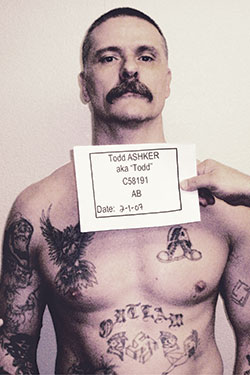 |
Todd Ashker, alleged member of the
Aryan Brotherhood.
(Photo: Courtesy of California Department of Corrections and Rehabilitation)
|
The sheer length of time inmates spend here has made Pelican Bay a novel experiment in social control. The California prison system allows any confirmed gang member to be kept in the SHU indefinitely, with a review of his status only every six years. (Prisoners who kill a guard or another inmate, by contrast, are given a five-year term in the SHU.) This policy has filled Pelican Bay with men considered the most influential and dangerous gang leaders in California. Ashker, allegedly a senior member of the Aryan Brotherhood, had for years shared a pod with Sitawa Jamaa, allegedly the minister of education of the Black Guerrilla Family, and Arturo Castellanos, allegedly an important leader of the Mexican Mafia. In the next pod over was Antonio Guillen, allegedly one of three “generals” of Nuestra Familia. According to the state, these men have spent much of their lives running rival, racially aligned criminal organizations dedicated, often, to killing one another. But over a period of years, through an elaborate and extremely patient series of conversations yelled across the pod and through the concrete walls of the exercise room, the four men had formed a political alliance. They had a shared interest in protesting the conditions of their confinement and, eventually, a shared strategy. They became collaborators.
The men planned for the hunger strike meticulously. They had staged two more modest strikes in 2011, and afterward some had staged private fasts in their cells to try to learn how long they might be able to go without food. The four men had spent the spring putting on weight. Ashker had calculated how much water he needed to drink to keep his electrolytes balanced, his heart pumping: 240 ounces a day. In June, the men sent letters to an activist group detailing their grievances, explaining when the strike would begin, and asking other prisoners to join them. In letters to families and friends, they spread the word. Corrections officers throughout the state heard the news; on July 2, a few senior officials visited from Sacramento to meet with the prisoners and measure their intent. They left convinced the men were serious. Then, a few days later, the prisoners stopped eating.
The severity of his isolation meant that as the strike began, Ashker had little idea of what effect it was having or how many other prisoners had decided to join him. It turned out to be the largest coordinated hunger strike in American history. On the first day, 30,000 prisoners across the state refused their meals. Three days in, more than 11,000 still had not eaten. “We had expected hundreds, even thousands,” says Dr. Ricki Barnett, a senior official in the state’s correctional health-care system. “We did not expect tens of thousands.”
From the beginning, even the most basic matters about the strike—what Ashker and the others were after, why so many people joined them, what the strike demonstrated—were opaque, and profoundly disputed. To the prisoners and their supporters, this was a protest against barbaric treatment, and the SHU was both an outrage in itself and a symbol of the arbitrariness and brutality of the prison system across the nation. The strike’s leaders had challenged the SHU’s constitutionality in court, arguing that the limits it placed on social interaction violated the Eighth Amendment’s prohibition on cruel and unusual punishment, and they had watched closely as a few other states, some pressured by prisoners and others mandated by judges, had de-emphasized solitary confinement. They believed they were part of a human-rights movement. But the prison officials saw something far simpler at work: a tactical maneuver by the gangs, acting in collusion, to end a system that had made it much more difficult for them to operate as they pleased.
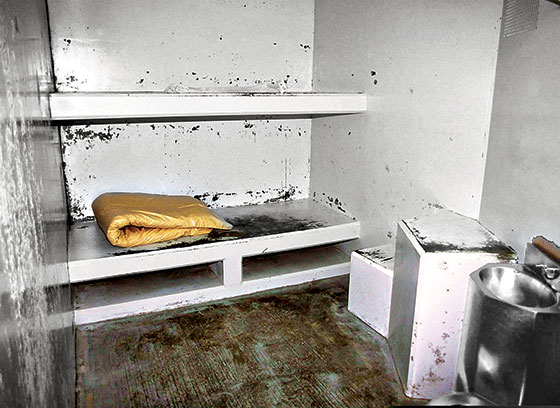 |
A cell in the Pelican Bay SHU.
(Photo: Reuters)
|
Jamaa thought his fellow inmates might need some concrete encouragement. His private fast the previous fall had lasted 33 days, and he believed he could have gone longer. Soon after last summer’s strike began, the four leaders were moved from the SHU to a unit called Administrative Segregation, and Jamaa, entering the unit, started to holler, “Forty days and 40 nights! Forty days and 40 nights!” If prisoners can be counted upon to know any literature, it is the literature of suffering that in the Bible precedes redemption. Jamaa had chosen his slogan with intent: They were Moses in the desert. At night, Jamaa would drop on his knees, put his mouth to the crack between the door and the floor, and yell: “Forty days and 40 nights!” Soon, new hunger strikers arriving in AdSeg were shouting the slogan as they were hustled in. It was then that Jamaa began to believe their movement had some possibility, some momentum.
At first, the fasting prisoners at Pelican Bay were lethargic. Then, after about a week, the nurses found them suddenly chatty and energized. “There were these pockets of brilliant clarity,” says Bill Woods, the chief nurse at the prison. “There is a certain point where your body equalizes out. It has this mechanism to survive.” In their temporary home at AdSeg, the hunger strikers exercised outdoors in individual metal cages, which for some prisoners provided their first view of the horizon in decades. Frogs crawled into the cages; the prisoners could see small wildflowers in the grass. For the first time in years, the men could look into one another’s faces. Jamaa told his sister, 20 days in, that he thought they could last another 60 days, which terrified her. When lawyers asked how they were holding up, one of the prisoners replied, “Not too bad. I can feel the breeze.”
This didn’t last. By late July, the prisoners in AdSeg were cold all the time. Ashker developed a constant pain underneath his collarbone. He started to notice symptoms of claustrophobia—tightness, panic—which in all his time in isolation he had never suffered before. Ashker has a thick chest, and he was convinced that the pain was his body consuming itself, hunting for nutrients. “I could feel the muscle flowing off my body,” he told me.
Over time, the Corrections Department emptied most of AdSeg, transporting dozens of hunger strikers to the state prison at Sacramento, closer to major hospitals. Ashker and his three collaborators were considered too influential and dangerous to transport, and so they were left behind—four prisoners alone, spaced out in an otherwise empty corridor of cells as long as a city block. On the weekends, they met with attorneys, and they learned that though the hunger strike had greatly diminished, a hundred prisoners around the state were still refusing food. At night, sometimes, they would try to strategize, shouting at one another underneath their doors, but often they found they were too weak to make themselves heard, and so they would return to their bunks and cover themselves with blankets to conserve energy. It was in this manner that the leaders of the California prison hunger strike approached the end of a summer spent without food, in the same way that they had spent much of their adult lives: in tense, anticipatory solitude.
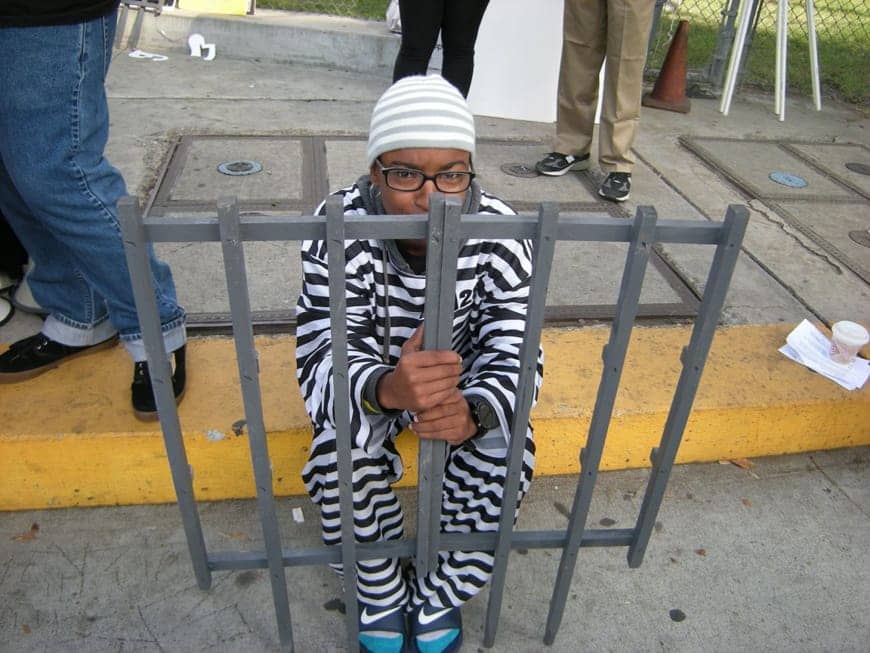
Picture yourself in a car heading north from San Francisco. Six hours after you leave that spotless city—after you pass the blissful yuppie towns of California wine country, and then the redwoods and hippie outposts of Mendocino and Humboldt, and then two hours of vacant, foggy coast north of Eureka—you arrive in Crescent City, 13 miles from the Oregon border. Physically, culturally, Pelican Bay is as remote from the rest of California as the state’s borders permit. Plaques in the motels warn visitors of the danger of tsunamis. Topographically speaking, the place is a fortress of isolation: Alaska-like, rocky and vertical and misty. It is an amazing place to put a prison.
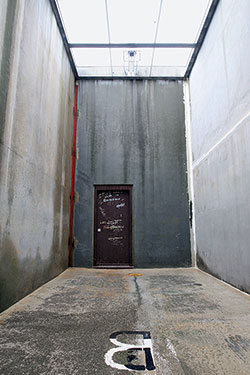 |
An exercise yard in the Pelican Bay SHU.
(Photo: Jim Wilson/The New York Times/Redux)
|
“From the time it opened, Pelican Bay was seen as having some historical significance,” says Craig Haney, a psychology professor at the University of California, Santa Cruz, who studies prisons. “Many of us saw Pelican Bay as perhaps the wave of the future, and that’s what it became.”
The Pelican Bay SHU, which houses 1,100 prisoners in almost as many cells, takes up half of the prison and operates under policies designed less to punish prisoners than to isolate them from other members of their gangs. Arriving inmates are often told that there are only three ways to leave the SHU: “Parole, snitch, or die.” But parole boards routinely inform SHU inmates that they will not be granted parole until they agree to leave their gang and explain its operations, a formal process known as debriefing. Doing so would send them back to a regular prison, where they would likely become gang targets. So many SHU inmates believe they only really have one option. “A while back, I realized I was probably going to spend the rest of my life in the SHU,” Ashker told me.
Haney visited Pelican Bay three years after it opened and surveyed 100 SHU inmates as an expert consultant to a prisoner lawsuit challenging the unit’s constitutionality. On his first day at the prison, the psychologist saw such florid psychosis that he called the attorneys and urged them to emphasize the confinement of the mentally ill. Once Haney began his interviews, he found serious psychological disturbances in nearly every prisoner. More than 70 percent exhibited symptoms of “impending nervous breakdown”; more than 40 percent suffered from hallucinations; 27 percent had suicidal thoughts. Haney noticed something subtler, too: A pervasive asociality, a distancing. More than three-quarters of the prisoners exhibited symptoms of social withdrawal. Even longtime prisoners reported feeling a profound loss of control when they entered the SHU, in part because they weren’t sure whether they’d ever be released. Many reported waking up with a rolling, nonspecific anxiety. The SHU “hovers on the edge of what is humanly tolerable,” wrote Thelton Henderson, the federal judge who decided the prisoner lawsuit in 1995. You can sense a vast uncertainty in that first word, hovers. The judge ordered major reforms—the seriously mentally ill, for instance, could no longer be housed there—but he let the SHU stand.
That was more than 18 years ago. Some of the same prisoners are still there. Haney returned to Pelican Bay last year, for a follow-up study, and found that these patterns of self-isolation had deepened. Many inmates had discouraged family members from visiting, and some seemed to consider all social interactions a nuisance. “They have systematically extinguished all of the social skills they need to survive,” Haney says. Those inmates who do comparatively well tend to replace the social networks outside the SHU with those within it—which, in a society composed of alleged gang members, often means gangs. “In isolation,” he says, “gang activity is the only contact that is possible; it is the only loyalty that is possible; it is the only connection that is possible.”
This is one way of understanding the paradox of American mass incarceration: There are 2.4 million prisoners across the country, four times more than in 1980, and Supermax facilities managed similar to Pelican Bay in at least 44 states, and though this corresponds with a dramatic drop in street crime, the system of prison gangs has flourished. In Pelican Bay, there are significantly fewer murders in the prison than there were a decade ago, but the gangs’ power has hardly softened: Prosecutors allege that current SHU inmates manage the affairs of street gangs in Los Angeles and direct negotiations with Mexican cartels. Elsewhere, the situation is even less stable. Baltimore’s city jail had, by 2012, fallen so completely under the control of a prison gang that, according to prosecutors, its leader not only maintained a network of guards who smuggled in drugs and weapons, but also impregnated four guards while behind bars. Last year in Colorado, an alleged member of a white prison gang, who had served several years in SHU-like isolation, assassinated the executive director of the state’s prison system on the official’s own doorstep.
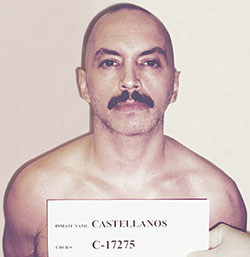 |
Arturo Castellanos
(Photo: Courtesy of California Department of Corrections and Rehabilitation)
|
In 1987, Ashker killed another white inmate at New Folsom prison, entering the man’s cell and stabbing him 26 times. Prosecutors were convinced the murder had been an Aryan Brotherhood hit, ordered because the victim had refused to cut the gang in on his methamphetamine deals. When the case came to trial, Ashker persuaded his court-appointed attorney, Philip Cozens, to call another inmate, an Aryan Brother named Paul Schneider, as a witness. Prison guards brought Schneider to the courthouse in leg irons, and he and Cozens spoke about the upcoming testimony in a side corridor. When the conversation had finished, and Cozens, back turned, was walking away, Schneider attacked the lawyer from behind, with an eight-inch blade he had hidden in his rectum. Cozens survived the stabbing. He believes that Ashker was behind the attack, that the knifing was an attempt to provoke a mistrial. But the judge refused to halt the case, and Cozens, now accompanied by a bodyguard, continued to serve as defense counsel. Ashker was convicted of second-degree murder. Schneider wound up testifying anyway. Ashker, he reportedly told the jury, was “a good white dude.”
Ashker got his first swastika tattoo when he was 19, a seventh-grade dropout in prison for burglary. He says he was motivated partly by white pride and partly by the sheer juvenile thrill of doing something outrageous. He describes himself then as “a rebel at heart.” This identity exchange happens often in prison: an inmate fuzzes out the specific parts of his personhood and instead inhabits the most threatening idea of his race. But that tattoo, and the others that followed, have a context, prison officials say: They advertised that he was affiliated with the Aryan Brotherhood, the white prison gang that was then warring with the Black Guerrilla Family. Ashker denies membership in a gang, but by 1990, three years after the murder, prison officials had pinpointed him as an Aryan Brother. Pelican Bay was built to house “the worst of the worst.” Ashker fit the bill. In he went.
Ashker is six feet tall, with a handlebar mustache and somewhat wild eyes, but his speech is direct and tautly compressed. Even his handwriting exhibits extreme control: His script is impeccable. “Eager to talk,” is how a fellow inmate describes him. “They don’t give us a lot of time,” Ashker said tensely when we met. Because Ashker has few connections to family (his mother has visited exactly once, in 1993) and because there are few whites in the Pelican Bay SHU, the pressures of isolation fell more heavily on him than on most other prisoners. “You do a lot of self-reflection—you don’t have a choice,” he said. “If you think too much about the past, or the future, it gets real depressing. I look at it as, my life has been a waste of space.” He said this very matter-of-factly.
Prisoners in the SHU look for a salve against this abyss or a distraction from it. Often they nurse a grievance. “You get through the first four or five years on anger alone,” Jamaa told me. Ashker is, unexpectedly, an optimist, and he learned to channel his anger through the law. Shortly after moving to the SHU, he was shot in his right arm by a guard. Three weeks later, while under treatment by prison doctors, an artery in his arm burst and he nearly lost his hand. Ashker sued, and a federal jury awarded him $225,000. This opened his mind. He earned a paralegal’s certificate through a correspondence course. He has now sued the prison system 15 times—for forbidding SHU inmates from sending letters to inmates in other prisons, for refusing to let him buy thermal shirts to keep his injured arm warm. Once, after Ashker had represented himself at a legal hearing in San Francisco in which the judge ruled in his favor, he was driven back across the Golden Gate Bridge in chains. It was one of those perfect California days—sun shining everywhere. “There are these moments,” he told me, remembering, “when you realize that you are still alive.”
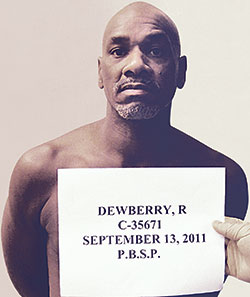 |
Sitawa Jamaa (known by officials
as Ron Dewberry)
(Photo: Courtesy of California Department of Corrections and Rehabilitation)
|
The men were wary around one another at first. But they were aging, and perhaps growing more reflective, and they had nothing to do but talk with neighbors they couldn’t see; the experience of the SHU is monotony in motion. Guillen talked about his son, who had been arrested; Castellanos about his brother, who was also in the SHU. They had grievances in common, too: Their isolation in the Short Corridor seemed to confirm to them that they had been singled out. Ashker grew particularly close to an older, politically minded white inmate on the pod named Danny Troxell. Eventually, Troxell and Ashker became something of a revolutionary book club. They read Naomi Wolf, Howard Zinn, Michel Foucault. The ideas that stayed with Ashker the longest came from Zinn: that they were all members of a single prisoner class and that racial animosities had been leveraged by the guards to divide them. “One of their purposes,” he told me, “is to sever all your ties to humanity.”
By 2009, Ashker was corresponding with a sociologist at SUNY-Binghamton named Denis O’Hearn, and on O’Hearn’s suggestion, he read a copy of a book the professor had written, a biography of Bobby Sands. O’Hearn had, in his book, emphasized that even though Sands had died during his protest, he had achieved a great deal in winning political sympathy for his cause. In studying Sands, Ashker read of an ancient Irish tradition called the King’s Threshold, in which a commoner who believed that he had been wronged by a nobleman would fast on the aristocrat’s door to gain attention and public sympathy. Ashker found this incredibly moving. He and Troxell began to talk about Sands’s example and about the risks and possibilities a hunger strike might offer. Jamaa, a studied revolutionary who had been reading about Sands and other hunger strikers for two decades, listened to Ashker’s epiphany with jaded amusement. But he did listen. “Every time we’d start talking about it, we’d notice the pod going quiet—we knew people were listening,” Ashker told me.
What Ashker and Troxell represented was a kind of “split faction” within the Aryan Brotherhood, Lieutenant Jeremy Frisk explained in a conference room in Pelican Bay’s headquarters building earlier this winter. Projected onto a screen was a diagram of the Aryan Brotherhood’s hierarchy. The three men at the top of the diagram, who he said composed the gang’s “commission,” had been ambivalent about the project, in part because Ashker was not especially popular within the Brotherhood and in part because they saw little advantage. But Guillen, Castellanos, and Jamaa, Frisk said, each had more personal pull among their racial groups. The Black Guerrilla Family has long been the most political gang, and its members could be expected to participate. The Pelican Bay gang-investigations unit soon noticed coded messages discussing the wisdom of a hunger strike passed among members of the two Hispanic groups and to their allies on the outside. In these deliberations, Frisk believes, Castellanos and Guillen were decisive. “Castellanos is, if not the most influential Mexican Mafia member, right there at the top. Once you put his name on something with orders, the southern Hispanics are going to do it,” he said. “And Guillen is the street-regiment general for the NF.” One former Nuestra Familia member says that his gang’s participation had been all Guillen’s doing: “It was Chuco Guillen, 100 percent.”
To see the yard as the prison guards do is to become alert to a hidden social physics in which the real actors are not individuals but networks. There is never just a hotheaded punch to a guard’s cranium, never just an enterprising drug dealer caught smuggling in supply. Political protests are never just that; they are always a conversation, in thug semiotics, among gangs and between gangs and guards, each move deliberated over with great care by a council of elders isolated in solitary cells. Guards talk with respect about the ingenuity of gang leaders, and with exasperation at the ends to which it is put (“a waste of human talent,” Frisk says about the SHU). Prison officials believe that gangs control most of what goes on among the state’s inmate population. In the high-security prisons, “almost everything happening out there has some influence of gang activity,” says Michael Stainer, a deputy commissioner of the California prison system.
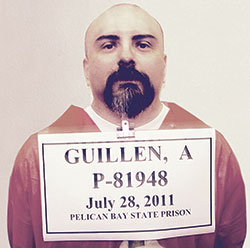 |
Antonio Guillen
(Photo: Courtesy of California Department of Corrections and Rehabilitation)
|
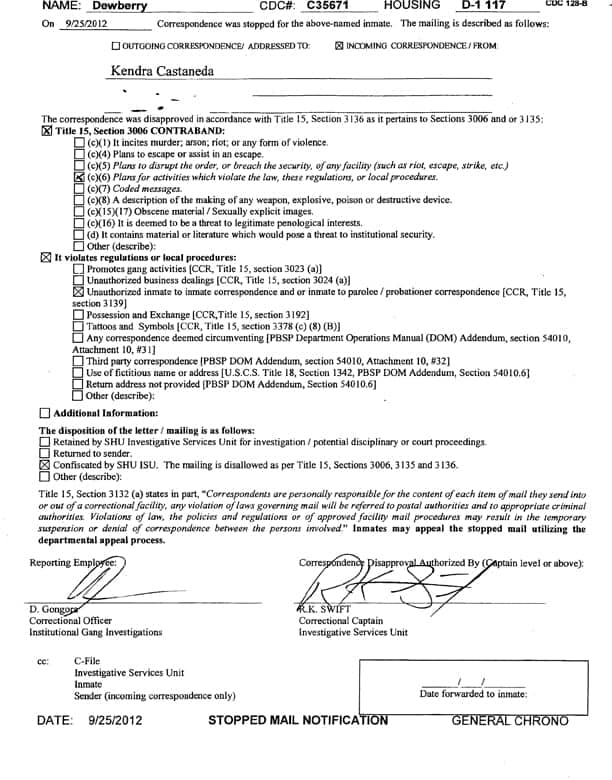
This ambiguity has long been institutionalized in the “validation” process through which alleged gang members are committed to the SHU. Investigators must document three pieces of evidence confirming an inmate’s gang membership. Often this is a tattoo or the statement of an anonymous informant. But expressions of ethnic identity and radicalism—black nationalist writings, for instance—can also be counted as gang-related. Even social relationships between members of the same ethnic group can be outlawed: Some prisoners have been validated for speaking with a known gang member from their own racial group. The prison officials, Jamaa told me, “blur the line between what is a gang and what is a racial group. They have to, because they don’t understand where a gang ends and a racial group begins.”
Pelican Bay is a strange hybrid of a place: Systems of isolation and communication vie constantly for control. SHU prisoners learned the architecture of the toilet drains and have used them to shout messages to other pods. Members of Nuestra Familia developed a system of information exchange through the law library—ghostwriting messages in legal books and then sending coded messages in letters to family members explaining which page in which book fellow gang members ought to consult. In gang lore, Pelican Bay has assumed a mythic place: The Mexican Mafia calls it La Playa Azul (“the Blue Beach”), and the bylaws of Nuestra Familia stipulate that its core leaders must be housed there. When a court order temporarily increased mail monitoring at Pelican Bay last fall, Frisk heard from gang investigators in the Los Angeles area: The crews were saying that there were no instructions coming from headquarters, that they did not know what to do. But most of the time, despite extreme restrictions, gangs find a way to function. “All Aryan Brotherhood decisions, including membership and the decision to murder another member, are conducted by vote,” says Bryan Elrod, a former Aryan Brotherhood member who recently “debriefed” and was transferred out of Pelican Bay. “Sometimes it could take months to complete voting in SHU.” But the votes did happen.
The central mystery of this summer’s hunger strike lies in its scope. Why did 30,000 prisoners around the state join a protest called by four men in the SHU? Most prison officials contend that these prisoners were prodded by the gangs. “There was a high element of coercion going on,” Stainer says. Many of the inmates who went on strike lasted just three days—proof, another senior prison official told me, that many participants were only joining to get credit from their gang. Javier Zubiate, a former Nuestra Familia member, was asked during his debriefing interviews why he had joined the strike. He said that he had seen the public letter from Antonio Guillen, and “we took that as an order from a general.”
Even so, prison officials had documented only one example of explicit coercion: an inmate at Corcoran state prison who was beaten after he refused to help his cell mate participate. Beyond that, there was nothing violent. In Pelican Bay, things were quiet. “They had said that they wanted the protest to be peaceful, and by and large it was,” says Clark Ducart, the chief deputy warden. Which suggests that perhaps the protesting prisoners were motivated by something other than simply pressure and that the allegiance they feel to their gang is not only a matter of intimidation and racial supremacy.
At every stage in the criminal-justice system, its basic moral complexity recurs: What part of a criminal act is an individual’s responsibility alone, and what part is the consequence of his circumstances—of poverty or racial alienation? In Pelican Bay, the prisoner is treated not as an individual but as a soldier for the group to which he belongs. The crucial question the validation process has asked, for years, has not been “What has this man done?” but “To what does this man belong?” But there has been a self-fulfilling element to this approach: Treat prisoners as racial blocs and all social networks as if they are gangs, and for all of its essential violence and brutality, the gang will retain some of the warmth, the underlying human attachment, of the social network on which it is built. “To this day, I love some of those men,” Elrod told me earlier this month from the secure unit at Kern Valley State Prison where he is now housed to keep him safe from the revenge violence of his former brothers.
Once
the Short Corridor Collective, as Ashker and his conspirators started
to call themselves, had a hunger strike in mind, even ordinary
grievances acquired weight. In 2011, the SHU was put on lockdown after a
disturbance in the general population. “We hadn’t even done anything,”
Ashker told me. “I said, ‘Hey, this is just gonna be the norm.
Everything that happens, they’re gonna come back on us.’ ” Among the
Brotherhood, word circulated that Ashker and Troxell were “willing to go
out in a box.” Jamaa wrote letters to prisoners-rights groups; if the
Collective was serious, they needed some support from outside. That
summer, the Collective staged their first two brief hunger strikes,
which resulted in minor victories, like getting a pull-up bar and a
handball in the exercise room. Even here, though, gang activity and
political activity were hard to separate: Elrod says that when he and
Ashker were briefly moved into AdSeg together, they took the chance to
discuss Aryan Brotherhood business.
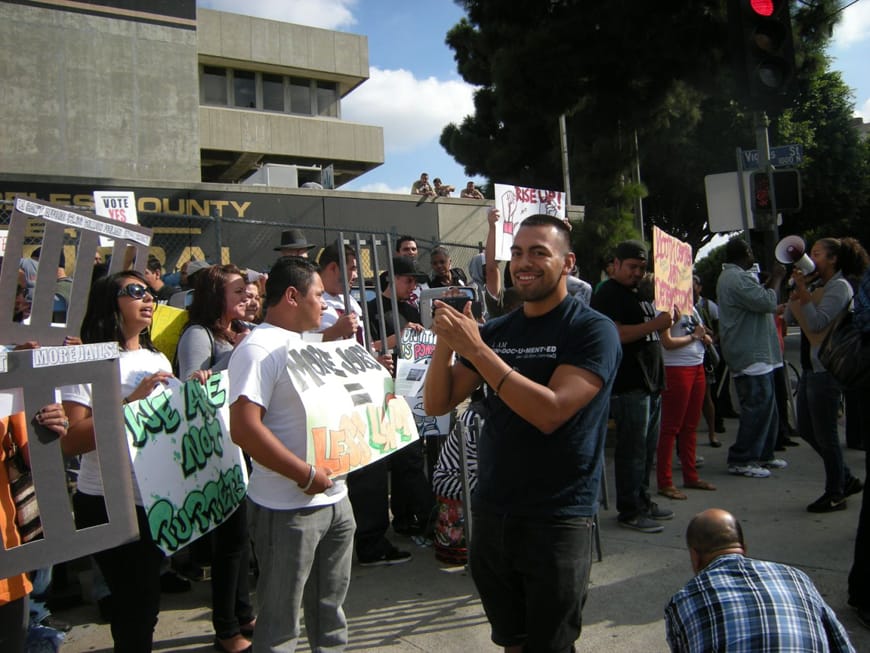
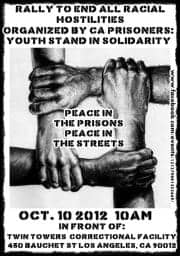
The next year, the Collective published a joint letter calling for the cessation of all hostilities among racial groups in prison. Jamaa had written the original draft and read it out to the others on the cell block, who each helped to edit it. To the four men in the Collective, the document felt like a great accomplishment, an end to the interracial prison wars in which they had spent their adult lives. They had some hope that the truce could eventually extend to the streets. “This is an historical document,” Jamaa said. “We are a prisoner class now.”
They asked the Corrections Department to post the letter in each of their facilities, and they imagined videos broadcast in prisons around the state in which they urged inmates to cooperate rather than to fight one another. The officials refused and issued Castellanos a rules violation when he discussed it with his family. The men in the Collective took it hard. Soon those same family and neighborhood networks that prison officials believe are often used to convey gang commands out to the street were carrying news of a coming hunger strike, and inside the Short Corridor the inmates were putting on weight in anticipation.
It felt freezing in AdSeg, all the time. The four remaining prisoners were convinced that the guards were blasting in cold air, trying to freeze them into submission. But each time the prison doctor, Donna Jacobsen, visited the AdSeg, she checked the thermometer, and it always read normal. Their bodies, she thought, must simply have lost the ability to regulate temperature.
Negotiations were static. The prisoners were demanding face-to-face meetings with top state correctional officials; these were refused. But the medical threat was escalating. Jacobsen, a former HIV physician from Miami, was focused less on the prisoners’ steady deterioration than on what might happen to them once they started to eat again. “Being on hunger strike isn’t the riskiest part; it’s the refeeding that can be incredibly dangerous,” Jacobsen says. The longer the prisoners went without nutrients, the more their electrochemical systems slipped out of balance. Refeeding “can basically stop your heart if you don’t have the right levels.” Her staff had offered vitamin supplements to the men to try to stabilize their electrolytes. After some initial resistance, they were accepted. But there was a paradoxical effect: “The vitamins rejuvenated us,” Jamaa told me. When a low-ranking official from Sacramento came up to meet with the prisoners, Jamaa rebuffed him. “I said, ‘I’m willing to die right now.’ ”
Each weekend, a veteran Oakland activist lawyer named Anne Butterfield Weills made the long drive up to Crescent City to meet with the prisoners. “I literally saw them shrink,” Weills says. She received a call from strikers who had been transported down to Sacramento: Did Ashker, Jamaa, Castellanos, and Guillen want them to continue to strike? What should they do? Newspaper and television stations were reporting a macabre daily watch—how many men were still on strike, how long had they each gone. One hunger striker had died already, though the coroner would later rule that he had strangled himself. There were still 69 men who had not eaten at all in more than 40 days, and many of them had written letters saying they would not cave. Weills was spending some of her time at Pelican Bay working on advance medical directives.
Then the standoff ended. On the 43rd day of the strike, Judge Henderson (the same judge who had, nearly two decades earlier, ordered reforms to the SHU) issued an order giving the state permission to force-feed prisoners who were at “near-term risk of death or acute bodily injury.” The order also allowed the state to override prisoners’ Do Not Resuscitate orders, if it had a reason to believe they had been coerced. Health officials, worried about the escalating risks, had joined the Corrections Department’s petition for the order. “I was concerned that the 40 or 50 leftover people might die,” says Barnett, the senior official at the department.
The next year, the Collective published a joint letter calling for the cessation of all hostilities among racial groups in prison. Jamaa had written the original draft and read it out to the others on the cell block, who each helped to edit it. To the four men in the Collective, the document felt like a great accomplishment, an end to the interracial prison wars in which they had spent their adult lives. They had some hope that the truce could eventually extend to the streets. “This is an historical document,” Jamaa said. “We are a prisoner class now.”
They asked the Corrections Department to post the letter in each of their facilities, and they imagined videos broadcast in prisons around the state in which they urged inmates to cooperate rather than to fight one another. The officials refused and issued Castellanos a rules violation when he discussed it with his family. The men in the Collective took it hard. Soon those same family and neighborhood networks that prison officials believe are often used to convey gang commands out to the street were carrying news of a coming hunger strike, and inside the Short Corridor the inmates were putting on weight in anticipation.
It felt freezing in AdSeg, all the time. The four remaining prisoners were convinced that the guards were blasting in cold air, trying to freeze them into submission. But each time the prison doctor, Donna Jacobsen, visited the AdSeg, she checked the thermometer, and it always read normal. Their bodies, she thought, must simply have lost the ability to regulate temperature.
Negotiations were static. The prisoners were demanding face-to-face meetings with top state correctional officials; these were refused. But the medical threat was escalating. Jacobsen, a former HIV physician from Miami, was focused less on the prisoners’ steady deterioration than on what might happen to them once they started to eat again. “Being on hunger strike isn’t the riskiest part; it’s the refeeding that can be incredibly dangerous,” Jacobsen says. The longer the prisoners went without nutrients, the more their electrochemical systems slipped out of balance. Refeeding “can basically stop your heart if you don’t have the right levels.” Her staff had offered vitamin supplements to the men to try to stabilize their electrolytes. After some initial resistance, they were accepted. But there was a paradoxical effect: “The vitamins rejuvenated us,” Jamaa told me. When a low-ranking official from Sacramento came up to meet with the prisoners, Jamaa rebuffed him. “I said, ‘I’m willing to die right now.’ ”
Each weekend, a veteran Oakland activist lawyer named Anne Butterfield Weills made the long drive up to Crescent City to meet with the prisoners. “I literally saw them shrink,” Weills says. She received a call from strikers who had been transported down to Sacramento: Did Ashker, Jamaa, Castellanos, and Guillen want them to continue to strike? What should they do? Newspaper and television stations were reporting a macabre daily watch—how many men were still on strike, how long had they each gone. One hunger striker had died already, though the coroner would later rule that he had strangled himself. There were still 69 men who had not eaten at all in more than 40 days, and many of them had written letters saying they would not cave. Weills was spending some of her time at Pelican Bay working on advance medical directives.
Then the standoff ended. On the 43rd day of the strike, Judge Henderson (the same judge who had, nearly two decades earlier, ordered reforms to the SHU) issued an order giving the state permission to force-feed prisoners who were at “near-term risk of death or acute bodily injury.” The order also allowed the state to override prisoners’ Do Not Resuscitate orders, if it had a reason to believe they had been coerced. Health officials, worried about the escalating risks, had joined the Corrections Department’s petition for the order. “I was concerned that the 40 or 50 leftover people might die,” says Barnett, the senior official at the department.
Until this point, the prisoners had thought of the guards—and, more broadly, the state—as their captors. But the state is also their warden and their protector: A prison is designed to separate convicts from society and prevent them from doing more harm, but also to shelter them and keep them alive. The judge’s order returned repeatedly to the problem of coercion. The specter of gang influence was so strong, Henderson’s ruling suggested, that the state could not trust that a prisoner’s advance medical directive had been made freely—that he had made his own decision about the terms under which he was willing to die. The strike leaders had thought that by volunteering to risk their own deaths they could compel the state to see them as individuals, and that in at least this one instance they could reassert freedom of control over their lives. But they had been wrong.
The men were still not eating, but they were debating how to proceed. Two prominent state legislators offered to hold a special hearing on conditions in the SHU. During the first hunger strikes, in 2011, Jamaa had been the hard-liner, but he is also the most politically attuned, and the promise of ongoing legislative scrutiny, something the prisoners had never managed to win, seemed to him a breakthrough. “That is a victory,” he told the others.
Eventually, somewhat reluctantly, they all agreed. On September 5, the 59th day of the hunger strike, the leaders of the Short Corridor Collective announced that they were “suspending” their action. The next day, Jacobsen met with each of the prisoners in their cells to explain the dangers of refeeding and the ideal way to manage it. Their sustenance once more in the hands of the state, they were gingerly, carefully, fed.
The end of the hunger strike was so deflating that it wasn’t until the second legislative hearing into SHU conditions was held, this month in Sacramento, that it began to seem plausible that Jamaa had been right, and that the hunger strikers had won something meaningful. At that hearing, even officials with the Corrections Department seemed to acknowledge that change to the SHU was inevitable. “We all agree that it is far too easy to get in and too hard to get out, and the stays in this environment have been far too long,” Martin Hoshino, an undersecretary of Corrections, testified. Hoshino and Stainer presented the Department of Corrections’ new validation process, which is meant to emphasize not associations but behavior. Tom Ammiano, the chair of the Assembly’s Committee on Public Safety, introduced a bill that would prohibit any prisoner from being kept in isolation indefinitely.
Prison policy is usually shaped out of public view, but the duration and visibility of the hunger strike has helped make the subject politically urgent. Last week, New York State agreed to extensive new restrictions on whom it could confine to its SHU. This week, in Washington, the Senate Judiciary Committee is holding a hearing titled “Reassessing Solitary Confinement.” Other states have also curtailed the use of isolation recently—Indiana, where change was compelled by a federal judge’s ruling, and Maine, Mississippi, and Colorado, which had faced pressure from prisoners’-rights groups. These changes are too few to constitute a total rejection of the practice. But for the first time, it has begun to seem plausible that the American attachment to this special kind of imprisonment is not a national peculiarity so much as a generational one, and that a 25-year experiment may be ending.
To Ashker, these changes are the subject of much attention and contemplation. But they are also very abstract. Since the hunger strike, he has been more isolated than ever. Before last year’s strike began, he was moved to a new pod, which had the effect of breaking up the Short Corridor Collective and separating him from Danny Troxell, his good friend. Troxell had given Ashker a small photograph of himself as a memento. When the guards found it, they took it away and gave Ashker a major rules violation for having secreted it. “They said it was gang-related,” he said bitterly when we spoke in December. “I mean, it’s a photograph.”
His television has been taken away from him as a consequence of the rules violation. For all of his legal endeavors and strategic planning, he has received only two social visits since 2007. He is the only white man in his new pod and is surrounded by strangers speaking Spanish. On some Sunday afternoons, he listens to a D.J. called Sista Soul on a public radio station that broadcasts from Humboldt County and plays recorded messages to the men in Pelican Bay sent in by family members, ex-girlfriends, female pen pals. A rare recent call for Ashker, from a woman whom he has never met: “This is a shout-out of love and admiration to Todd in the SHU from Julie in Western Australia. I hope hearing my voice brightens your day. Bye for now, my love.”
He has had trouble getting comfortable in his new cell. The problem is his mattress. It is too short, and his feet dangle off the end. It is also too thin. “As soon as I laid on it, it flattened out,” he told me. He tried shaking out the padding, smoothing it out with his palm. “It’s good for a minute, but then as time passes, it collapses again.” The padding is now permanently separated to the sides of his mattress, so that as he enters his sixth decade of life, he is sleeping on a thin plastic sleeve on a stone bench.
“I feel like exploding,” Ashker said.