Retiring Arizona Prison Watch...


This site was originally started in July 2009 as an independent endeavor to monitor conditions in Arizona's criminal justice system, as well as offer some critical analysis of the prison industrial complex from a prison abolitionist/anarchist's perspective. It was begun in the aftermath of the death of Marcia Powell, a 48 year old AZ state prisoner who was left in an outdoor cage in the desert sun for over four hours while on a 10-minute suicide watch. That was at ASPC-Perryville, in Goodyear, AZ, in May 2009.

Marcia, a seriously mentally ill woman with a meth habit sentenced to the minimum mandatory 27 months in prison for prostitution was already deemed by society as disposable. She was therefore easily ignored by numerous prison officers as she pleaded for water and relief from the sun for four hours. She was ultimately found collapsed in her own feces, with second degree burns on her body, her organs failing, and her body exceeding the 108 degrees the thermometer would record. 16 officers and staff were disciplined for her death, but no one was ever prosecuted for her homicide. Her story is here.

Marcia's death and this blog compelled me to work for the next 5 1/2 years to document and challenge the prison industrial complex in AZ, most specifically as manifested in the Arizona Department of Corrections. I corresponded with over 1,000 prisoners in that time, as well as many of their loved ones, offering all what resources I could find for fighting the AZ DOC themselves - most regarding their health or matters of personal safety.

I also began to work with the survivors of prison violence, as I often heard from the loved ones of the dead, and learned their stories. During that time I memorialized the Ghosts of Jan Brewer - state prisoners under her regime who were lost to neglect, suicide or violence - across the city's sidewalks in large chalk murals. Some of that art is here.

In November 2014 I left Phoenix abruptly to care for my family. By early 2015 I was no longer keeping up this blog site, save occasional posts about a young prisoner in solitary confinement in Arpaio's jail. I'm deeply grateful to the prisoners who educated, confided in, and encouraged me throughout the years I did this work. My life has been made all the more rich and meaningful by their engagement.

I've linked to some posts about advocating for state prisoner health and safety to the right, as well as other resources for families and friends.

until all are free -

MARGARET J PLEWS (June 1, 2015)
arizonaprisonwatch@gmail.com


INDIGENOUS ACTION MEDIA

INDIGENOUS ACTION MEDIA
ANTICOLONIAL zines, stickers, actions, power

Taala Hooghan Infoshop

Kinlani/Flagstaff Mutual AID

MASS LIBERATION AZ

MASS LIBERATION AZ
The group for direct action against the prison state!

Black Lives Matter PHOENIX METRO

Black Lives Matter PHOENIX METRO
(accept no substitutions)

BLACK PHX ORGANIZING COLLECTIVE

BLACK PEOPLE's JUSTICE FUND

PHOENIX: Trans Queer Pueblo

COVID Mutual AID PHOENIX

AZ Prison Watch BLOG POSTS:


Showing posts with label school to prison pipeline. Show all posts

Monday, June 2, 2014

Starve the School-to-Prison Pipeline: Trauma-informed care and restorative practices.

Phoenix, AZ 
(May 2014)
------------------------------------
From SocialJusticeSolutions.org:

San Francisco’s El Dorado Elementary uses trauma-informed & restorative practices; suspensions drop 89%

Jane Ellen Stevens
Aces Too High
Posted: 1/29/2014 15:59
For one young student – let’s call him Martin — the 2012-2013 school year at El Dorado Elementary in the Visitacion Valley neighborhood of San Francisco was a tough one, recalls Joyce Dorado, director of UCSF HEARTS — Healthy Environments and Response to Trauma in Schools.

“He was hurting himself in the classroom, kicking the teacher, just blowing out of class many times a week.” There was good reason. The five-year-old was exposed to chronic violence and suffered traumatic losses. His explosions were normal reactions to events that overwhelmed him.

This year, Martin’s doing better. That’s because he spent months working with a HEARTS therapist, and that therapist worked with his teachers and other school staff to create a more safe and supportive learning environment. Still, on days when he feels extremely anxious, Martin sometimes asks to visit the school’s Wellness Center, a small, bright room stocked with comforting places to sit, headphones to listen to music, and soft and squishy toys.

“If a student starts to lose it, the teacher can give the kid a pass to go to the Wellness Center,” says Dorado. “The kid signs in, circles emotions on a ‘feelings’ chart (to help the person who staffs the center understand how to help the child). The staff member starts a timer. The kid gets five to 10 minutes. The kid can sit on the couch with a blanket, listen to music, squeeze rubber balls to relieve tension and anger, or talk to the staff member. Kids who use the room calm down so that they can go back to class. It’s not a punishment room. It’s not a time-out room. It’s not an in-school suspension room. It’s a room where you feel better going out than when you went in.”

One day this year, as school staff members are meeting in the Wellness Center, Martin bursts in. “I need to borrow something,” he tells them. “Somebody needs my help.

They are stunned. He has had such a difficult time learning to manage his own feelings, that they’re shocked that he’s helping another child work through her distress. You go right ahead, they tell him. Martin picks up a couple of squeeze balls and takes them to a girl on the playground who’s crying. He shows her how to use them. Then he brings her to the Wellness Center and helps her use some of the other tools. Seeing that she’s in a safe place and in safe hands, he says, “I’m going back to class now.”

“Obviously,” says Dorado, a psychologist who’s also an associate clinical professor in the University of California San Francisco Department of Psychiatry, Child and Adolescent Services, “we’re going to work with him to build that strength.”

In most schools in the U.S., it’s likely that Martin would have been suspended, expelled, or shunted into special education classes. In fact, during the 2010-2011 school year 150,349 out of 3,042,670 – nearly five percent — of elementary school students were suspended or expelled in California.

Instead, because El Dorado Elementary has integrated HEARTS, Martin’s life is on a completely different trajectory than it was a year ago.

So are the lives of many of its other 275 students. The numbers tell the story: In 2008-2009, the year before HEARTS was introduced at El Dorado, there were 674 referrals – students sent to the principal’s office for fighting, yelling, or some other inappropriate behavior.

During the last school year – 2012-2013, there was a 74% drop, to only 175. This year, only 50 referrals have occurred.

There were 80 suspensions in 2008-2009. And although suspensions increased for four years to 150 in 2011-2012, last year they dropped 89%, to only 17. So far this year, only three students have been suspended.

As El Dorado Elementary School Principal Silvia Cordero thought when she first heard about trauma-informed practices: “Why don’t all schools have this?”

Kids who throw chairs in class – that’s a public health issue

“Childhood trauma is a public health issue,” says Dorado as we sit in a coffee shop in Berkeley, CA, late one afternoon to talk about the HEARTS program. “It’s really common, and the way kids react to it gets them into trouble in school.”

In fact, serious and chronic childhood trauma is so common that most people in the U.S. have experienced at least one type out of ten measured by the CDC’s Adverse Childhood Experiences Study. These include physical, sexual or verbal abuse; physical or emotional neglect; and five types of family dysfunction — family violence, living with alcoholic (or other drug-addicted) or mentally ill parents, losing a parent to divorce or abandonment, or a family member who’s in prison.

And almost half the nation’s children have experienced at least one or more types of serious childhood traumas, as measured by a recent survey on adverse childhood experiences by the National Survey of Children’s Health (NHCS). This translates into an estimated 35 million children nationwide. (Since parents responded to the survey, questions about physical, sexual and verbal abuse were excluded, since it was unlikely those would be answered accurately. Hence, 35 million children suffering childhood trauma is on the low side.)

It’s a public health issue, explains Dorado, because the toxic stress caused by chronic trauma can harm children’s brains. Toxic stress alters the brain’s structure and functioning, so that a child is hyper-vigilant. With their trigger reset on “red alert”, they can flip into “fight, fight, or freeze” mode even when they aren’t in real danger. As a result, they can have trouble concentrating, learning, or sitting still. They can erupt into rages, lash out at others or hurt themselves. Or they can withdraw in fear and not participate in anything that’s going on around them. None of this behavior is intentional, says Dorado.

Many teachers and principals think kids’ “bad” behavior is deliberate, and that the kids can control it. But it’s often not and they can’t – not without help, says Dorado. Their behaviors are a normal response to stresses they’re not equipped to deal with. Throwing a punch makes sense if they’re jumping in to defend their mother from an alcoholic raging father; screaming in fury is a normal reaction to a bully who continuously harasses them. But when the raised voice of a teacher or a counselor who’s criticizing them inadvertently triggers the same response, these behaviors look “abnormal, rude, or inappropriate,” says Dorado. “So, they’re getting kicked out of class and disengage from school. That puts our kids at incredible risk for later problems, including imprisonment.”

“We’re trying to change the school culture,” by teaching educators about the underlying neurobiology of trauma, she explains. “When we see aggravating behavior in a kid and ask the question, ‘What has happened to you?’ instead of ‘What’s wrong with you?’, that’s the fundamental reframe. This reframe helps give the behavior a context, engenders compassion, and helps us respond more effectively.”

The good news is that kids’ brains are plastic. If they develop a trusted relationship with a caring adult, if they’re taught how to calm themselves, if they spend more time in a resilience-building environment than a traumatic environment, their brains will heal and they will become happy and eternally curious learning sponges — i.e., their natural state of being.

Keeping everybody’s riders on their horses = happy teachers and kids

In 2007, after San Francisco Chronicle reporter Jill Tucker did a story about the overwhelming number of San Francisco schoolchildren who had PTSD, the San Francisco Unified School District (SFUSD) asked Dorado and Miriam Martinez, then director of the Division of Infant, Child, and Adolescent Psychiatry at UCSF-San Francisco General Hospital, if anything could be done about it.

UCSF was providing therapy to some students, but “we weren’t addressing the larger school culture,” says Dorado. We could bring kids into our offices, process their trauma, teach them how to be calm, and send them back into their classrooms, where they’d inadvertently be triggered again, because teachers weren’t aware of what complex trauma does to kids’ behavior in school.”

Borrowing from the book, Helping Traumatized Children Learn, and the trauma-informed “flexible framework” practices that Susan Cole, Ann Eisner and Joe Ristuccia at the Trauma and Learning Policy Initiative had developed for schools in Massachusetts, Dorado and Martinez developed HEARTS. The Metta Fund and the John and Lisa Pritzker Family Fund provided most of the support for the project. The search for schools to pilot the program began in 2009.
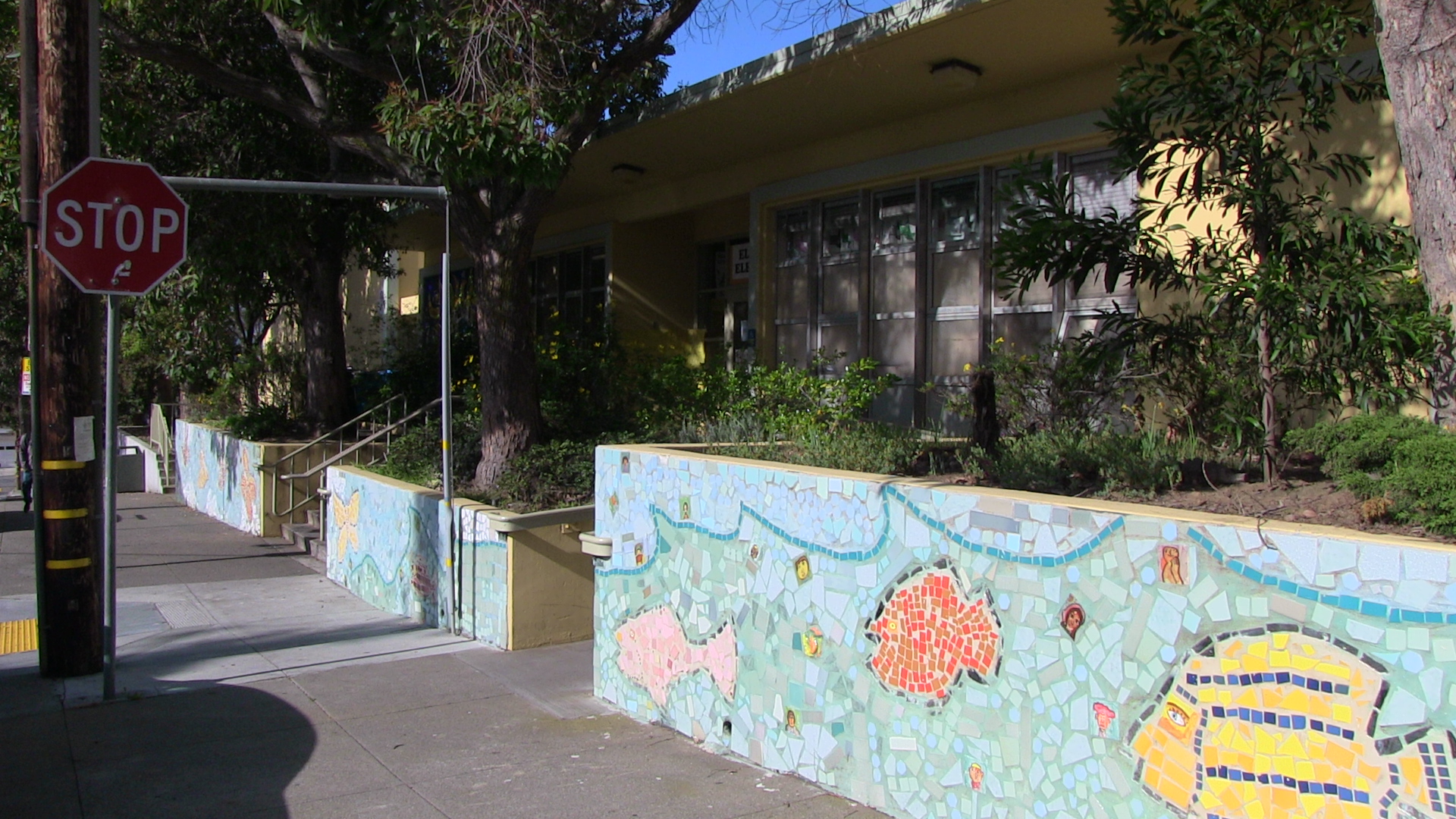
El Dorado Elementary School is located in the Visitacion Valley neighborhood in San Francisco

El Dorado Elementary School is located in the Visitacion Valley neighborhood in San Francisco

“We were looking for schools that understood the whole school mental health approach to trauma, and that understood that this approach was going to help improve their academic achievement,” explains Dorado. They invited five schools to apply and selected three to work with in the 2009-10 school year: El Dorado Elementary, Bret Harte Elementary and Paul Revere PreK-8 School.

Tai Schoeman was principal of El Dorado at the time. The training that Dorado provided “really shifted my thinking about why kids were acting the way they were,” he recalls. “It’s amazing information that I didn’t have access to before that. It completely transformed my understanding about why kids were getting in fights, throwing chairs, and struggling academically.”

El Dorado Elementary, which has 275 students from kindergarten through fifth grade — is a high-needs school, says Schoeman, who was its principal for seven years. Its students, mostly African-American and Latino, live in some of the poorest and most violent neighborhoods in San Francisco. Most students’ families live just above, at or below poverty level.

“There’s already a negative connotation about why these kids are behaving a certain way, especially the boys,” says Schoeman. “What you hear educators saying is: ‘You know how they are.’ They don’t understand that their behavior – fight-flight, confusion of cognition — comes from being exposed to clinical trauma. When you start to see that, then you begin to see that the kids aren’t doing it on purpose. “
 
The teachers learned what happens to a child’s brain when it’s faced with overwhelming stress. “You can think of the two main parts of the brain that come into play as a horse (“the survival/emotional brain,” AKA the limbic system) and the rider (“the learning/thinking brain”, AKA the prefrontal cortex),” says Dorado. “When something happens that reminds the child of their traumatic experiences, the rider falls off the horse. You’re left with a really terrified horse.

“No amount of star charts, reasoning with or demanding explanations from or yelling at that terrified horse will make a difference. It will just make the horse more terrified. That’s because you’re not talking to that child’s thinking brain. You’re talking to a terrified horse. The first thing to do is to get the rider back on the horse by helping the child to feel safe and a little bit in control. Only then can you talk about what happened.
That can take minutes, hours or days, depending on how stressful the triggering event was, if the child was on edge to begin with, or if the child trusts you.” And, she added, sometimes adults’ riders get knocked off their horses too, which can make situations worse if they aren’t aware of it.

The overwhelming response from the teachers was: Wow — this explains a lot of what we see in front of us.
“I was very careful not to tell teachers how to do their jobs,” says Dorado. “I just helped them understand how trauma might affect kids, and to use that information to think through strategies to deal with them.”

Over that first year in 2009-10 – with the teachers’ new awareness, the skills and tools Dorado taught them to help children learn how to calm themselves, and more counseling available for students with the most severe problems — the school climate began to shift.

“After a year, the kids who were throwing chairs and running out of class at the start of school were staying in class, and the reduction in fights was dramatic,” says Schoeman. Before the school began integrating trauma-informed practices, 40 to 50 kids – one-fifth of the school’s students — were erupting into rages or running away every day, and each classroom had four or five students who had serious problems.

Dorado also spent a great deal of time focusing on how stress and trauma affects teachers. “Taking care of our teachers is central to this work,” she says. “We don’t want to lose these incredible educators.”

“We explained how stress and trauma affect us as human beings,” recalls Dorado. “And then we showed what it does to teachers and other school staff. As I named some of the symptoms of burnout, many teachers said, ‘I’m NOT crazy.’ and ‘They don’t teach us this in school.’ The things they experience are why they burn out and leave the teaching profession.”

She offered teacher wellness groups at each of the three schools, and the teachers chose how they wanted to structure the meetings. The El Dorado teachers decided to take walks in the park. Physical exercise (and its accompanying deep breathing), social connections, and being in nature have all been shown to reduce stress, says Dorado.

Dorado says that by helping the teachers, all three schools kept teachers who might otherwise have quit. “One new teacher was so stressed out that she was ready to leave,” she recalls. “Nobody had taught her how to manage a classroom with so many stressed out kids. She’s now one of our best trauma-informed teachers, and enjoys teaching again.”

During 2010-2011, the school integrated another tool — restorative practices. These work well with trauma-informed practices, says Dorado – because they hold students accountable for their actions, teach empathy and focus on the importance of relationships. But restorative practices aren’t as effective without a trauma-informed approach.

“Chronic stress and trauma can get in the way of restorative practices,” she explains. “Restorative practices don’t work if you’re asking a kid who’s crying right after an incident to participate. But it’s useful after somebody’s recovered, after the rider’s back on the horse.”

In fact, it’s important for trauma-informed practices to be paired with any program or framework, including PBIS (Positive Behavioral Interventions & Supports) and Safe &Civil Schools, she says. Without that trauma lens, “we miss components about what makes these approaches work or not work.” For example, knowing that toxic stress affects children in different ways helps kids who are often labeled as “lazy”, “slow learners”, or “unmotivated”. These children slip through the PBIS and restorative practices nets because they sit quietly at their desks and aren’t acting out. But they fall behind, just as those who are suspended and expelled do, and are just as likely to eventually drop out of school.


What also helped Schoeman and the staff change the school climate was developing a data system to identify the location and time of referrals – students who are sent to the principal’s office for behavior issues. Instead of the entire school being considered a disaster, the staff could get a better grip on identifying which students were having the most trouble, why they were being sent to office, and which teachers were sending them.

“By the time I left (in June 2012),” says Schoeman, “there were only 10 or 15 kids who we were dealing with on a daily basis, and, in each class, only one or two had serious problems.”

Everybody needs a beanbag chair and a peace corner

Each classroom at El Dorado Elementary has a “peace corner” where kids can take a break if they need to. Beanbag chairs, books, squeeze toys, blankets, stuffed animals, windmills to blow into, pencils, crayons and paper crowd the peace corners at El Dorado.

“When teachers invite a student to use the corner, it’s not a reprimand,” says Principal Cordero. “It’s a space where kids can pull themselves together. It doesn’t mean they’re in trouble; there are no consequences. Kids spend no more than five minutes there.”

Students who feel an internal volcano brewing, as some of their drawings about toxic stress on the classroom walls show, also have the option of spending a few minutes in a buddy classroom with another teacher with whom they have a relationship. They can stay there five to 10 minutes, and return, without consequences.

This year, the school added the Wellness Center. If a child still can’t calm himself after time in a peace corner or in a buddy classroom, the teacher can send him to the Wellness Center, says Jen Caldwell, the school’s social worker. And if a student’s behavior escalates to a point where a teacher thinks a consequence will help, the student is sent to the Wellness Center to de-escalate, and then to another teacher’s classroom to spend 30 minutes up to the remainder of the day. The consequence is that the child is not participating in learning with his classmates.


The Wellness Center is also where restorative practices take place. “It’s where they may talk with the people they harmed, if they did, to learn how to repair the relationship,” says Caldwell.


If there’s an extreme situation – a physical fight, extreme verbal aggression (think “I’m going to take these scissors and stab your eyes out!”), or being sexually inappropriate – the child could be suspended.

There are several reasons behind the stunning drop in referrals and suspensions this year, say Cordero and Caldwell:

  • The kindergarteners of 2008-2009 are now fifth graders, so most students have been living in the trauma-informed environment for six years. This pre-empts blowouts. “They have the language and are implementing cool-down practices that can get them back on track,” notes Cordero. “I’m referring to the peace corner in the classroom, mindfulness (breathing/meditation), the buddy classroom, and restorative conversations.”
  • The addition of the Wellness Center this year provides an additional place where students go to “reset themselves, where they feel safe and supported to get back on track,” Cordero explains. “These visits to the Wellness Center are not considered referrals to the office. Students with conflicts are sent here too; not the office. The ‘wellness team’ made up of our school social worker, school social worker intern, HEARTS post doc, and behavior coach all staff this room throughout the day.”
  • Teachers and staff have been trained to recognize when a child is triggered, and have the skills to intervene early, so that kids don’t escalate their behavior.
  • “Every student has a positive relationship with at least one grownup in the building,” says Caldwell. “A teacher, a secretary, the behavior coach, a custodian, me…any adult. Having a trusted adult is really important. For some kids, the school staff members are the only consistent adults in their lives.”
  • A before- and after-school program gives kids a safe place to be from 7:30 a.m. until 6 p.m.. Martha Merchant, one of the UCSF HEARTS post-doctoral fellows who works with the children with the highest trauma levels, as well as some of their families, used to be a marriage and family therapist before getting her doctorate. Before she began working in the HEARTS program at El Dorado, she didn’t believe that it was possible to help children without involving their families. But some families don’t have the time, resources or ability to participate in the counseling. Nevertheless, she’s seen children make great strides. Many are at the school most of their waking hours, and that’s enough time in a safe and supportive environment to counteract the time spent in a family environment where caregivers’ suffering may get in the way of them being able to provide a healthy family environment, she believes.
Dorado, Cordero and Caldwell agree that it’s likely – and the data are beginning to show this – that from now on, most referrals and suspensions will come from two places: new students, most of whom are in kindergarten and the first grade; and the classrooms of new teachers who aren’t experienced in the “El Dorado way”. And the best way to decrease those suspensions and referrals is to help the kids and the teachers.


“You can’t punish behavior out of a kid,” says Caldwell. “The old-school model of discipline expects kids to listen to you just because you’re a grown-up. But they won’t, especially when they’re being raised in an environment where grownups are not trustworthy or safe. You have to understand where the students are coming from, develop a relationship with them so that they will trust you, teach them empathy. That’s what’s going to make a successful community.”

Schools can’t do this alone

At the end of the 2012 school year, the original three-year grant for HEARTS ran out. Despite many requests by other schools for the program, Dorado’s goal to expand HEARTS to other schools looked as if it was dead in the water.

But 2013 seemed to be a turning point in the school discipline debate in California. With more research showing that zero-tolerance policies were damaging, especially to minorities, and more pressure across the state and the nation to change the approach to school discipline, the Los Angeles Unified School District – the largest in the state — ended suspensions for “willful defiance”. Some schools in California eliminated suspensions altogether.

SFUSD, which is also considering ending suspensions for willful defiance, revived a restorative practices program that it had let lapse and funded the HEARTS program for one more year at El Dorado and Bret Harte Elementary.


So, after a year of uncertainty, Dorado is partnering with the restorative practices team as well as infusing trauma-informed practices into a district-wide effort to help change school environments that includes PBIS and social-emotional learning. “We’re learning from them; they’re learning from us,” she says. “It’s a good match.” With her colleague, Lynn Dolce, she’s also creating a curriculum for SFUSD mental and medical health staff who will train other schools how to integrate trauma-informed practices.

Tai Schoeman, who’s now assistant principal at A.P. Giannini Middle School, hopes that trauma-informed practices spread to all schools. But he makes this point: “Asking schools to carry out this work in isolation of the rest of society is challenging. In Visitacion Valley there are big barriers to a school having success with this model. The nearest big grocery store is two miles away. There’s only one bus line and the bus comes only once an hour. There’s limited access to medical care. There’s extreme poverty in an isolated community that has gang issues and continuing violence, with criminalization of young men.’

In fact, in the communities where schools are becoming trauma-informed, there’s a growing recognition that schools can’t do this alone. If a community really wants to become healthy, i.e, to reduce crime and health care costs, all the sectors of a community – police, housing, employment, transportation, medical services, economic development, etc. – need to implement trauma-informed practices.

“The American myth is that you can lift yourself up with your bootstraps,” continues Schoeman, “and if you fail, the myth says it’s because you didn’t work hard enough. But we now know through research and data that there are plenty of reasons to debunk this archetype.

“It gives you pause about how poorly kids are treated in this society in so many ways.”


______________________________
This is part of an investigative series into “right doing” – how some schools, mostly in California, are moving from a punitive to a trauma-informed approach to school discipline. The series includes profiles of schools in Le Grand, Fresno, Concord, Reedley, Los Angeles, Vallejo, and San Diego, CA; and Spokane, WA, and Brockton, MA. The series is funded by the California Endowment.

Wednesday, August 14, 2013

AZ Daily Star: Childhood, prison and poverty.

Here's the link to Sesame Street's work on children of the incarcerated:


It's long past time to bring some of these people home...


----------------------

Special report: Jail, prison bring sentence of poverty

Children of the incarcerated face financial, other risks
 August 09, 2013 12:00 am  • 

On any given day in Pima County this summer, about 23,000 children have a parent in prison or jail, or on probation.

Nationwide, the prison population has declined for two years in a row after decades of growth, says the U.S. Justice Department. But not in Arizona.

Here, the prison population increased by 16 percent from 2009 to 2011, second only to West Virginia's jump of 17 percent. And it is projected to surge by another 52 percent by 2017.

That growth adds challenges for the families of prisoners who, more often than not, are poor when they go to prison and poor after they come out. Besides the emotional strain of being separated from someone they love, children of inmates often suffer the stigma of having a parent in prison, coupled with the loss of family income.

Overall, 1 in 3 kids inside the Tucson city limits lives in poverty. Statewide, the rate is 1 in 4. Nationwide, it's 1 in 5.

Those poverty numbers are even higher for children of incarcerated parents.

Growing up poor dims kids' chances of success as adults. The chaos that comes with unstable housing, spotty school attendance and limited access to nutritious food and medical care increase the chances kids will grow up to be unemployed, unhealthy and in trouble with the law - in short, the responsibility of taxpayers.

When it comes to kids whose parents are locked up, the numbers are so large and the risks so high that even pop culture is taking notice. A Muppet named Alex, whose dad is in prison, is part of a "Sesame Street" initiative called "Little Children, Big Challenges: Incarceration," which provides free educational materials to these children and their caregivers.

Reaching out to these kids is crucial because they are five to seven times more likely to end up in prison themselves, says the National Center for Children of Incarcerated Parents.

"This is a very vulnerable population, and it's a very invisible population," says Claire E. Scheuren, CEO of Pima Prevention Partnership. Her organization teams up with Big Brothers and Big Sisters to run a nationally recognized mentoring program for kids of incarcerated parents.

City commission on poverty

The city of Tucson's Commission on Poverty is looking at ways to help ex-prisoners find more success.
"Most everyone who goes to prison comes out," Mayor Jonathan Rothschild says. "We want a society where we don't make it harder on those coming out of prison to make something positive out of their lives."

That can be especially tough in Arizona. For example, we are one of 13 states that impose a lifetime ban on food stamps for anyone convicted of a felony drug offense, says Nicole Porter, advocacy director of the Sentencing Project, which works to promote fairness in the criminal justice system.

Ex-prisoners here face big obstacles to rebuilding their lives, says Andy Silverman, a University of Arizona law school professor who has led a civil-rights-restoration clinic.

"I get calls almost on a daily basis from folks telling me the problems they are having in getting jobs, renting apartments, applying for professional licenses, etc.," Silverman says. That's true even when the convictions are many years old.

"There is no reason a prison sentence of one year or five years or 10 years should become a life sentence to poverty because employment is so out of reach," says Rothschild, who once worked with Silverman at the clinic. "It's the reason we have so many repeat offenders."

In Arizona during fiscal year 2010, the state Department of Corrections spent $998 million on an average of 40,000 people. "On the front end, we're investing in the wrong things," says Caroline Isaacs, Tucson's program director for the American Friends Service Committee.

She believes spending so much on prisons offers little return for prisoners or for the community.
"Simply put, the money is going to prisons instead of education," Isaacs says.

What could change here, she wonders, if more were spent on prevention and rehabilitation?

Texas in 2007 put a halt to its prison construction boom and instead invested $240 million in treatment and diversion programs. The results have been dramatic, says Pew Charitable Trusts: State taxpayers have avoided nearly $2 billion in new prison spending, and parole failure is down 39 percent.

Inmates poor, uneducated

Study after study has found that prisons and jails are full of poor, uneducated men. About 40 percent of state inmates lack a high school diploma.

And more often than not they leave behind a wife or girlfriend - and children - who must get by on less. Nationwide, each prison inmate today has an average of 1.7 children, the Bureau of Justice Statistics reports.
Dawnelle Walker knows well the hardship of needing child support from someone who is in and out of prison.

The father of her eldest child has struggled with addiction and incarceration for years and is now serving seven years.

Walker, 28, has held the same full-time job for more than five years, earning $11.33 per hour coordinating activities in the behavioral health unit of a care center.

She wants to study nursing, but there's no time. As a single mother, her primary focus is on raising her three children. She works hard to get by without child support, making sure her kids have "a good life without being worried about money."

Walker pays $950 each month in rent, plus utilities. She also gets $200 a month in food stamps, a little more than $6 per day for her family.

"I am a make-it-happen mom," she says. "I don't ever want my kids to know how difficult it really is."
Walker grew up without a dad, too, and understands now that her mother left him to protect her two children.

"She didn't ever want her kids to think it's OK for a man to hit a woman," Walker says.

"Sometimes it's better to be without a dad than to have a hardship in your life that you don't understand, especially when you are young."

Avoiding the poverty trap

Scott Scholtz went to prison when he was 17, and lived his whole adult life behind bars until his release last September.

Now he is working hard to avoid the poverty trap.

Scholtz, 41, served 25 years for felony murder. At age 16, his accomplice in a robbery killed a man, court records show. Under Arizona's felony murder law, he was equally culpable.

While in prison, Scholtz earned an associate's degree.

He also became addicted to heroin, a habit he says he kicked on his own two years ago. He thinks often of his family history of addiction and says he will never use again. Too much is at risk.

Scholtz applied at more than 10 businesses that were hiring but was turned down each time due to his record.

He also found no one would rent him an apartment. When he first got out, he lived with his mother.

He now stays with his new girlfriend. And he considers himself lucky, given his circumstances.

A classmate at Pima Community College helped him land a temporary job at IHOP. He also learned to be a tattoo artist in prison and now works at a Bisbee tattoo shop. He has a second job washing dishes.

He plans to further his education.

"Now that I have opportunities," he says, "I don't want to fall behind."

Find previous articles and online extras at azstarnet.com/poverty

Nationwide, Pew Charitable Trusts says 1 in every 28 children had a parent in jail or prison in 2010. Two decades ago it was 1 in 125.

Who are our prisoners?
68% are addicted to drugs or alcohol
40% lack a high school diploma or general equivalency diploma
30% were unemployed in the month before arrest, and almost twice as many were underemployed
16% are estimated to have serious mental health problems

Source: National Institute of Justice, Arizona Department of Corrections

Did you know?

Arizona's incarceration rate is the second highest in the nation.

"There is no reason a prison sentence of one year or five years or 10 years should become a life sentence to poverty because employment is so out of reach."
 - Tucson Mayor Jonathan Rothschild

Contact reporter Patty Machelor at pmachelor@azstarnet.com or 806-7754.

Thursday, December 6, 2012

Friending Dennis Deconcini: Time to resign.

Brilliant! More power to the Resistance! Stay tuned for how today's protest at the AZ Board of Regents meeting turned out - hit Dennis' facebook page to get the latest, in fact. 

You can all be a friend of his, too.

----------

Facebook Fake-Out: Someone Created a Profile All About Dennis DeConcini's Ties to Private Prisons

Tucson Weekly

Posted by on  

Tue, Dec 4, 2012 at 11:45 AM

This probably isnt actually Dennis DeConcini.

  • This probably isn't actually Dennis DeConcini.
The campaign to pressure former U.S. Senator Dennis DeConcini to resign from the board of directors of Corrections Corporations of America looks like it's heating up again. We first wrote about the campaign in March when local immigrant rights groups were challenging the lawyer-politician to get rid of his ties to the private prison industry.

Yesterday, a few hundred folks out there in Facebook land woke up to a special treat — an invitation to become FB besties with the CCA board member. Turns out the page is a great resource for folks interested in learning more about Arizona and our state government's love affair with the private prison industry folks. And wow, looky there, the senator has something to say about his own love affair with the industry:
Dennis DeConcini
12 hours ago.

Just another long, hard day in the life of a wealthy ex-Senator. Juggling my law firm, real estate company, lobbying firm and position on the Board of Directors of the nation's largest prison company sure is tough. But at the end of the day, if I can look back and know my wallet's a little thicker than the day before, it's all worth it.
I say you better friend the guy, before he gets all shy and this page goes down.

The Facebook page, while all fun and good for you, isn't the only thing happening to continue to pressure the senator to leave CCA. Not only is DeConcini a former U.S. Senator, he's also a member of the Arizona Board of Regents that governs the three state universities. This week, Thursday, Dec. 6, Fuerza, the group organizing the pressure campaign, is asking folks to attend the Board of Regents meeting at the UA at 9 a.m. in the Student Union Memorial Center.

You can read our story on DeConcini's connection to CCA — Morals Before Profit, but here's a bit of what DeConcini had to say at the time:
"I've been involved in prison reform a long time, and as I explained to the coalition group ... government has failed to provide humane and constitutional standards for prisoners," DeConcini said, adding that private prisons are needed to help states with strapped resources, similar to how the federal government uses contractors in Afghanistan and Iraq.

Last month, the Tucson office of the American Friends Service Committee issued a report on financial and security issues surrounding private prisons in Arizona (See "No Disclosure," Feb. 23), including CCA. The report also mentions the fact that private prisons do not have to operate transparently and comply with public-records requests.

DeConcini said he hasn't read the report, but he knew that CCA reps reviewed it. "I've been told we have much information that disputes (the report)—not that atrocities have not occurred. When they do, (people) are held responsible."

Regarding transparency issues, DeConcini said: "I'm concerned only that CCA, as any corporation, complies with all of the laws that are required. I'm satisfied from my review that they do. ... We are not a public entity."

Here's more. If you really want to do more than just show up for an action, you know, get your teeth into the issues, connect with the Tucson office of the American Friends Service Committee. Folks there have dedicated their work to taking on Arizona's private prison industry. Here's a story we did in February on their must-read report.

Tuesday, November 27, 2012

CCA in AZ: Putting private prisons in our public schools.

Troubling...nice job, Beau. Talk about the school-to-prison pipeline. Seems CCA is getting into our kids' heads in every way they can - gotta fill those beds someday. Casa Grande thought they would just be getting jobs when prisons began filling Pinal County, not rooms for their own kids at CAA's Red Rock Inn

Interestingly, two members of the board of Corrections Corporation of America (Anne L. Mariucci and Dennis DeConcini are also on the Arizona Board of Regents, and Jan Brewer's former Chief of Staff just became the President of ABOR ("Although Klein does not have a background in education, the board felt that she best fit the job because of her administrative experience...").  

What does CCA and Arizona's extreme conservatives have in mind for Arizona's educational system down the road, anyway? Hmm...


---------from DBA Press and  PR Watch at the Center for Media and Democracy---------


Links:
[1] http://www.prwatch.org/users/35302/beau-hodai
[2] http://www.prwatch.org/topics/children
[3] http://www.prwatch.org/topics/corporations
[4] http://www.prwatch.org/topics/education
[5] http://www.prwatch.org/projects/alec-exposed
[6] http://www.addtoany.com/share_save?linkurl=http%3A%2F%2Fwww.prwatch.org%2Fnews%2F2012%2F11%2F11876%2Fcorrections-corporation-america-used-drug-sweeps-public-school-students&linkname=Corrections%20Corporation%20of%20America%20Used%20in%20Drug%20Sweeps%20of%20Public%20School%20Students
[7] http://dbapress.com/front-page/brownskins-and-greenbacks-alec-the-for-profit-prison-industry-and-arizonas-sb-1070
[8] http://www.azcentral.com/arizonarepublic/news/articles/2011/09/04/20110904arizona-prison-business-politics.html
[9] http://dbapress.com/wp-content/uploads/2012/01/ALEC-AZ-Ash-Farnsworth-Tobin-Lesko-Kavanagh-Smoldon-Leal-2011.pdf

Tuesday, September 4, 2012

AZ school funding cuts are deepest while state prisons grow.

It isn't any wonder this is the case, since Jan Brewer is putting our money into building new prisons instead - prisons most people would agree we would never need if we funded education and public mental health care properly in the first place (not with more sales tax, though, folks - that's pretty regressive and burdens the poor and middle class unfairly...). 

Check out the Cradle-to-prison-pipeline for more on how factors like child poverty, illiteracy and adult incarceration are entwined. AZ used to project new prison growth based on our children's third grade reading scores - perhaps we still do. That should tell you a lot. 

The following stats are from a March 2012 slide show addressing literacy and crime by the AZ Department of Education...


-----------------------

Children's Action Alliance Press Release: 

Arizona School Funding Cuts Are the Nation's Deepest

September 4, 2012

PHOENIX - Arizona's deep cuts to school funding since the start of the recession rank as the worst in the country, according to a new study. Unless restored, the cuts will put Arizona's economy and long-term prosperity in jeopardy.

Arizona's investment in K-12 schools is 21.8 percent below 2008 levels in per student dollars adjusted for inflation, meaning our state has made the deepest education cuts in the nation, according to a report released today by the Center on Budget and Policy Priorities, a non-partisan policy research organization based in Washington, D.C.

"Legislators have pretended that education and accountability can be improved while they drastically slash resources," said Dana Wolfe Naimark, President and CEO of Children's Action Alliance. "Parents and voters know that just isn't true. Our leaders are setting Arizona up for failure."

The Legislature's cuts would have been even more devastating if not for the voter-approved 1-cent sales tax increase passed in 2010, which is set to expire in 2013, said Ann-Eve Pedersen, Chairwoman of The Quality Education and Jobs Initiative (Prop. 204). If approved, the initiative would renew the sales tax to provide a sustainable funding source for schools that legislators can't cut.

"Arizona ranking at the bottom of this list should be a wakeup call to every parent, voter and business owner in this state," said Pedersen. "Voters will have a chance to do something about this in November. We can strengthen our economy and be more competitive by improving the quality of education in this state."

The Arizona Legislature's has cut approximately $1 billion from education over the past four years. Arizona's revenues are now increasing, but lawmakers have done little to restore the cuts. According to the report, steep state-level K-12 spending cuts will have serious negative consequences for the nation, and restoring funding should be an urgent priority.

"Across much of the country, kids are going back to school to find more crowded classrooms, and - in some cases -- shorter school weeks," said Phil Oliff, policy analyst at the Center on Budget and Policy Priorities and author of the report released today. "That's no way to develop our future workforce and build a strong economy."

The cuts have hurt the state's economy in the short- and long-term, Oliff said. The cuts have extended the recession by causing both public- and private-sector job losses. The funding cuts have forced school districts throughout Arizona to lay off teachers and support staff, reduce pay for the remaining staff, cut back on classroom equipment and supplies, and cancel contracts with private businesses.

Reducing investment in schools also has long-term economic consequences. A strong education system is essential to creating and maintaining a thriving economy. Businesses need a well-educated workforce, and education cuts undermine the state's ability to produce workers with the skills needed to compete in a global economy, Oliff said.

Saturday, December 10, 2011

AZ Regent elected to CCA Board of Directors


AZ Regent Anne L. Mariucci
For education or incarceration?


Something's wrong with this picture; this is really troubling. It would seem to be a conflict of interest to be on the Arizona Board of Regents while also serving on the board of one of the largest for-profit incarcerators in the world. How can anyone truly committed to higher education not have a conflict with
the private prison industry? Hasn't she heard of the school-to-prison pipeline?


---------------------------


WALL STREET JOURNAL - Market Watch

press release

Dec. 9, 2011, 9:00 a.m. EST

Corrections Corporation of America Elects Anne L. Mariucci to Its Board of Directors


NASHVILLE, TN, Dec 09, 2011 (MARKETWIRE via COMTEX) -- CCA (Corrections Corporation of America) CXW +3.36% , America's leader in partnership corrections and the nation's largest provider of corrections management services to government agencies, announced today that Anne L. Mariucci has been elected as an independent member of CCA's Board of Directors.

"We are very pleased to announce Anne Mariucci as our newest board member. CCA is strongly committed to finding the best people to lead our company and help our industry become an increasingly valuable component of our nation's corrections system," said John Ferguson, chairman of CCA's Board of Directors. "Anne brings a significant amount of real estate knowledge and expertise as well as a strong financial background. I believe her experience, vision and leadership will provide a unique perspective and make her well suited to help oversee management's initiatives and will benefit our organization for years to come."

Ms. Mariucci spent the majority of her career in the large-scale community development and home building business. Anne was employed by Del Webb Corporation from 1984-2003 and served in a variety of senior management capacities, including serving as President following its merger with Pulte Homes Inc., which created the nation's largest homebuilding company. Since 2003, Ms. Mariucci has been affiliated with the private equity firms Hawkeye Partners (Austin, Texas), Inlign Capital Partners (Phoenix, Arizona), and Glencoe Capital (Chicago, Illinois).

Ms. Mariucci received her undergraduate degree in accounting and finance from the University of Arizona and completed the corporate finance program at the Stanford University Graduate School of Business. She presently serves on the Arizona Board of Regents, and is its immediate past-chairman. She also serves as a director of Southwest Gas Company, Scottsdale Healthcare, Arizona State University Foundation, and the Fresh Start Women's Foundation. She is a past director of the Arizona State Retirement System and Action Performance Companies, as well as a past Trustee of the Urban Land Institute.

About the Company

Corrections Corporation of America is the nation's largest owner and operator of privatized correctional and detention facilities and one of the largest prison operators in the United States, behind only the federal government and three states. We currently operate 66 facilities, including 41 company-owned facilities, with a total design capacity of more than 90,000 beds in 19 states and the District of Columbia. We specialize in owning, operating and managing prisons and other correctional facilities and providing inmate residential and prisoner transportation services for governmental agencies. In addition to providing the fundamental residential services relating to inmates, our facilities offer a variety of rehabilitation and educational programs, including basic education, religious services, life skills and employment training and substance abuse treatment. These services are intended to reduce recidivism and to prepare inmates for their successful re-entry into society upon their release. We also provide health care (including medical, dental and psychiatric services), food services and work and recreational programs.

CCA takes no responsibility for updating the information contained in this press release following the date hereof to reflect events or circumstances occurring after the date hereof or the occurrence of unanticipated events or for any changes or modifications made to this press release.

Image Available: http://www2.marketwire.com/mw/frame_mw?attachid=1826665