Retiring Arizona Prison Watch...


This site was originally started in July 2009 as an independent endeavor to monitor conditions in Arizona's criminal justice system, as well as offer some critical analysis of the prison industrial complex from a prison abolitionist/anarchist's perspective. It was begun in the aftermath of the death of Marcia Powell, a 48 year old AZ state prisoner who was left in an outdoor cage in the desert sun for over four hours while on a 10-minute suicide watch. That was at ASPC-Perryville, in Goodyear, AZ, in May 2009.

Marcia, a seriously mentally ill woman with a meth habit sentenced to the minimum mandatory 27 months in prison for prostitution was already deemed by society as disposable. She was therefore easily ignored by numerous prison officers as she pleaded for water and relief from the sun for four hours. She was ultimately found collapsed in her own feces, with second degree burns on her body, her organs failing, and her body exceeding the 108 degrees the thermometer would record. 16 officers and staff were disciplined for her death, but no one was ever prosecuted for her homicide. Her story is here.

Marcia's death and this blog compelled me to work for the next 5 1/2 years to document and challenge the prison industrial complex in AZ, most specifically as manifested in the Arizona Department of Corrections. I corresponded with over 1,000 prisoners in that time, as well as many of their loved ones, offering all what resources I could find for fighting the AZ DOC themselves - most regarding their health or matters of personal safety.

I also began to work with the survivors of prison violence, as I often heard from the loved ones of the dead, and learned their stories. During that time I memorialized the Ghosts of Jan Brewer - state prisoners under her regime who were lost to neglect, suicide or violence - across the city's sidewalks in large chalk murals. Some of that art is here.

In November 2014 I left Phoenix abruptly to care for my family. By early 2015 I was no longer keeping up this blog site, save occasional posts about a young prisoner in solitary confinement in Arpaio's jail. I'm deeply grateful to the prisoners who educated, confided in, and encouraged me throughout the years I did this work. My life has been made all the more rich and meaningful by their engagement.

I've linked to some posts about advocating for state prisoner health and safety to the right, as well as other resources for families and friends.

until all are free -

MARGARET J PLEWS (June 1, 2015)
arizonaprisonwatch@gmail.com


INDIGENOUS ACTION MEDIA

INDIGENOUS ACTION MEDIA
ANTICOLONIAL zines, stickers, actions, power

Taala Hooghan Infoshop

Kinlani/Flagstaff Mutual AID

MASS LIBERATION AZ

MASS LIBERATION AZ
The group for direct action against the prison state!

Black Lives Matter PHOENIX METRO

Black Lives Matter PHOENIX METRO
(accept no substitutions)

BLACK PHX ORGANIZING COLLECTIVE

BLACK PEOPLE's JUSTICE FUND

PHOENIX: Trans Queer Pueblo

COVID Mutual AID PHOENIX

AZ Prison Watch BLOG POSTS:


Showing posts with label death row. Show all posts

Tuesday, July 1, 2014

Execution by Deliberate Indifference: Killing Robert W. Murray.

UPDATED JULY 1 2014: There's nothing new about this, sadly - the AZ DOC has been executing prisoners all along by way of failing to treat their critical  medical and psychiatric conditions. Three death row prisoners in just over  a year have also committed suicide...


You must be a subscriber to see Gary Grado's newest article at the Capitol Times  about the above notice of Robert Murray's death -  if you can afford it,  check it out. Below is the original piece on Murray's cancer last fall, also by Grado, along with my post at the time. Not sure anything more needs to be said, except condolences to anyone who might have cared about this prisoner, as well as to the loved ones of his victims, for whom this will be an emotional time as well. 


----------------

SOS from Arizona's living dead: 
Deliberate indifference to life on death row
(originally posted to arizonaprisonwatch.org on September 26, 2013 7am)


 one of many letters received at AZ Prison Watch re: 
prisoner frustration over difficulty accessing medical care.

A big thanks goes out to Gary Grado at the AZ Capitol Times for interviewing this prisoner, and to the publication for making this particular article accessible to non-subscribers. Prisoners don't make sympathetic news subjects - especially not those on death row. A lot of folks would just as soon let Murray die of throat cancer untreated, in favor of putting those health care resources into the community (as if the state would actually re-direct "savings" there, instead of into the private pockets of profiteers). 

All I can say is that withholding medical care from Murray because the state plans to kill him anyway is akin to choosing to execute him by applying acid to his throat in small doses over the course of  9 months or so, letting it eat slowly away at his ability to  swallow, speak, and breathe, knowing this will not only kill him, but will make him suffer horribly as he dies. This has nothing to do with one's feeling about the death penalty - it's a question of whether or not you are for the constitution and against torture. If you believe in the rule of law, and that we should not torture our prisoners, then you have to support the provision of a basic standard of medical and mental health care to them.

The other thing is that prisoner health IS public health, and if we don't treat them inside, they come out with high rates of chronic illness, infectious disease, psychiatric disability, and so on. The imprisoned population is especially high-risk, medically, and many live marginally once back in the community, where they are more likely to lack access to health care than most non-felons. In prison they're frequently exposed to things like Hepatitis C (at least 40% of prisoners are believed to be infected), but as a captive patient population, they would be more likely than not to follow up on treatments and regimens that lower their mortality and long term health risks considerably, if their dietary plans and health care provider will offer them.

But that's not what appears to be happening. Deliberate indifference to human suffering is the absolute worst cancer there is in a society, and it's metasticized from the head of the AZ DOC to the agency's extremities. I hear stories like Murray's all the time, sadly - and it's not just the guys on death row. Remember Benny Joe Roseland? I've written to him a few times, but haven't heard back from him since writing that post. DOC says he's still alive, but that's all I can get from them.

Furthermore, as Dan Pochoda points out below, how we treat our prisoners says a lot about our society. The conditions in Arizona's prisons - from the medical neglect to the prevalence of heroin, the dominance of criminal gangs, and the rampant racialized violence - are among the worst in the country. There was a brief spell of progressive vision a the AZ DOC while Dora Schriro was director, under then-governor Janet Napolitano, but she was often mocked as being a "thug-hugger" for favoring rehabilitative programs over punishments, and her efforts were frequently undermined by the Good Old Boys network of DOC administrators and officers.

According to prisoners and former employees, things at the AZ DOC got dramatically worse as soon as Jan Brewer became governor, bringing Charles Ryan out of retirement to be her chief disciplinarian at the AZ DOC. The culture of contempt for prisoners and human rights that permeates that institution has actually been decades in the making, much of it under the direction of the younger Chuck Ryan, so all the bad stuff began to flourish again once he took over the reins there. 

I don't understand that man at all, I have to say. He's spent his career climbing that ladder, but now there, he appears to have utterly ceded control of his prisons to the gangs and profiteers - either that, or he's knowingly and intelligently aiding and abetting them. In either case,  his directorship  should be an embarassment to the Governor's office - for some reason Jan still stands by her man, though. 

Check out the other work the Capitol Times has been doing on the prison system here. If you're a subscriber, this is a pretty good piece that just came out about the class action lawsuit over health care, also by Gary Grado:

Exhibit in class-action lawsuit details failings of prison health system


-------from the AZ Capitol Times (9/16/13)--------

Prison ordeal

Death row inmate struggles with cancer

By Gary Grado

Published: September 16, 2013 at 8:41 am


A lab discovered death-row inmate Robert Murray had cancer the same day a Scottsdale surgeon removed his tonsils, but his disease went unknown to him and untreated for seven more months.

As Murray, 48, and his lawyers try to figure out what went wrong with his medical treatment, one thing is certain. The breakdown coincided with the turmoil surrounding the Department of Corrections’ transition to a private health care provider for Arizona prisoners, and his situation didn’t improve after the first company parted ways with DOC and a new company came under contract.

Murray endured long, painful delays between doctor’s appointments, a misdiagnosis, and a time in which blood from a burst abscess on his tonsil gushed from his mouth. He came to learn he had cancer when the surgeon he hadn’t seen in months asked him if he was finished with radiation to treat the illness, a treatment he never had.

Despite the delays, the cancer didn’t spread. Murray said an oncologist told him that although the situation could have become grave, he should have a full recovery with proper treatment.

“It was prayer, luck it just didn’t explode like it could have,” Murray said in a 21-minute interview from death row in Arizona State Prison Complex-Florence, where he’s been locked up since October 1992.

Such allegations aren’t unusual. A class-action lawsuit alleging DOC has provided inadequate health care for years offers other medical horror stories. And a suit recently filed by the survivors of an inmate who died in October 2012 alleges employees of Wexford Health Sources Inc. of Pittsburgh refused to treat him while he convulsed on the floor. Wexford is a company that provides prisoner health care in Arizona and elsewhere.

“We get weekly at least one letter that is equivalent, literally, to this fellow on death row,” said Dan Pochoda, the legal director for ACLU-Arizona.

Pochoda is one of more than 20 lawyers involved in the class action suit. He said the medical hardships of prisoners don’t resonate with the public, but they should because the state has a heavy obligation to provide adequate health care once it takes control of someone’s life.

“To paraphrase Dostoevsky, the test of a society is how they treat persons in prison,” Pochoda said.

Pleas for help

Murray and his brother, Roger Murray, are on death row for convictions in the May 14, 1991, robbery and murders of Dean Morrison, 65, and Jacqueline Appelhans, 60, at their store in Grasshopper Junction in Mohave County.

Morrison and Appelhans were found face down in their bathrobes, shot several times each in the head with shotguns and handguns. Appelhans was clutching Morrison’s arm.

Murray wrote a book titled “Life on Death Row” in which he denied committing the murders.

He has contended with an assortment of health problems during his 21 years in prison, and it was during an examination in February 2012 that he first complained of a lump in his throat.

Murray’s tonsils were becoming swollen and sore by April 2012, which was one of the final months that DOC provided medical care. Murray saw a DOC doctor in May and was diagnosed with an infected tonsil and given antibiotics.

Just days before his appointment, DOC and Wexford Health Solutions announced the company had been awarded a five-year contract to provide onsite medical, dental, pharmacy and mental health care, as well as the administration of third-party services.

Murray claims in a nine-page affidavit that the antibiotics had no effect and his many requests over the next month to see a doctor went unfulfilled as the swelling worsened and swallowing became difficult.

“His neck and face were visibly deformed,” said Murray’s attorney, Jennifer Garcia, a deputy federal public defender.

Wexford took over on July 1, 2012, and the company informed Murray he was on a waiting list to see a doctor, even as he continued to submit medical requests pleading for help.

“At least once during this period I overheard RX delivery nurses state that ‘Wexford has no available doctors for (the infirmary),’” Murray wrote.

In a Cure Notification, a letter to Wexford to outline how it wasn’t complying with the contract, DOC said the company’s staffing shortage created “inappropriate scheduling gaps in on-site medical coverage.”

In his requests to see a doctor, Murray writes about shooting pains in his ear, choking and coughing and difficulty breathing. He saw a nurse practitioner on July 20, 2012, who became alarmed by his condition and prescribed “magic mouthwash,” a formula of various medicines used to treat ulcers in the mouth.
Four days later the abscess burst.

“A warm fluid gushed into my mouth, I thought I may be vomiting and hurried to my sink,” he wrote.

He was rushed to the hospital, but he didn’t see a surgeon until September and wasn’t on the operating table until Nov. 19, 2012.

DOC, meanwhile, was already unhappy with Wexford’s performance, stating in the Cure Notification that the company was inadequately staffed, administered medication incorrectly, inconsistently and incompletely, and lacked a sense of urgency in addressing crisis situations.

DOC referred to several incidents in which it said Wexford did not comply with the terms of the contract, including not giving medication to a mentally ill inmate who hanged himself and a nurse who contaminated diabetes insulin with syringe tainted with Hepatitis C and continued to inject inmates with it.

Wexford responded with a letter of its own explaining that “the majority of the problems Wexford now faces are long-standing issues, embedded into (DOC) health care policy and philosophy, and which existed well before Wexford Health Sources assumed responsibility of the program.”

Wexford also alleged that DOC kept key information hidden during the procurement process.

An aggressive form of cancer

Dr. Joel Cohen of the Allergy Ear Nose and Throat Center in Scottsdale removed Murray’s tonsils on Nov. 19 and sent them to a nearby lab. The lab confirmed he had cancer and phoned the results to Cohen the next day, according to the pathology report.

Dr. Sun Yi, a University of Arizona professor who specializes in cancers of the head and neck, said that after diagnosis, blood work and scans would be done to determine the severity, or stage, of the cancer, a process that generally takes a few months.

From there, the patient would be referred to various oncologists.

“With malignancy, the more time you wait the more time the tumor has to continue to populate and grow,” said Yi, who is not involved in the case. “The worst case scenario is the cat’s out of the bag situation where it metastasizes and becomes phase four and for most cancers incurable at that point.”

Yi said cancer in the throat is extremely aggressive.

There are no records of any of the steps Yi described in Murray’s medical file.

Murray said Cohen wanted to see him 14 to 21 days after the surgery, but “ADOC-Wexford failed to take action.”

Cohen said he reported the cancer by telephone to a doctor at DOC on Nov. 20, 2012, and recommended treatment.

The doctor said he regularly treats prisoners and he understands there are all sorts of prison protocol that must be followed for each visit. He typically wants to see a patient for post-operative visit in 10 to 14 days.

“The prisoners can’t always come back when they’re told to come back,” Cohen said.

He said it is not his responsibility to prescribe the cancer treatment.

A spokesman for DOC and spokeswoman for Wexford declined to comment for this story. The agency and company agreed Jan. 30 to end the contract and DOC signed a new one with St. Louis-based Corizon Health Inc., which took over services on March 4.

Murray’s throat was still irritated and swollen in the meantime, and he got an appointment with Cohen on May 14.

“He’s talking to Corizon all the time about this problem and no one seems to be addressing them for months either,” Garcia said. “It doesn’t seem to me things have been measurably better under Corizon.”

Murray said Cohen asked him about his radiation treatment, which he never had, but the doctor still didn’t tell him about the cancer.

Records indicate Murray was prescribed radiation and a CT scan that day, but there is nothing in the record explaining why. When Murray returned to the doctor’s office on June 7 he saw Lee, Cohen’s associate.

“He said, ‘You have cancer, you didn’t know,’” Murray said. “It was kind of an astounding moment, surreal.

I kind of expected something was not right.”

Ray Norris, a medical malpractice attorney with the firm Gallagher and Kennedy, said medical negligence is determined by whether a doctor fell below the standard of care.

Norris, who is not involved in Murray’s case, said standard of care is measured by what an ordinary, prudent, and reasonable health care provider would do under the same circumstance.

“If there was a breach of the standard of care, the question then becomes causation, or in other words, what difference did it make,” Norris said.

Murray’s theory is he thinks Cohen expected him to return for a follow up visit within a few weeks and was going to inform him then about the cancer, but when Wexford failed to schedule the appointment Cohen never followed up. “I think it was probably just an accident, but an accident can be easily overlooked,” Murray said.

Murray is still undergoing treatment, and while it isn’t going at the pace he would prefer, he said he’s been assured it is normal pace for treating such a cancer. He said he is still considering his options on filing a lawsuit and looking for a civil lawyer.

Health Decline

May 2012: Inmate Robert Murray diagnosed with possible infected tonsils and given antibiotics. Wexford Health Solutions is awarded $349 million contract to provide health services to Arizona prisoners.

June 2012: Swelling in neck worsens.

July 1, 2012: Wexford takes over medical services.

July 24, 2012: Abscess in neck bursts and Murray rushed to hospital.

Aug. 17, 2012:  In an incident not related to Murray, Wexford nurses are accused of improperly administer medication by making inmates lick powdered medication from hands.

Aug. 23, 2012: Mentally ill inmate who didn’t receive psychiatric medication for weeks found hanged in cell.

Aug. 27, 2012: Wexford nurse allegedly contaminates diabetes insulin with syringe tainted with Hepatitis C.

Sept. 21, 2012: Arizona Department of Corrections informs Wexford of assorted contract breaches.

Nov. 19, 2012: Murray, whose face is deformed from swelling, undergoes tonsillectomy and lab results show he has cancer.

January 2013: Murray’s requests for follow up with surgeon unfulfilled, problems and pain with neck persist. Wexford and DOC agree to cancel contract. Corizon becomes new contractor.

June 7, 2013: Murray informed he has cancer that went untreated for seven months.

Wednesday, January 29, 2014

Corizon HealthScare: Another death row suicide.

Most Arizonans probably think "good riddance" whenever a death row prisoner commits suicide. I've seen such remarks on comments following articles posting about young drug offenders hanging themselves in jail or prison, too, however, suggesting a particular public callousness towards all prisoners of the state, as well as their survivors. What I've seen in the wake of these suicides, though, has been the grief of the survivors, who dont deserve the community's abuse or ridicule when searching news articles for answers, and I know that in cases where a killer dies, it brings up all sorts of feelings for the survivors of victims as well. Condolences to all of you whose grief is triggered by this news.

That said, this is to announce that another condemned prisoner has beaten the state to the punch and taken his own life: that's three from death row in less than nine months. Gregory Dickens, 48, was preceeded by Dale Hausner in June and Milo Stanley in May of 2013. 


The deaths of these condemned men is part of a streak of suicides and suspicious, premature deaths that have happened since Corizon took over the contract to provide medical and psychiatric services for AZ DOC prisoners in March 2013. To make a sweet profit at less than the state would have provided such services for, they're cutting corners wherever they can - apparently mostly for prisoners they think the public doesn't care about anyway, like these guys held in AZ DOC's supermax prison complex, ASPC-Eyman, which includes death row.  Say what you will about the evils some of them may have perpetrated, but we are condoning torture through gross medical neglect.

Like medical care, psychiatric "treatment" under corizon has been streamlined to maximize efficiency and company profit. This May 2013 letter from advocate Donna Hamm to DOC Director Charles Ryan illustrates the kind of "care" prisoners at the Supermax are getting from Corizon. Keep in mind that many of these men were imprisoned in the first place or sent off to Supermax because of poorly treated psychiatric conditions - and that most male suicides are occurring in these maximum custody and solitary confinement cells. 

Ms. Hamm was soon put on notice about other troubling practices and policies put in place by Corizon for evaluating and treating serious mental illness, as indicated in this October email to the DOC director. Mr. Ryan's responses to her letter are embedded in the email in bold letters.

Note that Mr. Ryan asserts all these men received "private consulations with the provider". That's not what the men say, though, as evidenced by this email from a mother a month ago:

"He did try to get mental health when during his time in the minimum unit but he was never called in. When he was in medium security unit he was finally called in for evaluation, he was woken up at 2am, handcuffed, and taken to Central unit. At that time, as no-one was telling him what was going on, and he thought, he was gong to get moved there and he could get executed. The visit was a "telemedical" visit and he had to speak with someone over the TV. Obviously, he did not like the fact he had to speak in front of other inmates about his issues. The frequency of his anxiety attacks increased significantly immediately after and he declined further care...."  


Given that at least ten prisoners now (perhaps more, as many young recent deaths have been noted by DOC as due to "unknown causes") have killed themselves in less than a year with Corizon HealthScare, it seems as if its' time for the DOC to seriously re-evaluate that contract. 

AZ legislators who ordered DOC to privatize the health care for prisoners should be less worried about assuring corporate profits to Corizon and more concerned with public health consequqneces of mass incarceration and poor prison health care. Keep in mind that 95% of these prisoners will someday return to the community - over 40% of whom are infected with Hepatitis C now, due to rampant heroin addiction in the prisons and an obscene lack of substance abuse treatment services (only 4% of state prisoners are able to access help for their addictions in a given year).  

Prisoner health IS public health.


From: Middle Ground Prison Reform
Sent: Friday, October 11, 2013 10:30 AM
To: RYAN, CHARLES; Kim Ives, Litigation Manager; NORTHUP, DAWN; GROSS, ARTHUR; PRATT, RICHARD

Subject: Unprofessional Treatment of Mentally Ill Prisoners

 Mr. Ryan:

On or about October 3, 2013, about 20 men at the Meadows Unit (medium custody) were placed into shackles, chains and cuffs and transported to the Browning Unit (maximum custody) where they were placed in a holding cell, awaiting a video-conference with a psychologist.  Apparently, this is the imminently "professional" manner in which Corizon, with the cooperation of DOC security staff,  is conducting psychological evaluations for dispensing mental health medications.  During the entire time the men were inside the locked holding cell awaiting their turn for the videoconference, the shackles, chains and cuffs were not removed.  This exercise took approximately five (5) hours.  I do not have information about whether the men were fed during the five (5) hours, but I suspect they were not.  If they were, how does one eat  or drink when one's hands are attached to a belly chain?
It should not be surprising to you that these men were extremely upset with this procedure.  The failure to remove the shackles, chains and cuffs for medium custody inmates who were locked in a cell in a maximum custody cellblock is no doubt based upon pure institutional convenience -- another way of putting it would be to say that the guards were too lazy to go through the "effort" to remove security devices that would later be reapplied.  The security implements were not removed from the prisoners until they returned to the Meadows Unit.

Several of the affected inmates have stated to me  that they do not wish to continue on their psych meds if they are forced to go through this psychologically stressful and tortuous exercise in the future in order to be given an impersonal "interview" of very brief duration with someone who is dispensing medications via videoconferencing.

In addition to the reprehensible decision to leave these men in shackles, cuffs and chains, it is particularly important to take note of the fact that these men were transported for the purpose of having their psychotropic medications evaluated, approved or modified/renewed.  Because of the externally-caused psychological stress, it seems quite problematic for any psychiatric professional to be able to make an accurate determination of the patient's affect, response to current course of psychotropic treatment, and potential need for modification of medication or dosage when the patient is presenting under such externally negative conditions. 

It is noteworthy that if these men were so stressed by the procedure that was devised and utilized by the ADOC that they subsequently elect to withdraw from psychiatric treatment rather than be subjected to such an unprofessional and distressing course of action, then the entire "scheme" of psychiatric treatment for these men must be called into serious question.  The Department of Corrections cannot utilize a method that, in fact, directly interferes with the very diagnostic procedure that they are claiming to provide.  This is akin to giving 20 inmates a ride on a super high  roller-coaster and then lining them up to test to see if they need blood pressure medication.

Please answer the follow questions:

1.      Why are medium custody inmates transported to a maximum custody facility in the first place?  This would appear to be a violation of your own Classification Policy which prohibits mixing custody levels.

Browning Unit is the designated facility for tele-med in the Eyman Complex. Custody levels are not mixed during the process. However, it would be allowed by policy to occur since it is lower custody to higher.

2.   You only have two maximum custody facilities, but you have a host of lesser custody units at Florence.  Why not have videoconferencing facilities at each classification level so that custody levels do not have to be mixed?   IF YOU AND CORIZON ARE SAVING SO MUCH MONEY BY VIDEOCONFERENCING RATHER THAN BY PROVIDING PERSONAL CONTACT WITH A PSYCHOLOGIST, PSYCHIATRIST OR DOCTOR, THEN WHY ISN'T SOME OF THAT SAVINGS APPLIED TO INSTALLATION OF VIDEO CONFERENCING IN EACH UNIT?  Or at least at each administrative building in each unit?
 
The practice of tele-med has been in place in ADC for a number of years, long before privatization of health services. It is the practice to place the equipment in the highest custody unit at the complex as policy does not allow to transport to a lower custody unit. It does not preclude transport to a higher custody unit.  Your suggestion will be given due consideration.

3.Prior to chaining and transporting these men for five (5) hours and holding them in a locked cell for so long, were their medications (for other conditions) checked?  Were  diabetics or men with other conditions negatively affected by such conditions imposed for five (5) hours?

The total time of transport reported was 3 hours, not 5. Upon learning that the inmates were left in restraints during this time, the Deputy Warden issued a directive, prospectively, that the restraints will be removed once the inmate is secured in the holding area. All the inmates received their medications prior to the transport and those that had KOP’s were allowed to take theirs as well. The inmates were fed prior to the transport and did not miss any meals.

4.  If it is an inconvenience to apply and remove shackles, cuffs and chains for individual inmates, then why not eliminate all need for shackles, cuffs and chains by installing one more videoconferencing site in the unit -- or at least at a commensurate custody level unit --  where inmates will be cared for via video-conferencing?
Responded to this issue above in #2.

5.   Were each of the 20 men given a private consultation with the doctor, or were they given group consultations while chained, without privacy? 

All inmates that participated in this tele-med visit were provided with a private consultation with the provider.

Please respond in a timely manner.  I would like to insure that this procedure is not taking place at any unit in any prison for Arizona's prisoners.

This has been addressed appropriately throughout ADC.

Donna Leone Hamm, Judge (Ret.)
Director, Middle Ground Prison Reform

------------------------

Wednesday, June 19, 2013

AZ Death Row Deaths In Custody: Dale Hausner, 40.

UPDATED JULY 17, 2013:

The state might as well have just executed Dale Hausner when he asked them to...which I guess the DOC did oblige him on, in the end. He was suicidal and being treated with an anti-depressant, which they conveniently gave him in large enough quantities to overdose on...this isn't the first death row prisoner this year to go this way, either. Seems the CORIZON mental health team assigned to death row has been falling down on the job since day 1.

this is one piece on why some death row prisoners prefer suicide...


UPDATED July1, 2013 10:44am:

Most of the time, when a prisoner dies, my condolences go to his or her family.  But my thoughts are with the victims and survivors of this man's crimes, as well - even if his death is celebrated by some, such events can bring up painful memories. I still object to the death penalty, but not because I don't find violence like this to be contemptible. Still, there's some suggestion in his remarks thathe felt remorse and hoped his death would help survivors heal...that's really interesting.  


When I talk about abolishing prisons and what that future might look like, just how communities would deal with the kind of harm this man perpetrated is the sort of thing that still stumps me. That doesn't mean the project of abolition should be abandoned, though - the prison industrial complex is destroying us. I believe in holding people more accountable than I think the criminal justice system often does, anyway - not less. Letting people run amok hurting others isn't what prison abolition is about.

Here's a good lead-in to what abolition IS about, though. It makes a lot of sense...


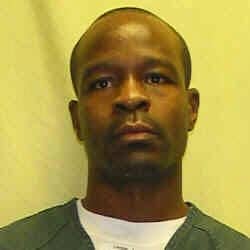
I don't know how this man died yet - he looks pretty sickly in his DOC mug shot - but if he killed himself, he'd be the second guy on death row in just over a month to have done so. Interestingly, he recently asked the Arizona Supreme Court to hasten his execution. The article regarding that is below.

That said, I'm investigating the homicides and suicides in Arizona's state prisons - which have doubled under the current administration - and would appreciate any information anyone out there has about how Hausner died. Please contact me (Peggy Plews) at arizonaprisonwatch@gmail.com  or 480-580-6807.


Ariz. serial killer wants media kept from hearing


by Paul Davenport, Associated Press

azfamily.com

Posted on February 1, 2013 at 3:57 PM
Updated Monday, Feb 4 at 6:28 PM

PHOENIX (AP) -- An Arizona serial killer on death row wants the media barred from a hearing on whether he is mentally competent to waive further appeals so he can be executed as soon as possible, his lawyer said Friday.

Court-appointed attorney Julie Hall made the disclosure during a hearing without explaining why Dale Shawn Hausner wants reporters and cameras kept from the April proceedings in Maricopa County Superior Court.

Judge Roland Steinle will hear from Hausner and mental health experts at the hearing.

The judge intends to hold a separate hearing for media organizations to object.

Hausner was convicted of six murders and numerous other crimes in a series of random shootings in the Phoenix area in 2005 and 2006. Victims included pedestrians, bicyclists and animals.

During an automatic appeal for Hausner in July, the Arizona Supreme Court upheld the death sentence and all but out one of his 80 convictions.

Hausner then asked the justices to set his execution date. He said he wanted to forego further appeals -which could take years to resolve - and to represent himself in any court proceedings. The state high court ordered the Superior Court to determine Hausner's competency to waive appeals.

Hausner didn't acknowledge guilt during his trial but told the jury before sentencing that he should be sentenced to death "to help the victims heal."

He was allowed to not present evidence for leniency in sentencing after Steinle ruled he was competent to make that decision.

Hausner, Hall and a state prosecutor participated by phone in Friday's hearing. Hall did not immediately respond to messages later in the day.

A Phoenix crime author who wrote a book about Hausner's case said Hausner "loves the media" because of the attention it provides him. But he successfully fought to keep secret the psychological evaluation report prepared for the previous competency ruling, author Camille Kimball said.

"He did not want his childhood explored and any psychological records revealed at that time," Kimball said. "He does not want people to know what his childhood was like."

A lawyer for a group that advocates for open government said there were no compelling reasons to bar the media from the upcoming hearing.

"There's no jury to influence, or anyone, for that matter," said attorney Daniel Barr of the First Amendment Coalition. "The public's interest in Dale Hausner's fate is extremely high."

The attorney general's office said it will have no position on Hausner's request until his lawyer files a written motion.

The office's general position is that all such proceedings should be open to the public, but there could be extraordinary circumstance allowing a court to privately consider information, spokeswoman Amy Rezzonico said.

Also during Friday's hearing, Hall reiterated Hausner's desire to keep his in-person court appearances at a minimum. Hausner has expressed concern about his safety in Maricopa County jails, where he was previously assaulted.

In a letter submitted to the court, he also expressed concern about a court-appointed expert's ability to provide the judge with an honest and professional report.

Hausner said the expert needs to put aside her expressed opposition to the death penalty. Hausner also said the expert told him that his body language indicated that he's depressed, which Hausner disputed.

Steinle told Hausner that he was confident that questioning of the expert in court would detect any bias and that Hausner himself would be heard.

"I will have a colloquy with you," Steinle told Hausner.

Monday, May 13, 2013

AZ Death Row Deaths in Custody: Suicide of Milo Stanley, 50.


Arizona death row inmate is apparent suicide 


by Paul Davenport, Associated Press
azfamily.com

Posted on May 10, 2013 at 2:38 PM
Updated Friday, May 10 at 4:03 PM 


PHOENIX (AP) -- An Arizona death row inmate who murdered his wife and young daughter nearly 27 years ago died Friday in what the Department of Corrections called an apparent suicide.

The department said Milo Stanley, 50, was found hanging in his cell at a unit of the Eyman prison complex in Florence and that his death would be investigated by the department and medical examiners.

Stanley was convicted in Yavapai County of fatally shooting his wife, Susan, and 5-year-old daughter, Seleste, in 1986.

A Corrections Department description of Stanley's criminal history said he shot both victims in the head during an argument with his wife over his drinking.

He then dumped the victims' bodies on the side of a road in a remote area, returned to his Clarkdale home and put his 1-year-old son to bed and called police to report his wife and daughter missing but confessed the next day, the description said.

After a 2 1/2-week trial in 1987, Stanley was convicted and then sentenced 2 1/2 months later to death for killing his daughter and to life in prison for killing his wife.

A federal court docket indicated that Stanley had an appeal pending with the U.S. 9th Circuit Court of Appeals regarding whether he received effective legal representation during sentencing.

Paula Harms, an assistant federal public defender listed as representing Stanley in the appeal, did not immediately return a call for comment.

In a separate matter, Stanley was among six Arizona death row inmates who were plaintiffs in federal litigation challenging Arizona's execution protocol as unconstitutional. In that now-ended case, federal courts upheld the protocol, but the state made some procedural changes sought by the inmates' attorneys.

The last suicide of an Arizona death row inmate took place on March 14, 2010, when James Adams, 46, was found hanging in his cell.

© 2013 The Associated Press. All rights reserved. This material may not be published, broadcast, rewritten or redistributed.

Thursday, March 14, 2013

Appeals court: Debra Milke sent to death row by police & prosecutorial misconduct.

Believe it or not, all sorts of innocent people end up in prison and on death row - especially in this state, it seems.  I heard from Arizona prisoner Eddie Sanders not long ago; he's doing life for the rape and murder of an elderly woman in Tucson at a time when there was a rash of such assaults, and can't seem to get anyone to listen to his defense, which he has tried to wage himself - check out his heartbreaking plea below. 

I don't know how to begin to help this guy - the AZ Justice Project apparently hasn't decided to pick up his case - at least, not yet. If you have any ideas or wish to spend some time helping Eddie get a reasonably fair shake, please drop Peggy Plews a note at arizonaprisonwatch@gmail.com...


 ------------------------------------------

Now for the good news about Debra Milke...

Debra and son Christopher

HERE'S THE ACTUAL RULING

 from CNN.com:

Arizona woman's murder conviction, death sentence overturned


By Greg Botelho, CNN

updated 7:27 PM EDT, Thu March 14, 2013


(CNN) -- After 22 years on death row, Debra Milke is close to freedom.

A jury convicted the Arizona woman, now 49, of murder, conspiracy to commit murder, child abuse and kidnapping on October 12, 1990, less than a year after her 4-year-old son was found dead.

A judge sentenced her to death a few months later.

But those convictions and the related sentence were tossed out Thursday by a federal appeals court judge. In explaining his decision, Chief Judge Alex Kozinski of the federal 9th Circuit Court of Appeals chided the prosecution for remaining "unconstitutionally silent" on the "history of misconduct" of its key witness, a Phoenix police detective.

"The Constitution requires a fair trial," Kozinski wrote. "This never happened in Milke's case."

A day after seeing Santa Claus at a mall, young Christopher Milke asked his mother if he could go again. That was the plan, she said, when the boy got into the car with Milke's roommate, James Styers.

Styers picked up a friend, "but instead of heading to the mall, the two men drove the boy out of town to a secluded ravine, where Styers shot Christoper three times in the head," according to Kozinski's summary of the case. Styers was convicted of first-degree murder in the boy's killing and sentenced to death.

The detective, Armando Saldate, said the friend told him that Debra Milke was involved in a plot to kill her son. But neither the friend nor Styers testified to that assertion in court.

In fact, "no other witnesses or direct evidence (linked) Milke to the crime" other than Saldate's testimony.
"The trial was, essentially, a swearing contest between Milke and ... Saldate," said Kozinski.

The detective testified he "didn't buy" Milke's reaction after he informed her that her son was dead. After that, Saldate said he placed Milke under arrest. In a subsequent interrogation, she confessed that her role in the murder conspiracy was a "bad judgment call," the detective said.

But Milke offered a vastly different view of the interrogation and denied that she had confessed to any role in a murder plot.

There was no recording of the interrogation, no one else was in the room or watching from a two-way mirror, and Saldate said he threw away his notes shortly after completing his report.

"The judge and jury believed Saldate," said Kozinski of the verdict and sentence. "But they didn't know about Saldate's long history of lying under oath and other misconduct."

Specifically, the judge noted that the detective had been suspended five days for taking "liberties" with a female motorist and lying about it to his supervisors; that judges had tossed out four confessions or indictments because Saldate had lied under oath; and that judges suppressed or vacated four confessions because Saldate had violated a person's constitutional rights.

"The state knew of the evidence in the personnel file and had an obligation to produce the documents," Kozinski said. "... There can be no doubt that the state failed in its constitutional obligation."

The judge ordered "the state" to turn over Saldate's personnel records to Milke's lawyers, after which "a police official" must state under oath that everything has been disclosed and nothing has been "omitted, lost or destroyed."

Once this is done, a district court must order Milke's release unless prosecutors tell the court within 30 days that they plan to retry her soon.

"In the balance hangs the life of Milke," Kozinski said, explaining the importance of his decision to overturn her convictions.

Sunday, January 16, 2011

Ohio Hunger Striker Victory; Executions still loom.

The SF Bay View does excellent coverage of both California's and the nation's issues related to political prisoners, conditions of confinement, mass incarceration, racial profiling, police brutality, etc., and will be following the Lucasville hunger strikers at the OSP - go straight there for your news. They often publish letters from prisoners across the country as well, so if you know any prisoners with something to say about the conditions of confinement where they are, turn them on to the SF Bay View.

Spacebookers, please hit the strikers' solidarity site and join. These guys still have a hard road ahead.

Also, a reminder that it ain't over yet in Georgia, either. The Black Agenda Report has been providing the best coverage of issues there, and is overall a great publication coming from the Black Left.

Finally, for those of you interested in supporting Arizona's prisoners and challenging the conditions of confinement here, contact me (see side column) or drop into the Conspire Art Collective at 901 N. 5th St, Phoenix (NE corner of 5th. St & Garfield) for a prisoner support group on Thursdays at 5:00pm. Look for me in red high tops and a cowboy hat. My cell is 480-580-6807 if you can't find me or just want to know more. The weekly meeting of the Phoenix Anarchist Coalition follows at 7:30pm.

---------------------------------------

A great rally, a great victory for the Lucasville hunger strikers

San Francisco Bay View

January 15, 2011 @ 8:23 pm

by Denis O’Hearn

Jan. 15, 4:33 p.m. – I have a short report on today’s rally at the Ohio State Penitentiary in support of the three men on hunger strike. But first, I can now report to you the wonderful news that all three have resumed eating because they achieved a victory. The prison authorities have provided, in writing, a set of conditions that virtually meets the demands set out by Bomani Shakur in his letter to Warden Bobby, provided below.

[1]
Ohio State Penitentiary

The hunger strikers send you all thanks for your support and state that they couldn’t have won their demands without support from people from around the world. But they add to their statement the following: This time they were fighting about their conditions of confinement, but now they begin the fight for their lives.

They were wrongfully convicted of complicity in 1993 murders in Lucasville prison and have faced retribution because they refused to provide snitch testimony against others who actually committed those murders. Now, because of Ohio’s – and other states’ – application of the death penalty, they still face execution at a future date. Ohio is today exceeded only by Texas in its enthusiasm for applying the death penalty. We need to take some of this energy that was created around the hunger strike to help these men fight for their lives.

So, we may celebrate a great victory for now. Common sense has prevailed in a dark place where there appeared to be no light. But watch this space [2]for further news on their ongoing campaign.

I hope to share a copy of the Ohio prison authorities’ written statement that ended this hunger strike in a short time.

As Bomani has told me many times, “It ain’t over …”

Jan. 15, 4:40 p.m. – The rally at OSP was attended by a large crowd, including many members of the families of the hunger strikers, despite the freezing weather. Family members met with the hunger strikers this morning and they reported that they were in high spirits on ending their hunger strike and winning their demands, but that they now had to turn their attention to their death sentences.

Statements of support came from all over the world and a small delegation of relatives, along with Alice Lynd, went to the prison and left a copy of our open letter for Warden David Bobby [3], signed by more than 1,200 people including prominent people from Ohio and around the world. Warden Bobby was not there, but a designated representative received the letter on his behalf with a promise that he would read it.

The crowd then proceeded to a church hall in downtown Youngstown for refreshments and some celebration over the good news. The organizers, especially Sharon Danann and Alice and Staughton Lynd, want to thank everyone who supported these men for their contribution to this victory.

Our thoughts are with Bomani, Hasan, Jason and Namir, and we will remain at their sides.

Denis O’Hearn is professor of sociology at Binghamton University SUNY. His book, “Nothing But an Unfinished Song,” is a biography of the Irish hunger striker Bobby Sands. This story first appeared on the Facebook page “In Solidarity with the Lucasville Uprising Prisoners on Hunger Strike [2].” Contact Denis O’Hearn through Facebook, at http://www.facebook.com/profile.php?id=1533483976&v=wall [4].

Letter from Keith LaMar (Bomani Shakur) to Warden Bobby of Ohio State Penitentiary

by Keith LaMar

[5]
Bomani Shakur

Jan. 3 – I’m writing to inform you that I am henceforth on a hunger strike. After 12 years of what can only be described as a double penalty, I am respectfully requesting that you cease this tortuous predicament that I am in. As a death-sentenced prisoner, I should be allowed the very same privileges as other similarly sentenced prisoners, and this is all I am asking, nothing more or less. Therefore, in spite of what your personal feelings are, I hereby appeal to your sense of professionalism and ask that you seriously consider the following demands:
  1. Full recreation privileges.
  2. Full commissary privileges.
  3. Full access to Access SecurePac catalog.
  4. Semi-contact visits.
  5. Access to computer database so that I can assist in the furtherance of my appeals.

These things are presently being offered to all death-sentenced prisoners and, again, I hereby respectfully request that I be granted the same. As you know, my appeals are fast approaching resolution, moving me closer and closer to a day of reckoning. Please allow me the opportunity to pursue whatever my end will be with the same level of dignity and respect that other similarly situated prisoners enjoy. You have this within your power to permit, and I ask that instead of abusing your power that you use it justly, and soon.

Bomani Shakur can be reached by writing to Keith LaMar, 317-117, P.O. Box 1436, Youngstown OH 44501. Addresses for the other Lucasville prisoners are:

  • Jason Robb, 308-919, P.O. Box 1436, Youngstown OH 44501
  • Siddique Abdullah Hasan, R 130-559, P.O. Box 1436, Youngstown OH 44501
  • James Were, 173-245, P.O. Box 1436, Youngstown OH 44501; refer to him by his preferred name, Namir Abdul Mateen.

Saturday, January 15, 2011

Global solidarity with Ohio hunger strikers grows.

Hey all - tune into this SUPERMAX/death row hunger strike in Ohio. Check out the links at the bottom of the article for more. I'll follow this post with one about the rally. Here's the background post.

The letter that's been circulating (below) is being printed and given to OSP warden David Bobby, but nothing would stop readers from reprinting the letter or writing one with their own sentiments and sending it to the attention of:

Warden David Bobby, Ohio State Penitentiary;
Director Gary Mohr, Ohio Department of Rehabilitation and Correction; and
Chief William A. Eleby, Bureau of Classification, Ohio Department of Rehabilitation at:

Ohio State Penitentiary
878 Coitsville-Hubbard Road
Youngstown, Ohio 44505

Fax (330) 743-0841

You can also call and express your concern/support for the hunger strikers:

(330) 743-0700;

Email for General Inquiries

JoAnn.King@odrc.state.oh.us


-------------------------------

Lucasville hunger strikers’ support rally outside Ohio State Penitentiary on MLK’s birthday Saturday, Jan. 15, 1 p.m.

San Francisco Bay View

January 14, 2011 @ 7:26 pm

Delegation to present Warden David Bobby’s representative with letter of support for the hunger strikers with hundreds of signatures

by Sharon Danann, Lucasville Uprising Freedom Network

[1]
This is the Ohio State Penitentiary, where supporters of the Lucasville prisoners on hunger strike will rally tomorrow, Saturday, Jan. 15, on Dr. Martin Luther King’s birthday

Three inmates on death row at Ohio State Penitentiary have been on hunger strike since Monday, Jan.3, to protest the conditions of their confinement. All three prisoners received death sentences following the rebellion in the Southern Ohio Correctional Facility in Lucasville, Ohio, and have been held at the highest security level, Level 5, since they were transferred to OSP In 1998.

The hunger strikers, Keith LaMar, Siddique Abdullah Hasan (Carlos Sanders) and Jason Robb are simply asking that they be treated like other death row prisoners. A fourth prisoner, Namir Abdul Mateen (James Were), may join the hunger strike as his health permits. Other prisoners at OSP may go on hunger strike on Jan. 15 to show their support for the hunger strike in progress.

Robb has pointed out that other prisoners from the Lucasville disturbance have been transferred out of OSP or have had their security levels reduced so that they are not suffering the extreme restrictions of Level 5. In the words of LaMar, also known by his chosen name, Bomani Hondo Shakur:

“We have undergone penalty on top of penalty, kept from fully participating in our appeals, from touching our friends and families, denied adequate medical treatment, and so many other things that are too numerous to name. In a word, we have been tortured. And, yes, I’m aware that the word ‘tortured’ is a strong word to use, but I know of no other word that more adequately describes what we have been through. We have been put through hell.”

An “Open Letter” has been circulating and has collected more than 1,200 signatures (see below). In the sampling of the first 100 names, it can be seen that the prisoners have support from Ohio, many other states and all across the globe, among them many prominent citizens. After the participants in the rally have had the opportunity to add their names to the list, a delegation of friends and family members of the hunger strikers will proceed to OSP to present the signed letter to Warden David Bobby’s designated representative. Youngstown attorney Staughton Lynd is available to answer questions about the “Open Letter” at (330) 652-9635.

Supporters are driving in from other states and from several Ohio cities to participate in the rally at the gates of OSP. Family members of the hunger strikers will be in attendance. Messages of solidarity will be read that are coming in from across the country and around the world. In particular, people in Ireland are remembering the tragic deaths of 10 prisoners who went on hunger strike thirty years ago and are sending words of understanding and support.

The location for Saturday’s event is 878 Coitsville-Hubbard Rd., Youngstown, Ohio. The rally and press conference is a joint effort of the Youngstown-based prisoner-advocacy organization, LOOP (Loved Ones Of Prisoners), the Lucasville Uprising Freedom Network and the Cleveland chapter of the New Black Panther Party.

Contact Sharon Danann and the Lucasville Uprising Freedom Network at (216) 571-2518 lucasvillefreedom@gmail.com [2].

---------------------------------------------


Open letter to Ohio prison officials on behalf of the Lucasville prisoners on hunger strike

To: Warden David Bobby, Ohio State Penitentiary; Director Gary Mohr, Ohio Department of Rehabilitation and Correction; and Chief William A. Eleby, Bureau of Classification, Ohio Department of Rehabilitation

We the undersigned call for an end to isolated “supermax” imprisonment in Ohio State Penitentiary. We are especially concerned about the cases of Siddique Abdullah Hasan (Carlos Sanders), Bomani Shakur (Keith LaMar), Jason Robb and Namir Abdul Mateen (James Were), who are on hunger strike in protest against their conditions of confinement. We understand that they have taken this course of action out of total frustration with their hopeless situation at OSP (Ohio State Penitentiary).

These men have been kept in isolation continuously since they were sentenced to death for their alleged roles in the 11-day rebellion at the Southern Ohio Correctional Facility (SOCF) in Lucasville, Ohio, in April 1993. Hasan and Robb were two of the three men who negotiated a peaceful surrender in that rebellion and their actions undoubtedly saved lives.

Throughout their more than 17 years of solitary confinement, these four men have been subjected to harsher conditions than the more than 150 other men sentenced to death in Ohio. The conditions under which they are confined prevent them from ever being in the same space as another prisoner. Judge James Gwin of federal district court noted with amazement during the trial of the prisoners’ class action, Austin v. Wilkinson, that death-sentenced prisoners at the highest security level in the Ohio State Penitentiary wanted to be returned to Death Row!

The four have suffered Level 5 top security isolation since OSP was opened in 1998. This essentially means that they live in 23-hour lockup in a hermetically sealed environment where they have almost no contact with other living beings – human, animal or plant. When released from their cells for short periods of “recreation,” they continue to be isolated from others. During occasional visits, a wall of bullet-proof glass separates them from their visitors. They remain shackled, despite the fact that they could do no harm in these secure spaces. A few booths away, condemned men from death row sit in cubicles where a small hole is cut from the security glass between them and their visitors. They can hold their mother’s hand. With a little effort, they can kiss a niece or a grandchild. They do not have to shout to hold a conversation.

Hasan, LaMar, Robb and Were experience annual “security reviews,” but their outcome is predetermined. The prison authorities have told them, in writing:

“You were admitted to OSP in May of 1998. We are of the opinion that your placement offense is so severe that you should remain at the OSP permanently or for many years regardless of your behavior while confined at the OSP.”

The lack of a meaningful review violates the due process clause of the Fifth Amendment of the U.S. Constitution. Keeping men in supermax isolation for long periods clearly violates the Eighth Amendment prohibition of cruel and unusual punishment. Moreover, the emphasized words above directly violate the explicit instruction of the Supreme Court of the United States in Wilkinson v. Austin.

These men are being held in solitary confinement permanently, until they are put to death by Ohio or their convictions reversed. This is not simply long-term solitary confinement, but in essence permanent solitary confinement.

Other prisoners sentenced to death for alleged crimes comparable to or worse than those for which Hasan, LaMar, Robb and Were were found guilty have been moved off of Level 5 – to Death Row, to Level 4 at OSP and out of OSP entirely. One of the four Lucasville defendants asks, “Must I have a mental breakdown in order to get off Level 5?”

We demand that the Ohio prison authorities remove these four men from Level 5 “supermax” security and that they end the cruel practice of long-term isolated confinement.

Signed by:

Jules Lobel, Vice President, Center for Constitutional Rights, Professor of Law, University of Pittsburgh

Christine Link, Executive Director, ACLU of Ohio

Noam Chomsky, Massachusetts Institute of Technology

David Goldberger, Professor Emeritus of Law, Ohio State University

Barbara Ehrenreich, author, academic, activist

Mike Ferner, National President, Veterans for Peace

Immanuel Wallerstein, academic and writer

Boaventura de Sousa Santos, University of Coimbra, Distinguished Legal Scholar, University of Wisconsin

Edward S. Herman, Wharton School, University of Pennsylvania

Professor Gabriel Palmer-Fernandez, Director, Dr. James Dale Ethics Center, Youngstown State University

Andrej Grubacic, author and lecturer at San Francisco Art Institute

Peter Linebaugh, historian, University of Toledo, Ohio

Michael Albert, founder, Znet

Professor Thomas Mathiesen, KROM, The Norwegian Association for Penal Reform, Oslo, Norway

Jana Schroeder, Former Director, American Friends Service Committee Ohio Criminal Justice Program

Jesse Lemisch, Professor of History Emeritus, John Jay College of Criminal Justice, CUNY

Denis O’Hearn, Professor of Sociology, Binghamton University, SUNY

Ellen Kitchens, CURE-Ohio, Inc.

Christian G. De Vito, Associazione Liberarsi, Italy

Lorry Swain, migrant rights activist, Ohio

Robert W. McChesney, Gutgsell Endowed Professor, University of Illinois at Urbana, Champaign

Jason Jaffery, Development Director, ACLU of Ohio Foundation

Kathie Izor, Colorado CURE Board

Raj Patel, author and scholar

Katherine Soltis, Chair, Cleveland Coalition Against the Death Penalty

Ioanna Drosou, Greek Initiative for Prisoners’ Rights

Immanuel Ness, CUNY, Editor, Working USA

Ron Keine, Assistant Director, Witness to Innocence

Carlos Ivan Ramos, Ph.D., Executive Director, Hispanic UMADAOP, Cleveland

Michael Parenti, author and scholar

Veronica Dahlberg, Board Member, ACLU Cleveland Chapter

Professor Phil Scraton, Law School, Queens University, Belfast

Sam Bahour, Management Consultant, West Bank, Palestine

Bob Fitrakis, Editor, Free Press, Columbus, Ohio

Faye Harrison, Southern Human Rights Organizers’ Network

Reverend Dorsey R. Stebbins, Cincinnati, Ohio

Herbert P. Bix, Pulitzer Prize-winning historian, SUNY, Binghamton

John Polanski, ordained minister, Mineral Ridge, Ohio

Judith Stanger, retired teacher, Boardman, Ohio

James Gilligan, M.D., Professor of Psychiatry and Law, New York University

James E. Ray, ordained minister, Poland, Ohio

Marcus Rediker, Historian, University of Pittsburgh

John Stoffer, Elder of Presbyterian Church, Salem, Ohio

Kathleen McGarry, attorney, New Mexico

Mary Ann Meaker, Ohioans to Stop Executions

Paulette F Dauteuil, The Jericho Movement for PP’s/POW

Sarah L. Duncan, retired teacher, Vienna, Ohio

Fr. Joseph E. Mulligan, S.J., Nicaragua

Jim Jordan, assistant for autistic children, Vienna, Ohio

Joe Lombardo, co-coordinator, United National Antiwar Committee, UNAC

Andrew Lee Feight, Associate Professor of History, Shawnee State University

Jane Stoffer, retired drug counselor, Salem, Ohio

Margaret J Plews, Arizona Prison Watch

Peter Rachleff, Professor of History, Macalester College, Saint Paul, Minnesota

Lynn Thompson Bryant, Presbyterian pastor, Akron, Ohio

And more than 1,100 others.

Related Posts

Wednesday, March 17, 2010

James Adams: AZ Death Row Suicide.

For those who think prison is a posh country club with great health care benefits. Even the guys on death row are so mired in despair that they're apparently killing themselves.

Imagine what it must be like if you are innocent...

Ryan has been confirmed as Director of ADC by the State Senate, by the way. It happened quietly a couple of weeks ago. He's the official state disciplinarian now.

This is the press release about the suicide; you can find all other death notices posted there, presumably.
I'll post the others who died in ADC custody during the first quarter of 2010 at the end of the month. Guess I'm still figuring out how to deal with death, myself.

----------------

ARIZONA DEPARTMENT OF CORRECTIONS

JANICE K. BREWER GOVERNOR
1601 W. JEFFERSON PHOENIX, ARIZONA 85007 (602) 542-3133

CHARLES L. RYAN DIRECTOR

NEWS RELEASE For Immediate Release


For more information contact:

Barrett Marson
bmarson@azcorrections.gov

Bill Lamoreaux
blamorea@azcorrections.gov

March 15, 2010

Death Row inmate commits suicide

Florence, Ariz. – Inmate James Adams, 46, ADC #131965, died while in Arizona Department of Corrections custody Sunday after apparently committing suicide. Adams, sentenced to death out of Maricopa County for 1st degree murder, was found hanging in his cell and pronounced dead at 3:29 p.m. Sunday. Adams came to ADC Nov. 12, 1997 and was held at the Browning Unit, ASPC-Eyman. The death is under investigation by the department.