


Below is just one more example of Corizon's deliberate indifference to the pain and suffering of patients in the AZ Department of Corrections. They are paid handsomely to perpetrate their neglect on state prisoners at great cost to all of us, thanks to legislators like John Kavanagh who insisted that privatizing medical care in the prisons would save taxpayers money - seems to me that so far all they've done has been to steal from us, instead.
As for this kid doing 5 years for possession - shame on all you judges locking addicts away thinking they will
get any treatment or assistance with their addiction whatsoever in
prison. As you can see, they can hardly get the basic medical care they
need - only 4% a year get any kind of substance abuse treatment, period.
Most will just be bringing home Hep C and a new heroin addiction to show for their time away. This kid is lucky to be making it home at all...
Thanks to News 4 Tucson for digging into this. Stay tuned for more exposes in the weeks to come, as more and more of
Corizon employees refuse to participate in their profit-driven machine
at the expense of their patients, like Michael Levy.


.JPG)


Roughly 200,000 US veterans are in prison or jail, many of them there because of substance abuse or mental health issues, according to a new report released Wednesday. The report outlines the problem and suggests reforms that could ease the plight of American soldiers returning from the war zone and trying to make the transition back to civilian society.
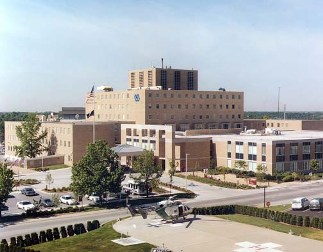
VA Medical Center, Columbia, MO
The report, Healing a Broken System: Veterans Battling Addiction and Incarceration, comes at a critical time. With hundreds of thousands of soldiers currently deployed in Iraq and Afghanistan, the US faces a mounting challenge in caring for returning vets.
Many are returning home damaged by their experiences. According to the report, 30% of Iraq and Afghanistan veterans report symptoms of Post-Traumatic Stress Disorder (PTSD), traumatic brain injury, depression, mental illness, or other cognitive disability. These medical conditions, if left untreated, can contribute to problematic drug use, addiction, and fatal overdoses, as well as homelessness, suicide, and criminality, particular violations of the drug laws.
While the study mentions 200,000 vets behind bars, the number is most likely much higher. That's because owing to problems in data collection -- a problem in itself -- the last year for which hard numbers on vets behind bars is available was 2004. Since then, more than a million more vets have returned from their deployments and mustered out.
The report had its genesis about a year and a half ago, when the Drug Policy Alliance (DPA) teamed up with a classroom of law students at Northeastern University in Boston to investigate the obstacles veterans were facing in obtaining adequate access to mental health and substance abuse services. In addition to a series of surprising and dramatic findings, the report also includes a list of specific recommendations about how to improve services for vets suffering mental health and substance abuse issues.
"We learned that far too many returning vets are falling victim to the war on drugs because of barriers to effective treatment," said DPA's Dan Abrahamson at a Wednesday press conference. "There are nearly a quarter million vets behind bars right now for crimes motivated in part by mental health or drug addiction problems. One third of returning vets report symptoms of Post-Traumatic Stress Disorder (PTSD). Also, vets suffer from traumatic brain injury, depression, and mental illness at higher rates than normal. All of those are contributory factors to substance abuse and drug addiction, as well as overdose, homelessness, suicide, and being arrested for a non-violent drug offense."
In the battle theater, soldiers are supposed to function despite high stress, and the military is more than willing to prescribe them whatever it takes to keep them fighting. But it's a different story when the vets come home.
"Service-related drug dependency is being talked about quite a bit in the veterans community, but is not well understood outside the military," said Tom Tarantino, an Iraq war veteran and now legislative associate for Iraq and Afghanistan Veterans of America. "The ease of obtaining prescriptions in theater is staggering," he explained. "I know crack dealers who are more discriminating about issuing drugs than some of the medics I saw in Iraq. It's alarming how many people were just given anti-depressants instead of asking whether they were really fit for duty," said the veterans' lobbyist.
"Sometimes, it's just a matter of expediency and life in a combat zone, but then you have vets coming back from an environment where meds are very loosely prescribed and they are confronted with a medical system much more stringent about issuing drugs," Tarantino explained. "And that can cause problems."
"Let's be smarter than the problem," said veterans' advocate Guy Gambill. "We can't afford not to be. We arrest too many people and incarcerate them for too long. Then the mark of a criminal record keeps them from getting jobs, housing, and other services, and then the recidivism rate goes up."
There are things that can be done, Gambill said. States can change their incarceration policies. Localities can be more proactive.
"Chicago police and the LAPD are doing front-end interventions," Gambill noted. "In LA, trained peer specialists are doing ride-alongs with the LAPD so the officers will recognize Iraq and Afghanistan war vets. In Chicago, police are doing crisis intervention training, and the first hundred of them are all Iraq and Afghanistan vets. They'll try to grab these guys at first contact and get them into treatment instead of jail. These sorts of peer-led interventions work very well. We need to catch this on the front end, so we don't have 200,000 homeless vets on the streets like we do now."
Another stumbling block is the Department of Veterans Affairs current policy on drug treatment for vets. The VA is willing to offer treatment, but not for vets behind bars.
"We need the Department of Veterans Affairs to lift their ban on drug treatment of incarcerated vets," said Tarantino. "We're pleased that the department now has a justice coordinator at every VA hospital, but they're waiting outside the prison door, not inside, when the vets need it most. This is a regulation they can change with the stroke of a pen," he said.
Yet another problem for vets, especially those with substance abuse issues, is the lack of access to proven treatments. And because the insurance provided to soldiers by the armed forces also covers their families, lack of access to treatment affects them as well.
"Vets don't qualify for substance abuse treatment unless they are diagnosed with PTSD," said Abel Moreno, a former Army sergeant who saw service in both theaters and who now works with veterans through his organization Vets 4 Vets. "We are fighting two wars at once. It's obvious PTSD exists, and it's clear there are going to be substance abuse issues. We've created a subgenre among today's vets where there is a pain pill-popping mitigation ideal. We need quantified data so we can attack this situation head on," he said.
It's not only in failing to provide drug treatment absent a PTSD diagnosis where the DOD falls down, said Dr. Bob Newman, MD, director of the Rothschild Chemical Dependency Institute at Beth Israel Medical Center in New York City. "Tricare, the Department of Defense insurance plan refuses to pay for maintenance treatment of addiction with methadone or buprenorphine," he noted. "Maintenance therapy is not a new idea. It's endorsed by agencies such as NIDA, SAMHSA, the Institute of Medicine, and the World Health Organization. The US government supports this, yet DOD has an insurance plan that excludes maintenance treatment without explanation. That's outrageous," he said.
Tricare insures not only military personnel, but also their families. Tricare's refusal to pay for maintenance therapy nearly cost Teresa Bridges her daughter. Teresa's daughter, Amanda, married a soldier, Sgt. Shawn Dressler. Dressler was killed in combat shortly after the couple were wed, and Amanda retreated into a haze of Lortab and Tramitol. Tricare paid for her treatment, but after a year, her doctor noted on her records that she was being subscribed maintenance doses of Suboxone.
"Suddenly, Tricare dropped her like a hot potato," Bridges said. "Tricare believes taking Suboxone is just substituting one addictive drug for another -- at least that's what they told me. Amanda has done well on Suboxone, and if she stops taking it, she will eventually relapse. Fortunately, she is now in a temporary assistance program, but that will end after a year."
There are potential reforms that could ease the plight of returning vets, the report said. Among them are:
"The care and feeding and support of vets is a national concern and responsibility," said Gen. Stephen Xenakis, MD, Special Adviser to the Chairman of the Joint Chiefs for Staff, Warrior & Family Support . "We are looking to knit together all the various services and institutions so that the soldier who has served and come home and ends up having problems or maybe ended up incarcerated gets treatment from all the sources available."
One of the big problems, said Tarantino, is lack of hard information. He noted that the Justice Department numbers in the report are from 2004. "In 2004, there were over one million fewer vets than there are today," he said. "We don't know how many vets are behind bars right now. We have no method for tracking vets unless they interact with some social services. We need to have DOD and DOJ compare lists. We need data," he said.
Lack of coordination among agencies dealing with vets is part of the problem, said Xenakis. "We need to better configure what we're doing," he said. "Records are not shared. The Department of Justice doesn't have access to Department of Defense records. We need to get organized so we can track people over time."
That effort has the support of the Pentagon, Xenakis said. "Our leadership heartily endorses this," he said. "It is really important that this information that this information is out there now, and that we follow it with the best action plans we can create. As a country, we have a responsibility to support our vets."
Many are returning home damaged by their experiences. According to the report, 30% of Iraq and Afghanistan veterans report symptoms of Post-Traumatic Stress Disorder (PTSD), traumatic brain injury, depression, mental illness, or other cognitive disability. These medical conditions, if left untreated, can contribute to problematic drug use, addiction, and fatal overdoses, as well as homelessness, suicide, and criminality, particular violations of the drug laws.
While the study mentions 200,000 vets behind bars, the number is most likely much higher. That's because owing to problems in data collection -- a problem in itself -- the last year for which hard numbers on vets behind bars is available was 2004. Since then, more than a million more vets have returned from their deployments and mustered out.
The report had its genesis about a year and a half ago, when the Drug Policy Alliance (DPA) teamed up with a classroom of law students at Northeastern University in Boston to investigate the obstacles veterans were facing in obtaining adequate access to mental health and substance abuse services. In addition to a series of surprising and dramatic findings, the report also includes a list of specific recommendations about how to improve services for vets suffering mental health and substance abuse issues.
"We learned that far too many returning vets are falling victim to the war on drugs because of barriers to effective treatment," said DPA's Dan Abrahamson at a Wednesday press conference. "There are nearly a quarter million vets behind bars right now for crimes motivated in part by mental health or drug addiction problems. One third of returning vets report symptoms of Post-Traumatic Stress Disorder (PTSD). Also, vets suffer from traumatic brain injury, depression, and mental illness at higher rates than normal. All of those are contributory factors to substance abuse and drug addiction, as well as overdose, homelessness, suicide, and being arrested for a non-violent drug offense."
In the battle theater, soldiers are supposed to function despite high stress, and the military is more than willing to prescribe them whatever it takes to keep them fighting. But it's a different story when the vets come home.
"Service-related drug dependency is being talked about quite a bit in the veterans community, but is not well understood outside the military," said Tom Tarantino, an Iraq war veteran and now legislative associate for Iraq and Afghanistan Veterans of America. "The ease of obtaining prescriptions in theater is staggering," he explained. "I know crack dealers who are more discriminating about issuing drugs than some of the medics I saw in Iraq. It's alarming how many people were just given anti-depressants instead of asking whether they were really fit for duty," said the veterans' lobbyist.
"Sometimes, it's just a matter of expediency and life in a combat zone, but then you have vets coming back from an environment where meds are very loosely prescribed and they are confronted with a medical system much more stringent about issuing drugs," Tarantino explained. "And that can cause problems."
"Let's be smarter than the problem," said veterans' advocate Guy Gambill. "We can't afford not to be. We arrest too many people and incarcerate them for too long. Then the mark of a criminal record keeps them from getting jobs, housing, and other services, and then the recidivism rate goes up."
There are things that can be done, Gambill said. States can change their incarceration policies. Localities can be more proactive.
"Chicago police and the LAPD are doing front-end interventions," Gambill noted. "In LA, trained peer specialists are doing ride-alongs with the LAPD so the officers will recognize Iraq and Afghanistan war vets. In Chicago, police are doing crisis intervention training, and the first hundred of them are all Iraq and Afghanistan vets. They'll try to grab these guys at first contact and get them into treatment instead of jail. These sorts of peer-led interventions work very well. We need to catch this on the front end, so we don't have 200,000 homeless vets on the streets like we do now."
Another stumbling block is the Department of Veterans Affairs current policy on drug treatment for vets. The VA is willing to offer treatment, but not for vets behind bars.
"We need the Department of Veterans Affairs to lift their ban on drug treatment of incarcerated vets," said Tarantino. "We're pleased that the department now has a justice coordinator at every VA hospital, but they're waiting outside the prison door, not inside, when the vets need it most. This is a regulation they can change with the stroke of a pen," he said.
Yet another problem for vets, especially those with substance abuse issues, is the lack of access to proven treatments. And because the insurance provided to soldiers by the armed forces also covers their families, lack of access to treatment affects them as well.
"Vets don't qualify for substance abuse treatment unless they are diagnosed with PTSD," said Abel Moreno, a former Army sergeant who saw service in both theaters and who now works with veterans through his organization Vets 4 Vets. "We are fighting two wars at once. It's obvious PTSD exists, and it's clear there are going to be substance abuse issues. We've created a subgenre among today's vets where there is a pain pill-popping mitigation ideal. We need quantified data so we can attack this situation head on," he said.
It's not only in failing to provide drug treatment absent a PTSD diagnosis where the DOD falls down, said Dr. Bob Newman, MD, director of the Rothschild Chemical Dependency Institute at Beth Israel Medical Center in New York City. "Tricare, the Department of Defense insurance plan refuses to pay for maintenance treatment of addiction with methadone or buprenorphine," he noted. "Maintenance therapy is not a new idea. It's endorsed by agencies such as NIDA, SAMHSA, the Institute of Medicine, and the World Health Organization. The US government supports this, yet DOD has an insurance plan that excludes maintenance treatment without explanation. That's outrageous," he said.
Tricare insures not only military personnel, but also their families. Tricare's refusal to pay for maintenance therapy nearly cost Teresa Bridges her daughter. Teresa's daughter, Amanda, married a soldier, Sgt. Shawn Dressler. Dressler was killed in combat shortly after the couple were wed, and Amanda retreated into a haze of Lortab and Tramitol. Tricare paid for her treatment, but after a year, her doctor noted on her records that she was being subscribed maintenance doses of Suboxone.
"Suddenly, Tricare dropped her like a hot potato," Bridges said. "Tricare believes taking Suboxone is just substituting one addictive drug for another -- at least that's what they told me. Amanda has done well on Suboxone, and if she stops taking it, she will eventually relapse. Fortunately, she is now in a temporary assistance program, but that will end after a year."
There are potential reforms that could ease the plight of returning vets, the report said. Among them are:
- Changes in state and federal statutes to focus on treatment instead of incarceration for veterans who commit nonviolent drug-related offenses.
- Adoption by government agencies of overdose prevention programs and policies targeting veterans who misuse substances or take prescription medications.
- Significantly expanded access for veterans to medication-assisted therapies such as methadone and buprenorphine to treat opioid dependence.
"The care and feeding and support of vets is a national concern and responsibility," said Gen. Stephen Xenakis, MD, Special Adviser to the Chairman of the Joint Chiefs for Staff, Warrior & Family Support . "We are looking to knit together all the various services and institutions so that the soldier who has served and come home and ends up having problems or maybe ended up incarcerated gets treatment from all the sources available."
One of the big problems, said Tarantino, is lack of hard information. He noted that the Justice Department numbers in the report are from 2004. "In 2004, there were over one million fewer vets than there are today," he said. "We don't know how many vets are behind bars right now. We have no method for tracking vets unless they interact with some social services. We need to have DOD and DOJ compare lists. We need data," he said.
Lack of coordination among agencies dealing with vets is part of the problem, said Xenakis. "We need to better configure what we're doing," he said. "Records are not shared. The Department of Justice doesn't have access to Department of Defense records. We need to get organized so we can track people over time."
That effort has the support of the Pentagon, Xenakis said. "Our leadership heartily endorses this," he said. "It is really important that this information that this information is out there now, and that we follow it with the best action plans we can create. As a country, we have a responsibility to support our vets."